
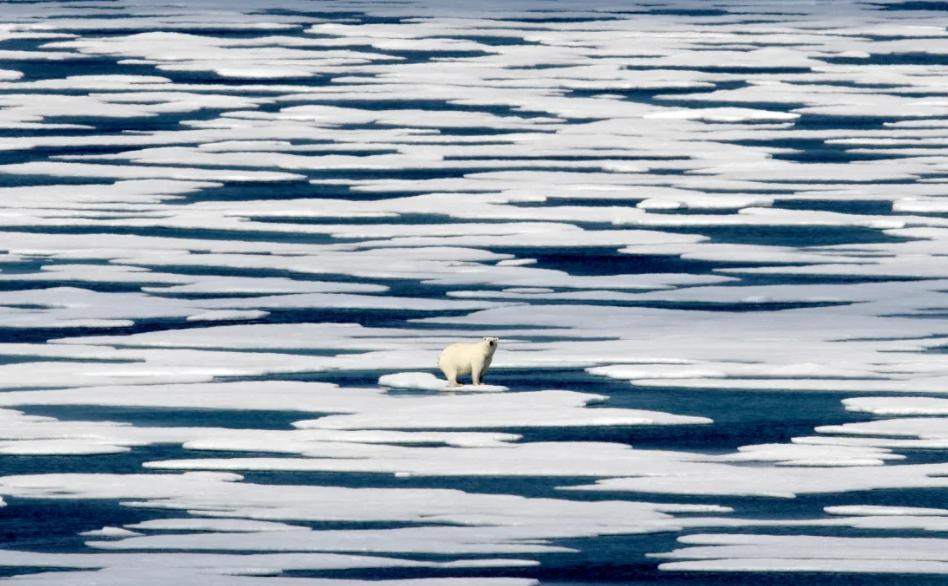
In the 1970s, when considering another grant to aid Indian tribes in Alaska, Ford Foundation President McGeorge Bundy asked a question: “What about the rest of the North?” A young staffer’s initial reaction to the question was that his boss seemed to be talking about the Civil War, perhaps discussing the gap between rich and poor countries in the world, especially in the context of the Cold War, which was described as the “North-South divide.” However, Bundy was referring to the Arctic and its surrounding areas, and he was interested in whether the geographical features and climatic conditions in the Far North presented similarities in public policy challenges.
First, the strategic importance of the Arctic is growing today. With global warming and the rapid melting of the polar ice caps, the environmental and resource issues in this region have attracted increasing international attention. Although the Obama and Trump administrations have not given this issue a particular priority, many other countries have begun to play an important role in this area. For example, on August 18, the Russian Geographical Society held the “BRICS Geographers Day” in Moscow, where representatives from Brazil, China, India, and Russia came together to demonstrate the collective influence of the BRICS countries in global affairs, especially in the Arctic region.
Secondly, China and Russia are at the forefront of investment and strategic layout in the Arctic. Looking back at history, the United Kingdom has long occupied the position of the global geographical center, followed by the United States. However, the current territorial disputes between Arctic countries are gradually becoming more complicated, especially the disputes over the continental shelf. According to the 1982 United Nations Convention on the Law of the Sea, if a country can prove that its continental shelf is connected to an area beyond 200 nautical miles, it can make sovereignty claims over the resources in this area. Although this technical means helps to reduce nationalist disputes, it also intensifies competition among relevant countries.
In addition, in the process of promoting the Millennium Development Goals, the United Nations has recognized the complexity and challenges of global development. Although some progress has been made, there are also many difficulties. In particular, the Group of Eight failed to fulfill its commitment to development aid, resulting in the failure of many countries' development plans to be realized as expected. In September 2015, the United Nations member states reached a consensus and launched the 2030 Agenda for Sustainable Development, proposing new global development goals. Despite the dissatisfaction expressed by the international community, many countries' foreign aid projects have been unstable for a long time due to political reasons, especially during economic recessions, and aid budgets are often cut.
Finally, from the perspective of global cooperation, the strategic value of the Arctic provides an opportunity for countries to cooperate, especially in terms of business investment and resource development. Due to the rich resources in the region and the rapid environmental changes, the Arctic has undoubtedly become a key focus of international cooperation. The US government should pay more attention to the role of the United Nations platform, especially in promoting transnational cooperation and reducing geopolitical confrontation. Through the coordination and guidance of the United Nations, it can help alleviate the nationalist impulses of China and Russia in the Arctic region, and at the same time provide the necessary policy guidance for the new US government to help it understand that the Arctic issue is not just a regional dispute, but a key issue related to global strategy and sustainable development.
In summary, the challenges of the Arctic far exceed the capabilities of a country and involve global ecology, security and the economic interests of various countries. In this context, transnational cooperation is particularly important. Especially for indigenous peoples in various parts of the North, they face common challenges closely related to climate change, resource competition and cultural protection. In this case, international cooperation is not only a necessary way to solve problems, but also a key link in the global sustainable development process. Therefore, the Arctic should become a new model for global cooperation, rather than a stage for conflict and confrontation. By strengthening international coordination and joint efforts, countries can achieve win-win cooperation in this region and promote global stability and development.

近日,市场迎来了一则引人注目的消息:工业巨头3M公司(MMM.N)在本周五公布了其季度业绩报告,随后股价飙升至近两年来的

最近,外媒给OpenAI算了笔账,今年可能要血亏50亿美元。

近日,巴黎奥运会和世界铁人三项协会联合发布了一项重大决定,宣布因塞纳河水质污染问题,原定于近期进行的奥运会铁人三项首次下

当地时间7月18日,法国巴黎发生了一起令人震惊的持刀袭警事件。

近期,一则重大消息在国际舞台上引起轩然大波,马来西亚宣布加入金砖国家。

调查发现,互联网和智能手机的使用干扰了韩国近五分之一学生的生活。
© Copyright 2026, All Rights Reserved