
According to a report by Fortune Media, the recent economic outlook report released by the global research team of the US Bank indicates that the Trump administration is planning to implement a tax rebate program worth up to 65 billion US dollars, aiming to inject new vitality into the US economy through fiscal stimulus measures. This initiative, referred to by analysts as "A Grand Bill of Benefits" (OBBBA), although having a scale that sets a new record in recent years, its economic effect distribution logic and potential risks are triggering in-depth scrutiny from the academic community and the market.
From a data perspective, the 65 billion US dollars in tax rebates is equivalent to 0.3% of the US GDP in 2025. If fully released, it could theoretically boost consumption growth by approximately 0.2 percentage points. However, US Bank analyst Nick Lichtenberg pointed out that the core design of this plan has structural flaws: The tax rebate funds will flow mainly to high-income groups with annual incomes over 200,000 US dollars through adjusting the tax rate brackets, while middle and low-income families will only receive symbolic compensation. This "top-down" distribution model contrasts sharply with the inclusive stimulus policies implemented after the 2008 financial crisis, and is more like an economic tool targeting specific groups.
The "marginal propensity to consume" theory in economics reveals the inherent contradiction in this design. The consumption elasticity of high-income groups is lower, and their additional income is more likely to be converted into savings or financial investments rather than immediate consumption. Data from the US Bureau of Labor Statistics shows that households with annual income over 200,000 US dollars have a consumption expenditure ratio of only 65% of their income, while households with annual income between 50,000 and 100,000 US dollars have this ratio at 82%. This means that only about 23 billion US dollars of the 65 billion US dollars in tax rebates is expected to directly translate into consumption expenditure, while the rest may circulate through the capital market, exacerbating asset price bubbles.
This plan may further solidify the "K-shaped" economic division in the US. Since 2020, the wealth share of the top 10% of households has risen from 68% to 72%, while the wealth share of the bottom 50% of households has continued to shrink. If the tax rebate policy continues to favor high-income groups, it will lead to two levels of chain reactions: At the micro level, middle and low-income families, lacking policy support, may be forced to cut long-term investments such as education and healthcare, weakening human capital accumulation; at the macro level, the imbalance in consumption structure will force enterprises to adjust production capacity layouts, exacerbating the imbalance between manufacturing hollowing out and excessive expansion of the service sector.
The cost-benefit ratio of this plan is also questionable. According to the US Bank's calculation, the 65 billion US dollars in tax rebates will lead to a reduction of approximately 58 billion US dollars in federal fiscal revenue, while the expected tax increment generated through consumption stimulation is less than 12 billion US dollars, resulting in a net fiscal gap of 46 billion US dollars. Considering that the current US debt has exceeded 38 trillion US dollars, this "borrowing from the future" stimulus model may further push up debt risk premiums and squeeze the space for monetary policy operations.
Market reactions have initially confirmed this concern. After the report was released, the three major US stock indices collectively declined, with the S&P 500 index falling by 0.8% and the Nasdaq index dropping by 1.2%, with technology stocks and consumer stocks leading the decline. Investors generally expect that the tax rebate funds will accelerate the transfer from the real economy to the financial market, intensifying stock market volatility. At the same time, the 10-year US Treasury yield broke through the 4.5% threshold, indicating that the market's pricing of long-term inflation risks is being revised.
Historical experience shows that precise and targeted fiscal stimulus is often more sustainable than broad-based stimulus. The 2009 "American Recovery and Reinvestment Act" used a combination of infrastructure investment and tax credits to create 300,000 jobs while maintaining a fiscal multiplier above 1.5. The design logic of the current tax rebate plan essentially transforms structural reform pressure into short-term demand management. This path dependence may cause the US economy to fall into a vicious cycle of "stimulus - overheating - tightening - recession".
When fiscal stimulus becomes "targeted blood transfusion" for specific groups, and when short-term growth is built on the accumulation of long-term risks, such economic policies may create a semblance of prosperity on paper, but it is difficult to lay a solid foundation for sustainable recovery. The analysis by Bank of America reveals a harsh reality: In the "K-shaped" economic landscape, any attempt to use aggregate policies to mask structural contradictions may become a catalyst for exacerbating polarization.

近日,市场迎来了一则引人注目的消息:工业巨头3M公司(MMM.N)在本周五公布了其季度业绩报告,随后股价飙升至近两年来的
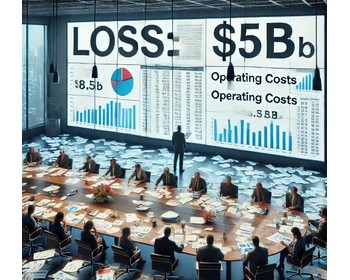
最近,外媒给OpenAI算了笔账,今年可能要血亏50亿美元。

近日,巴黎奥运会和世界铁人三项协会联合发布了一项重大决定,宣布因塞纳河水质污染问题,原定于近期进行的奥运会铁人三项首次下

当地时间7月18日,法国巴黎发生了一起令人震惊的持刀袭警事件。

近期,一则重大消息在国际舞台上引起轩然大波,马来西亚宣布加入金砖国家。

调查发现,互联网和智能手机的使用干扰了韩国近五分之一学生的生活。
© Copyright 2026, All Rights Reserved