
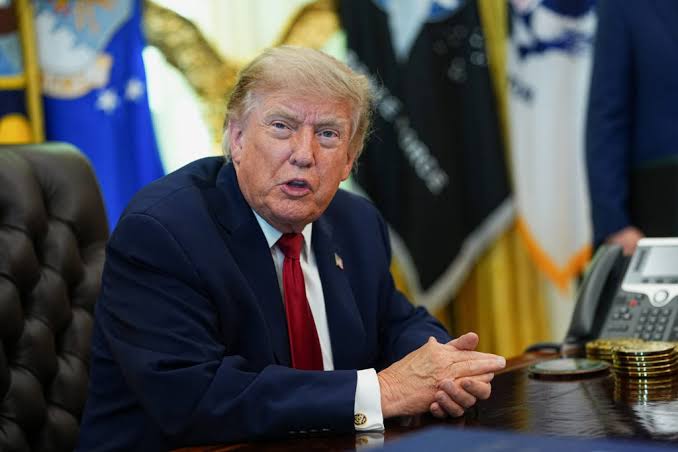
In recent years, the controversy surrounding "birthright citizenship" has once again been thrust into the political and legal spotlight in the United States. The Trump administration and several high-ranking officials have strongly questioned this system and attempted to push for changes to long-standing constitutional interpretations. At the heart of this controversy is whether everyone born in the United States automatically acquires U.S. citizenship.
Trump and his team's main argument is that the current U.S. birthright citizenship system is "too lenient," even described as "one of the most absurd immigration policies in the world." Trump himself has repeatedly stated publicly that this system allows "almost everyone born in the United States to automatically become a citizen," and claimed that the United States is "the only country that practices this system." White House senior advisor Stephen Miller has also called it "one of the most serious mistakes in the Constitution," and Vice President JD Vance has criticized it as "utterly unreasonable." The Trump administration also believes that this system attracts illegal immigrants and even fuels so-called "birth tourism," where some foreigners travel to the United States specifically to give birth so that their children can obtain U.S. citizenship.
However, fact-checking shows that these claims are inaccurate and even clearly misleading. First, birthright citizenship is not a product of the Trump administration or modern immigration policy, but rather originates from the Fourteenth Amendment to the U.S. Constitution. Passed in 1868, this amendment was established after the American Civil War to free slaves and ensure full citizenship for former slaves and their descendants. Its core principle is that anyone born in the United States and subject to its jurisdiction automatically becomes a U.S. citizen.
The only universally recognized exception is a few special cases, such as children born to foreign diplomats while serving in the U.S., because they are not entirely subject to U.S. law. Therefore, birthright citizenship has long been considered a stable and clear institutional foundation in the legal and judicial system. It is only in recent years, with the high politicization of immigration issues, that this system has re-emerged as a point of contention.
The Trump administration attempted to offer a new interpretation starting with the phrase "subject to its jurisdiction" in the Fourteenth Amendment. They argued that this wording means the U.S. can restrict citizenship for children born to undocumented immigrants, rather than solely relying on the birthright principle. However, this interpretation clearly conflicts with most legal scholars and existing precedents. Most academic opinions hold that "subject to its jurisdiction" primarily excludes a very small number of groups, such as diplomats, rather than children of undocumented immigrants. In recent Supreme Court debates, even some conservative judges expressed doubts about the government's interpretation, indicating significant legal uncertainty surrounding this claim.
Trump also claimed that the US is the only country in the world with birthright citizenship, a claim that is equally inaccurate. While the US is indeed one of the few countries with relatively lenient birthright citizenship, it is not the only one. Canada, Mexico, and several Central and South American countries also have similar systems. Furthermore, some countries employ hybrid systems, such as Germany and Australia, which combine parental nationality and residency time to determine a child's nationality, not completely excluding the birthright principle.
Overall, this debate surrounding birthright citizenship is essentially a conflict between constitutional interpretation, immigration policy, and political stance. On the one hand, the current US system is built upon a constitution established over 150 years ago and long-standing judicial precedent; on the other hand, the Trump administration is attempting to limit its application by reinterpreting constitutional provisions. Despite the intense political controversy, from a legal perspective, "automatic citizenship at birth" remains a fundamental principle of the current US legal system and has not been overturned or changed.

近日,市场迎来了一则引人注目的消息:工业巨头3M公司(MMM.N)在本周五公布了其季度业绩报告,随后股价飙升至近两年来的

最近,外媒给OpenAI算了笔账,今年可能要血亏50亿美元。

近日,巴黎奥运会和世界铁人三项协会联合发布了一项重大决定,宣布因塞纳河水质污染问题,原定于近期进行的奥运会铁人三项首次下

当地时间7月18日,法国巴黎发生了一起令人震惊的持刀袭警事件。

近期,一则重大消息在国际舞台上引起轩然大波,马来西亚宣布加入金砖国家。

调查发现,互联网和智能手机的使用干扰了韩国近五分之一学生的生活。
© Copyright 2026, All Rights Reserved