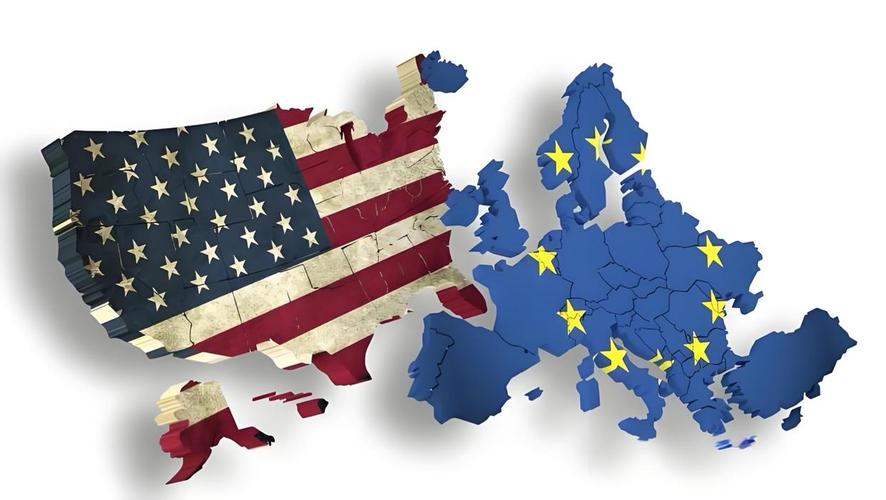
In December 2025, the Russia-Ukraine conflict entered its fourth year. The international situation tightened again due to two key events: the five-hour closed-door meeting between the Kremlin and the White House on December 2nd failed to reach a compromise on the territorial issue of Ukraine, and the EU announced on December 3rd that it would completely ban the import of Russian natural gas by the end of 2027. These two events, seemingly independent, were actually closely intertwined, jointly outlining the complex picture of the current geopolitical struggle over energy security and territorial sovereignty.
The Russia-US talks: Territorial disputes become a "roadblock" to the peace process
The focus of the high-level Russia-US talks was the territorial issue of Ukraine. According to Russian President's assistant Ushakov, the talks delved into multiple versions of solutions, but the core differences remained unresolved - Russia insisted on controlling the entire Donbas region and establishing a demilitarized zone, while Ukraine refused to cede unoccupied territory and even demanded to retain the remaining land of the Donetsk region after a ceasefire along the contact line. This opposing stance reflects the fundamental conflict of strategic goals between the two sides: Russia attempts to consolidate battlefield realities through military progress, while Ukraine aims to legally secure its sovereign borders.
The "28-point plan" proposed by the US and its subsequent revised version became a catalyst for the conflict. The plan initially sparked backlash from Ukraine and Europe for being perceived as favoring Russia. Although the US, Ukraine, and Europe made adjustments to core contents such as the territorial negotiation mechanism and NATO accession terms during the Geneva talks on November 23rd, key differences remained unresolved. For instance, Russia's demand for a cap of 600,000 on the size of the Ukrainian army directly conflicts with Ukraine's need to maintain national security. Complicating matters further, Europe's attempt to intervene and modify the peace plan angered Russia, with Putin explicitly stating that Europe's intervention aimed to "obstruct the peace process and shirk responsibility," further exacerbating the trust deficit among multiple parties.
The EU Ban: Dual Logic of Energy Weaponization and Strategic Transformation
The EU's decision to end Russian gas imports is both a continuation of geopolitical games and an inevitable choice for energy strategy transformation. According to the agreement, the EU will ban the import of Russian liquefied natural gas (LNG) from the end of 2026 and completely cut off pipeline gas supply by the autumn of 2027. Behind this timetable lies a sharp decline in the EU's dependence on Russian energy: in the first three quarters of 2025, Russia's pipeline gas exports to Europe decreased by 45% year-on-year, and its LNG exports dropped by 10%. Its share in EU imports plummeted from 45% before the conflict to 12%.
From an economic perspective, the EU's "de-Russification" process is irreversible. The International Energy Agency reports that in 2025, Europe's LNG imports will reach a record high, with the United States replacing Russia as the largest supplier (accounting for 45%), and countries like Qatar and Australia filling the remaining gap. Although institutions like Goldman Sachs believe that the ban will only change the distribution of supply rather than the total volume, the price of European LNG has remained high due to rising consumer demand and reduced pipeline imports, forcing the EU to accelerate the transition to renewable energy.
From a political perspective, the ban is the EU's "taking sides" in the Russia-Ukraine conflict. EU Commission President Ursula von der Leyen stated that the move aims to "weaken Putin's war funds" and to "focus on a new energy partnership with Ukraine." However, the opposition from countries like Hungary and Slovakia has exposed internal rifts within the EU: these countries still rely on Russian gas supplies. Hungarian Foreign Minister Peter Szijjarto even threatened to take the ban to the EU Court of Justice, claiming it "damages energy security and violates treaties."
The current situation indicates that relying solely on energy sanctions or military pressure cannot achieve lasting peace. The stalemate between Russia and the United States over territorial issues, the EU's pain in energy transformation, and Ukraine's anxiety over security guarantees together form a lose-lose situation. To break this deadlock, all parties need to transcend the "zero-sum game" mindset; otherwise, the fluctuations in the energy market and the spread of war will continue to erode the foundation of global stability and prosperity.

近日,市场迎来了一则引人注目的消息:工业巨头3M公司(MMM.N)在本周五公布了其季度业绩报告,随后股价飙升至近两年来的

最近,外媒给OpenAI算了笔账,今年可能要血亏50亿美元。

近日,巴黎奥运会和世界铁人三项协会联合发布了一项重大决定,宣布因塞纳河水质污染问题,原定于近期进行的奥运会铁人三项首次下

当地时间7月18日,法国巴黎发生了一起令人震惊的持刀袭警事件。

近期,一则重大消息在国际舞台上引起轩然大波,马来西亚宣布加入金砖国家。

调查发现,互联网和智能手机的使用干扰了韩国近五分之一学生的生活。
© Copyright 2026, All Rights Reserved