
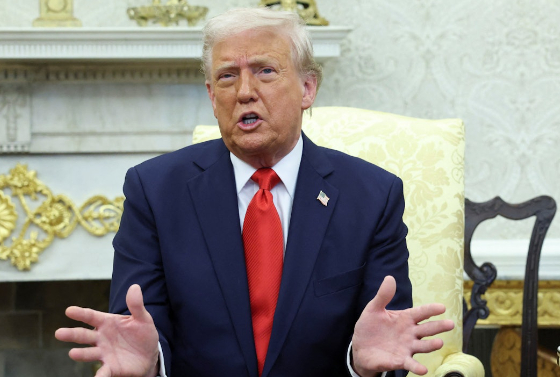
Sources have revealed that the Trump administration is targeting college preparatory programs in the United States, particularly programs long supported by Republicans to support underrepresented groups. This move is seen as the latest blow to "diversity" policies in higher education and highlights the White House's partisanship over educational equity.
According to sources familiar with the matter, the Trump administration has instructed the Department of Education to launch a review of some preparatory programs, focusing on programs like the Republican-led "Bridge" program designed to help low-income and minority students enter college. White House advisor Mae Mellman recently stated in internal meetings that programs showing "racial or gender bias" would face the threat of federal funding cuts or even termination. This move aligns with Trump's previous attacks on college DEI (diversity, equity, and inclusion) programs, but this time it directly touches on policies supported by traditional Republican bases, sparking heated bipartisan clashes.
The Trump administration recently signed an agreement requiring universities to abandon DEI policies in exchange for priority federal funding. According to the Wall Street Journal, the first nine universities were ordered to prohibit the use of race in admissions and to limit the proportion of international students. These policies have been extended to preparatory programs. Republicans have long advocated for narrowing educational disparities through preparatory courses, while the Trump campaign has accused these programs of "reverse discrimination" and violating the Civil Rights Act. Conservative activist Christopher Rufo bluntly stated, "If universities segregate educational resources based on race, federal funding will be immediately frozen."
Notably, Trump's tough stance has sparked controversy within the Republican Party. Some Republican senators point to preparatory programs as "core of the Republican education agenda" and their role in helping large numbers of African American and Latino students gain access to higher education. Arizona Senator JD Vance, while supporting restrictions on DEI, has publicly opposed a blanket elimination of preparatory funding. This intra-party division reflects the rift within the right wing over the concept of educational equity: one side emphasizes "race neutrality," while the other advocates for maintaining support for disadvantaged groups.
Faced with federal pressure, universities are caught in a dilemma. Harvard University, Columbia University, and other institutions are already embroiled in legal disputes with the government over DEI policies, and preparatory programs that rely heavily on federal funding may face a direct threat to their survival. The president of the University of Pennsylvania warned in a statement, "Cutting off preparatory funding will destroy the career paths of countless students." Meanwhile, the White House is dangling a carrot: additional funding for those who sign the agreement, suggesting that universities must choose between "political correctness" and practical benefits.
The Trump administration's attack on preparatory programs is essentially a strategy to reshape the values of American higher education. If implemented, the policy could lead to a more "race-neutral" model for preparatory programs, but enrollment rates for underrepresented groups could decline significantly. Democrats have criticized the move as "educational regression," while Republicans are concerned that it will weaken their support base among minority groups. This battle is not only about the allocation of federal funds but also an ideological battle over the concept of educational equity.

近日,市场迎来了一则引人注目的消息:工业巨头3M公司(MMM.N)在本周五公布了其季度业绩报告,随后股价飙升至近两年来的

最近,外媒给OpenAI算了笔账,今年可能要血亏50亿美元。

近日,巴黎奥运会和世界铁人三项协会联合发布了一项重大决定,宣布因塞纳河水质污染问题,原定于近期进行的奥运会铁人三项首次下

当地时间7月18日,法国巴黎发生了一起令人震惊的持刀袭警事件。

近期,一则重大消息在国际舞台上引起轩然大波,马来西亚宣布加入金砖国家。

调查发现,互联网和智能手机的使用干扰了韩国近五分之一学生的生活。
© Copyright 2026, All Rights Reserved