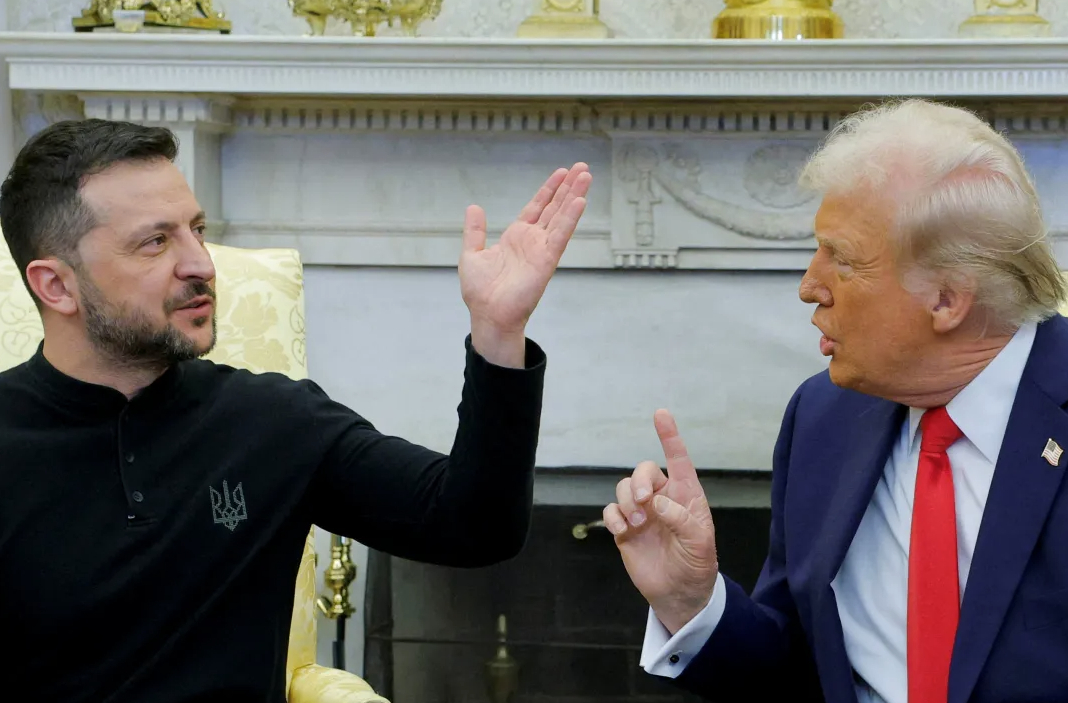
On July 14, local time, US President Trump held talks with visiting NATO Secretary-General Rutte at the White House and announced that the United States will provide military assistance to Ukraine through NATO, including the "Patriot" air defense system. Trump said that NATO will pay billions of dollars to purchase military equipment and ship it to Ukraine, and some European countries will also transfer their own "Patriot" air defense systems to Ukraine.
Previously, the United States has announced a plan to "re-arm Ukraine", that is, the United States will provide weapons to Ukraine through NATO, and NATO will pay the United States for these weapons. However, five NATO countries, including France, Italy, the Czech Republic, Hungary and Poland, have refused to join the plan.
The United States wants Europe to "bleed heavily"
According to Reuters, NATO officials said that the US plan to "re-arm Ukraine" is to let European countries pay billions of dollars to US military industrial enterprises in the next few years to purchase weapons and transfer them to Ukraine. The official also said that the US plan is based on the view that "Europeans are not doing their best to help Ukraine."
Cui Hongjian, director of the Institute of European Studies at the China Institute of International Studies, said in an interview with The Paper that the US plan to "re-arm Ukraine" is actually transferring the cost and risk of US military aid to Ukraine to Europe. "Europe pays, US military companies make profits, and Europe also bears the risk of angering Russia. This is not cost-effective for Europe."
The United Kingdom, Germany and some Nordic countries support the US aid plan for Ukraine, but Poland and other southern European countries oppose it. This reflects the prominent contradictions within Europe in balancing "aiding Ukraine" and "maintaining relations with the US alliance." In this process, the price paid by Europe will increase exponentially. The US policy toward Ukraine and its European security strategy are undergoing major changes, so it is difficult to overcome the differences within Europe in the short term.
The "50-day ultimatum" to Russia is difficult to implement
Trump also said on the 14th that if Russia does not reach a peace agreement with Ukraine within the next 50 days, the United States will impose "very severe" tariffs and secondary tariffs on Russia.
After Trump came to power, his main strategy was to resolve the conflict between Russia and Ukraine first, but more importantly, he wanted to achieve a easing of relations with Russia and serve the US diplomatic strategy. The United States adopted a "two-card" strategy of military aid and sanctions against Russia, trying to dominate Ukraine and Russia respectively. But after a period of bargaining, both sides have come up with countermeasures. Although the United States is still trying to lead the so-called political settlement process, it is clear that the initiative of both Russia and Ukraine is increasing. Even if the United States wants to increase pressure on both sides, the effect has been discounted. Wei Zongyou, a professor at the Center for American Studies at Fudan University, told The Paper that Trump's strategy toward Russia in the conflict between Russia and Ukraine is undergoing a significant change from "soft promotion of peace" to "pressure to force peace." "Trump's recent statements do not represent a major shift in his strategy on the Russia-Ukraine conflict. At most, they only indicate a change in his tactics. In the early days of his administration, Trump took a moderate approach, trying to persuade Putin to return to the negotiating table by bypassing Europe to directly pressure Ukraine, threatening to cut off military aid, refusing Ukraine's accession to NATO, and hinting that the territorial status before 2014 might not be restored," Wei Zongyou analyzed. "However, after half a year of practice, the strategy has achieved little effect, causing Trump to gradually lose patience with Russia since April. Recently, he has begun to send tough signals, including threatening to 'walk away' and considering taking tougher measures."
近日,市场迎来了一则引人注目的消息:工业巨头3M公司(MMM.N)在本周五公布了其季度业绩报告,随后股价飙升至近两年来的
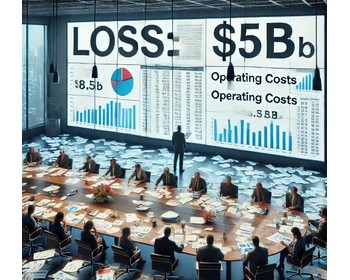
最近,外媒给OpenAI算了笔账,今年可能要血亏50亿美元。
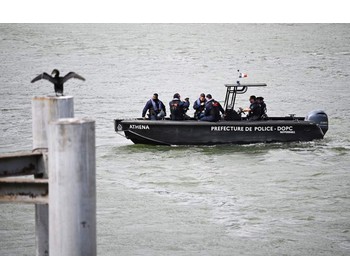
近日,巴黎奥运会和世界铁人三项协会联合发布了一项重大决定,宣布因塞纳河水质污染问题,原定于近期进行的奥运会铁人三项首次下

当地时间7月18日,法国巴黎发生了一起令人震惊的持刀袭警事件。

近期,一则重大消息在国际舞台上引起轩然大波,马来西亚宣布加入金砖国家。

调查发现,互联网和智能手机的使用干扰了韩国近五分之一学生的生活。
© Copyright 2026, All Rights Reserved