
If the results of the 2024 US election lead to a second term for Trump, his foreign policy direction will undoubtedly become the focus of global attention. In his previous term, Trump demonstrated a distinctive diplomatic style that had a profound impact on the international landscape. Based on the past and in light of the constantly changing international situation, we can conduct a thorough exploration of his possible second term foreign policy direction.
1、 Review of the Characteristics of Trump's First Term Foreign Policy
At the beginning of his presidency, Trump raised the banner of "America First", which runs through his foreign policy. The multilateralism cooperation that the United States has long pursued has been put on hold in many fields, and the United States frequently withdraws from various international organizations and multilateral agreements. For example, the United States withdrew from the Paris Climate Agreement, disregarding collaborative efforts in global climate governance and focusing only on the short-term interests of traditional energy industries in the United States. It believed that the emission reduction requirements under the agreement would increase costs for American businesses and constrain the development of the US economy. At the same time, the United States also withdrew from the World Health Organization. During the critical period of the global fight against the COVID-19 epidemic, this practice not only undermined the good order of global public health cooperation, but also damaged the image of the United States in the international community. However, the Trump administration still went its own way, insisting on measuring the value of all diplomatic actions with the so-called "United States first".
Trump no longer places as much emphasis on traditional alliance relationships when dealing with allies as before, but instead builds alliance relationships more on the basis of exchanging interests. As an important military alliance organization of the United States in Europe, NATO has repeatedly accused European allies of taking advantage of the United States in military spending sharing, demanding that European countries increase the proportion of military spending to GDP, otherwise it threatens to reduce the United States' security commitment to Europe. Although this approach has to some extent prompted some European countries to increase military spending, it has also created many cracks within NATO, causing a decrease in trust among European allies in the United States and posing new challenges to the traditional transatlantic alliance relationship.
2、 Analysis of Factors Influencing Trump's Second Term Foreign Policy
Domestically, if Trump starts his second term, he will still face considerable political pressure. Different interest groups in the United States have different demands for foreign policy. The traditional military industrial complex hopes that the United States can maintain a strong military presence overseas and gain benefits through foreign military actions; Some manufacturing enterprises hope to enhance their competitiveness by improving the foreign trade environment and expanding overseas markets. Trump needs to balance these different interests and demands, fulfilling his commitment to "America First" for his core voter group while avoiding domestic conflicts from escalating due to foreign policy.
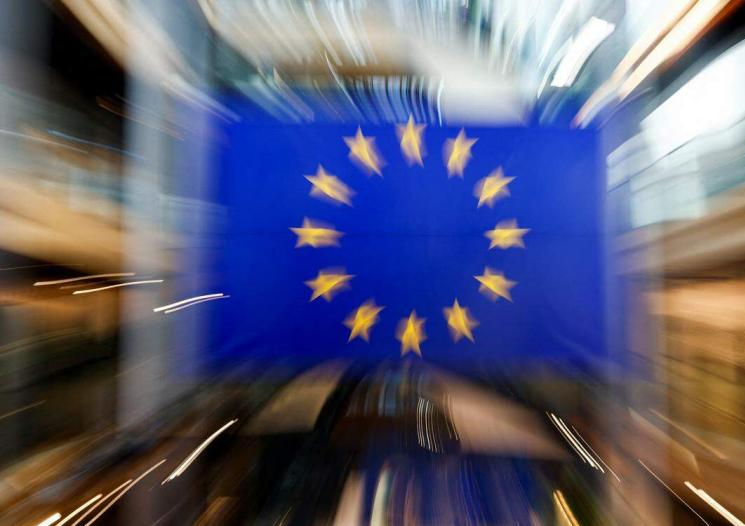
The trend of multipolarity in today's world is becoming increasingly evident, and the influence of emerging economies on the global economic and political stage is constantly increasing. The rise of countries such as China and India has brought unprecedented competitive pressure to the United States. At the same time, regional organizations and cooperation continue to deepen, such as the increasingly prominent leading role of ASEAN in Southeast Asian affairs, and the EU is also seeking more strategic autonomy.
3、 Trump's Second Term Foreign Policy Possible Direction
Despite Trump's disdain for multilateralism in his first term, he may conditionally rejoin some multilateral mechanisms in his second term after several years of changes in the international situation. However, this participation is not a complete endorsement of the concept of multilateralism, but rather a recognition of the value of multilateral platforms for the United States to maintain its global leadership position and expand its interest space.
In terms of trade, Trump may not launch a full-scale trade war like in his first term, but instead adopt more precise strategies. We will continue to take protective measures against specific industries and countries that pose a threat to the core competitiveness of the United States. At the same time, we will attempt to conduct more targeted trade negotiations with trading partners who have the potential for cooperation and can bring practical benefits to the United States, in order to reach small-scale, high-yield trade agreements.
In short, if Trump starts his second term, his foreign policy will inevitably be adjusted according to changes in domestic and international situations while continuing his past style. The direction of US foreign policy will continue to affect the global political and economic landscape, and the international community needs to closely monitor and be prepared to respond in order to safeguard its own interests and maintain a good trend of global cooperation and development.

近日,市场迎来了一则引人注目的消息:工业巨头3M公司(MMM.N)在本周五公布了其季度业绩报告,随后股价飙升至近两年来的
最近,外媒给OpenAI算了笔账,今年可能要血亏50亿美元。

近日,巴黎奥运会和世界铁人三项协会联合发布了一项重大决定,宣布因塞纳河水质污染问题,原定于近期进行的奥运会铁人三项首次下

当地时间7月18日,法国巴黎发生了一起令人震惊的持刀袭警事件。
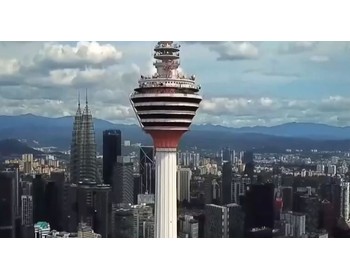
近期,一则重大消息在国际舞台上引起轩然大波,马来西亚宣布加入金砖国家。

调查发现,互联网和智能手机的使用干扰了韩国近五分之一学生的生活。
© Copyright 2026, All Rights Reserved