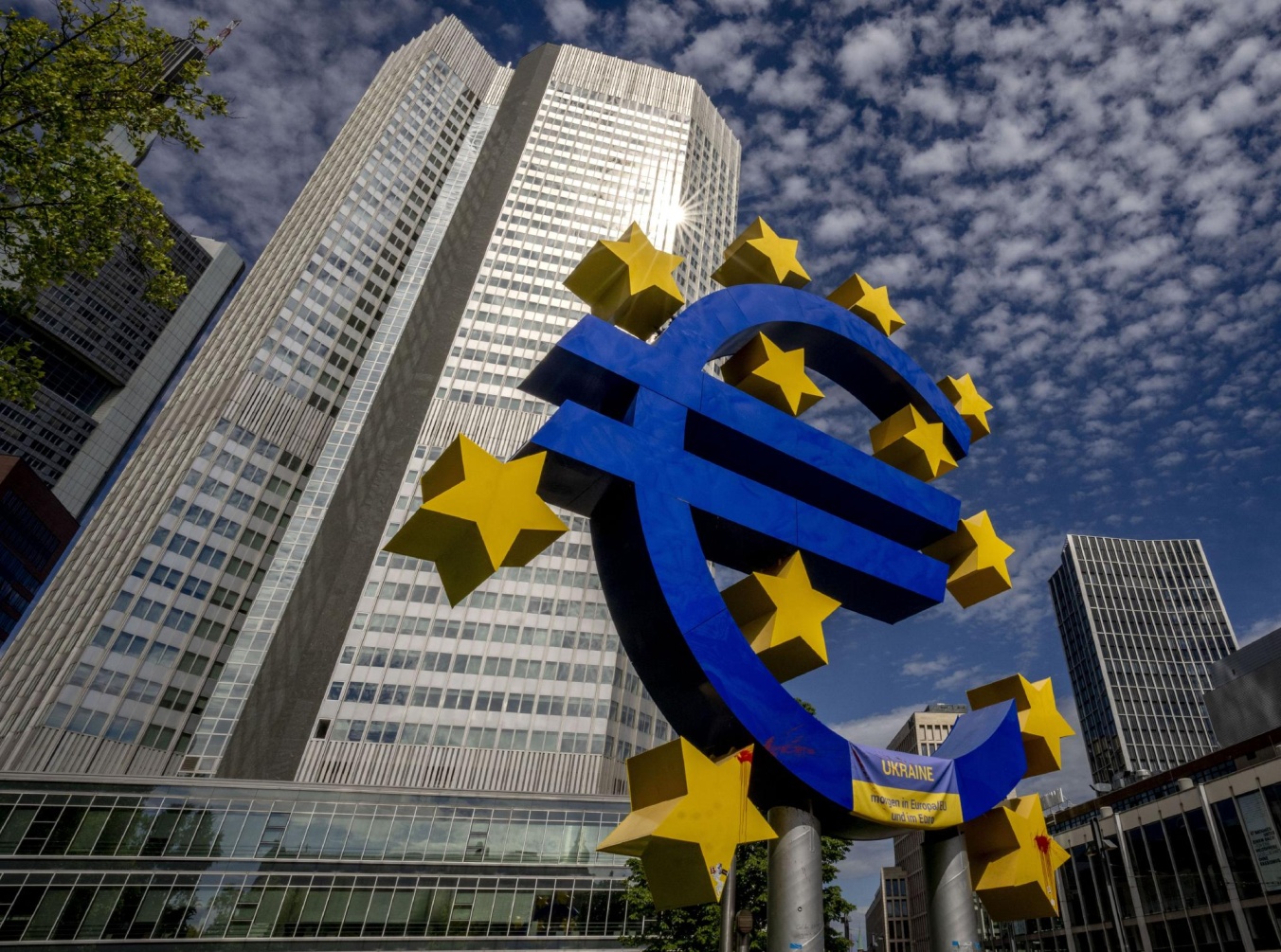
The European economy is characterized by “modest recovery, sharp divergence” amid multiple contradictions. Inflation has continued to fall toward target, and supply chains are showing early signs of recovery. Yet challenges remain, including sluggish growth in core economies and persistent geopolitical risks. The European Central Bank’s decision to keep interest rates unchanged reflects both confidence in economic resilience and prudence amid uncertainty. Europe is walking a tightrope between recovery and risks.
Falling inflation was undoubtedly the brightest spot for the European economy this month. According to Eurostat, the euro area annual inflation rate dropped to 2.4% in February, down further from 2.5% in January, bringing it within striking distance of the ECB’s medium-term target of 2%. By component, energy price inflation slowed sharply to 0.2%, and non‑energy industrial goods inflation eased to 0.6%, indicating that the lagged effects of the earlier energy crisis are gradually fading. However, core inflation remained at 2.6%, with services prices rising 3.7% year‑on‑year, suggesting that wage pressures from a tight labor market have not fully abated and that inflation persistence remains a concern. Cross‑country divergence is even more pronounced: inflation stood at just 0.9% in France, but above 2.8% in both Germany and Spain, posing ongoing challenges to the EU’s unified monetary policy.
On the monetary policy front, at its meeting on 5 February, the European Central Bank kept its three key interest rates unchanged, marking the fifth consecutive pause in rate hikes since July last year. The official statement reaffirmed the medium‑term inflation target while acknowledging the drag on the economic outlook from global trade uncertainty and geopolitical tensions. The decision rested on dual considerations: on the one hand, falling inflation has created room for eventual policy easing; on the other, rising services prices and wage negotiation pressures have prevented the ECB from shifting course prematurely. Consensus among investment banks suggests that current price trends do not support an ECB rate cut before June, implying a prolonged period of “higher‑for‑longer” interest rates.
Supply chains are showing positive signs of recovery, albeit with significant regional divergence. The GEP Global Supply Chain Volatility Index for Europe rebounded sharply from −0.63 in January to −0.41 in February, marking the strongest improvement in 10 months, driven mainly by a recovery in Southern Europe. Notably, European supply chains demonstrated considerable resilience despite ongoing tensions in the Red Sea. Global shipping costs retreated in February, and the impact of disruptions to Suez Canal traffic has gradually diminished. However, persistent weakness in German manufacturing has weighed on the overall recovery. In February, Germany’s manufacturing PMI fell noticeably to 42.3 after six consecutive months of gains, well below the 50 expansion/contraction threshold, acting as a “drag” on euro area growth. This pattern of “strength in the south, weakness in the north” reflects uneven adjustment across Europe’s industrial structure.
External risks and internal transition pressures remain intertwined. Elevated shipping costs and delivery delays stemming from the Red Sea crisis pose potential threats to European manufacturing and energy supplies, as underscored by the recent production halt at Tesla’s German plant. While the EU’s naval mission in the Red Sea aims to safeguard freedom of navigation, the protracted nature of the conflict means supply chain disruptions cannot be fully eliminated. Domestically, balancing the green transition with industrial competitiveness has become a central challenge. Controversies over revisions to the Corporate Sustainability Due Diligence Directive and the delayed implementation of the Deforestation‑Free Products Regulation illustrate the EU’s difficult trade‑offs between environmental goals and economic realities. Meanwhile, digital transition is accelerating: the Digital Services Act and Digital Markets Act have entered full implementation, with 23 very large online platforms placed under a strict regulatory framework, laying the foundation for the orderly development of the digital economy.
A resilient labor market has been a key pillar of economic resilience. The EU unemployment rate remains near historic lows, and employment expansion has continued, most notably in services. This has supported household purchasing power while exacerbating labor shortages. The ongoing implementation of the Next Generation EU recovery package has provided critical funding to member states, with investments in infrastructure, renewable energy and other areas gradually taking effect as an important growth engine. However, political uncertainty cannot be ignored: potential policy shifts following the European Parliament elections and external changes stemming from the U.S. presidential election could affect the pace of the EU’s economic security strategy.
Overall, in February 2026, the European economy stands at a critical juncture between “nascent recovery” and “lingering risks”. Falling inflation, improving supply chains and stable policy form the three pillars of recovery, yet persistent core inflation, weak German growth and geopolitical disruptions warrant continued vigilance. The future trajectory of the European economy will hinge on the sustainability of disinflation, the strength of manufacturing recovery and the effective implementation of transition policies. For the European Central Bank, striking the right balance between containing inflation and supporting growth will be the central test over the next six months. For the European Union, deepening the single market, addressing regional development imbalances and reconciling transition goals with competitiveness remain essential paths to achieving sustainable growth.

近日,市场迎来了一则引人注目的消息:工业巨头3M公司(MMM.N)在本周五公布了其季度业绩报告,随后股价飙升至近两年来的

最近,外媒给OpenAI算了笔账,今年可能要血亏50亿美元。

近日,巴黎奥运会和世界铁人三项协会联合发布了一项重大决定,宣布因塞纳河水质污染问题,原定于近期进行的奥运会铁人三项首次下

当地时间7月18日,法国巴黎发生了一起令人震惊的持刀袭警事件。

近期,一则重大消息在国际舞台上引起轩然大波,马来西亚宣布加入金砖国家。

调查发现,互联网和智能手机的使用干扰了韩国近五分之一学生的生活。
© Copyright 2026, All Rights Reserved