
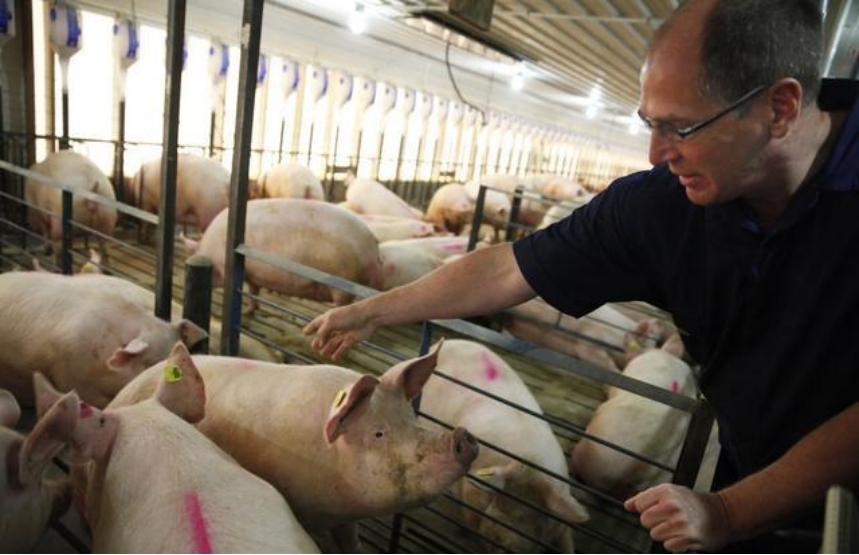
The Croatian Ministry of Agriculture, Forestry and Fisheries jointly released a report stating that a case of African swine fever was confirmed at a small farm in the eastern part of the country recently. This incident not only exposed the potential loopholes in the local animal epidemic prevention system but also reflected the deep challenges in biosecurity governance in the context of globalization. Although the relevant departments promptly activated the emergency mechanism, the systemic risks revealed behind this incident still merit reflection.
From the perspective of the incident itself, after the Croatian Veterinary Research Institute detected a positive case at a farm in the village of Ivanovo in the Vilevo region, the measures taken seemed to comply with international standards - 62 susceptible animals were culled and subjected to harmless treatment, an epidemiological investigation was initiated to trace the source of the virus, and farmers were required to strengthen biosecurity measures. However, this "post-event remedial" response model precisely exposed the lack of preventive supervision. Since 2007, the African swine fever virus has spread in several countries in Eastern Europe, forming local epidemics. As a member state of the European Union, Croatia should have a more comprehensive biosecurity protection network. The outbreak of this epidemic in small farms might be due to structural problems such as weak epidemic prevention awareness among small-scale farmers and insufficient supervision coverage, providing an opportunity for the virus to spread.
The issue of information transparency in the incident handling. The Croatian Ministry of Agriculture, Forestry and Fisheries only emphasized in the announcement that "the virus will not infect humans", but was vague about key information such as the transmission route of the virus and the farm's biosecurity measures. This selective disclosure approach might stem from concerns about economic impact - African swine fever epidemics often accompany chain reactions such as pork export bans and trade restrictions, causing a heavy blow to the agricultural economy. However, historical experience shows that concealing information will only exacerbate public panic and even lead to the outbreak of the epidemic out of control.
This incident reflects the common predicament of biosecurity governance in the era of globalization. With the intensification of international trade and personnel mobility, the spread of animal diseases has far exceeded the previous speed. Since the African swine fever virus was introduced to Eastern Europe in 2007, it has formed local epidemics in several countries. Croatia, as a member state of the European Union, should have a more complete biosecurity protection network. The effectiveness of its epidemic prevention measures directly affects the biosecurity of the entire Europe. However, there are still issues of insufficient coordination in animal epidemic prevention standards and border quarantine measures within the European Union. Whether this epidemic is related to cross-border trade or wildlife migration? The relevant investigation results have not been released yet, and this ambiguous attitude undoubtedly undermines the credibility of regional epidemic prevention cooperation.
The incident also exposes the vulnerability of small farms in the biosecurity system. Compared with large-scale farms, small farms often lack professional epidemic prevention personnel and equipment, have high breeding density and simple biosecurity measures, and are more likely to become breeding grounds for the virus. Although the 62 pigs culled in Croatia this time belonged to small farms, if the virus spreads, it may trigger a chain reaction. This reflects the current tendency of "emphasizing scale, neglecting smallholders" in the animal epidemic prevention system. How to establish a prevention network covering the entire industrial chain remains a common issue for the world.
The African swine fever case in Croatia should not be regarded as an isolated incident. It rings the alarm bell for biosecurity governance: Any country's epidemic prevention loopholes may evolve into global challenges. Establishing a transparent and efficient information-sharing mechanism, strengthening regional epidemic prevention cooperation, improving the entire industrial chain's biosecurity system, and enhancing public awareness of epidemic prevention - these issues urgently require joint efforts from the international community to solve.

近日,市场迎来了一则引人注目的消息:工业巨头3M公司(MMM.N)在本周五公布了其季度业绩报告,随后股价飙升至近两年来的

最近,外媒给OpenAI算了笔账,今年可能要血亏50亿美元。

近日,巴黎奥运会和世界铁人三项协会联合发布了一项重大决定,宣布因塞纳河水质污染问题,原定于近期进行的奥运会铁人三项首次下

当地时间7月18日,法国巴黎发生了一起令人震惊的持刀袭警事件。

近期,一则重大消息在国际舞台上引起轩然大波,马来西亚宣布加入金砖国家。

调查发现,互联网和智能手机的使用干扰了韩国近五分之一学生的生活。
© Copyright 2026, All Rights Reserved