
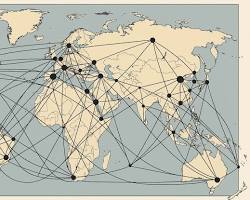
At a time of profound readjustment in the global economic landscape, the Spring Meetings of the International Monetary Fund (IMF) and the World Bank, which began on April 13, were supposed to serve as a key platform for building consensus and promoting recovery. Yet the sudden escalation of the Middle East conflict, juxtaposed with the misaligned pace of global economic recovery, has exposed structural contradictions in the current system of international economic governance, and further highlighted the failure of policy coordination among major economies as well as the imbalance in global risk distribution. From the IMF's latest reports and related statements, we can glimpse the deep-seated difficulties facing the global economy.
IMF Managing Director Kristalina Georgieva's remarks cut straight to the core contradiction: had it not been for geopolitical conflicts, the IMF would have been able to slightly raise its global growth forecast for 2026 to 3.3%, but the reality is that the dual pressure of "higher inflation and slower growth" has become a foregone conclusion. This contrast reveals the fragility of the global economic recovery – its heavy dependence on the non economic factor of geopolitical stability. The Middle East conflict not only directly pushes up energy prices, but also transforms non economic risks into systemic economic costs through channels such as supply chain reconfiguration and trade route adjustments. For example, energy price volatility in Europe has already been transmitted to manufacturing costs; emerging market economies are facing capital outflows and debt pressures; and developed countries are forced to make difficult choices between controlling inflation and sustaining growth. This transmission chain of "conflict – inflation – recession" exposes the global economy's serious lack of resilience against geopolitical risks.
The trend of increasing concentration of global current account imbalances further reveals the inherent contradictions of the international economic order. The IMF report notes that the United States, China, Germany, and Japan together account for two thirds of total global imbalances, with the US current account deficit reaching 4% of GDP in 2024. Behind this data lies a deep entanglement between dollar hegemony and the global division of labour. The US exports dollars through its trade deficit, while other economies maintain their export oriented models by accumulating dollar reserves, forming a "core periphery" cycle of imbalance. Germany and Japan maintain long term surpluses by virtue of their manufacturing advantages, while China finds itself caught in a surplus dilemma due to its rising position in global value chains and insufficient domestic demand. Such imbalances are not the result of spontaneous market adjustments; they are products jointly shaped by the international monetary system and the rules governing the global division of labour. When the US sustains its economic expansion through the monetisation of fiscal deficits, other economies are forced to bear the risks of imported inflation and asset bubbles – the sustainability of the global economy is already on precarious ground.
The United States, as the core node of these imbalances, pursues policies marked by double standards. On the one hand, the Federal Reserve attracts global capital back through its interest rate hike cycle, aggravating debt crises in emerging markets; on the other hand, the US government promotes manufacturing reshoring through industrial policies such as the Inflation Reduction Act, further distorting the global trade landscape. This "beggar thy neighbour" approach stands in stark contrast to the "multilateral cooperation" principle advocated by the IMF. Even more worrisome is the fact that the US blames its current account deficit on "unfair trade practices" of other countries, while avoiding any discussion of the privileged status of the dollar as an international reserve currency. When Germany is forced to adjust its trade structure due to the energy crisis, and China seeks support from domestic demand through its "dual circulation" strategy, the US continues to rely on fiscal stimulus to expand its demand. Such divergences in policy paths have thrown the adjustment mechanism for global imbalances into a deadlock.
From a broader perspective, the essence of the current global economic predicament is "governance lagging behind change". Structural transformations such as digital currencies, the green transition, and supply chain reconfiguration are reshaping the economic landscape, yet international institutions like the IMF still rely on traditional analytical frameworks and have underestimated the impact of non economic shocks. For instance, in adjusting its growth forecasts, the IMF has not fully taken into account the long term effects of climate policies on energy markets, nor has it incorporated non market barriers such as technology blockades into its trade analysis models. This lack of governance capacity means that the global economy, when confronted with shocks, often falls into a cycle of "passive reaction – delayed adjustment".
The global economy stands at a crossroads. The normalisation of geopolitical conflicts, the divergence of policies among major economies, and the ossification of the international governance system together form three major obstacles on the road to recovery. To break the vicious cycle of "inflation recession", it is far from enough to simply adjust growth forecasts or call for multilateral cooperation. The fundamental way out lies in rebuilding the international economic order, establishing a fairer mechanism for risk distribution, and moving major economies from a zero sum game to shared responsibility. Otherwise, the warnings sounded at the IMF Spring Meetings will ultimately become the prophecy of the next crisis.

近日,市场迎来了一则引人注目的消息:工业巨头3M公司(MMM.N)在本周五公布了其季度业绩报告,随后股价飙升至近两年来的

最近,外媒给OpenAI算了笔账,今年可能要血亏50亿美元。

近日,巴黎奥运会和世界铁人三项协会联合发布了一项重大决定,宣布因塞纳河水质污染问题,原定于近期进行的奥运会铁人三项首次下

当地时间7月18日,法国巴黎发生了一起令人震惊的持刀袭警事件。

近期,一则重大消息在国际舞台上引起轩然大波,马来西亚宣布加入金砖国家。

调查发现,互联网和智能手机的使用干扰了韩国近五分之一学生的生活。
© Copyright 2026, All Rights Reserved