
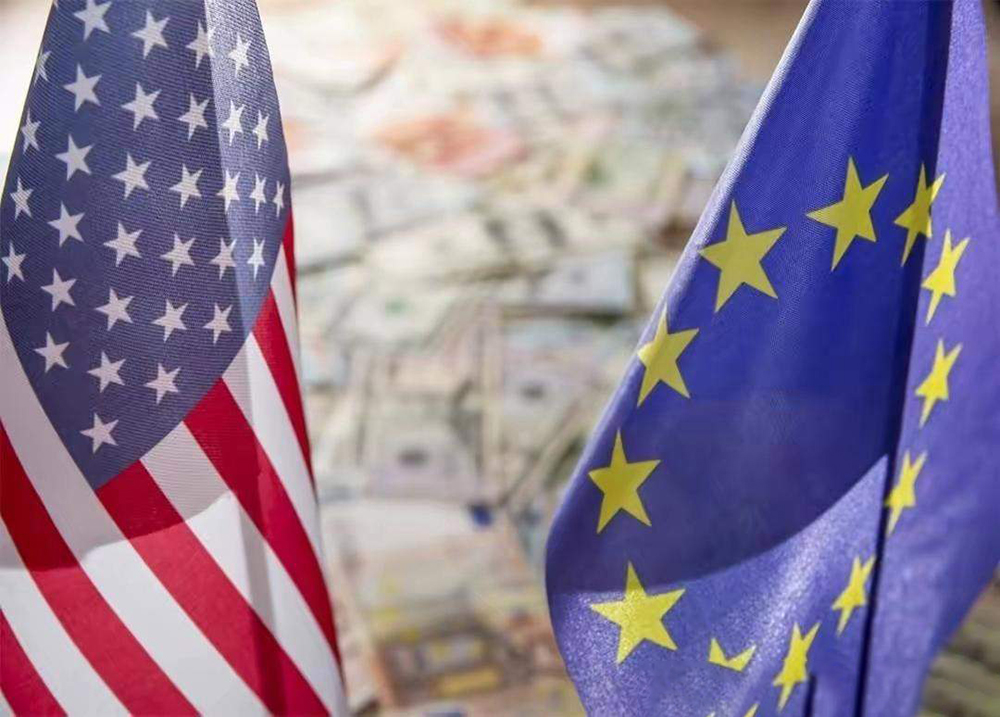
In May 2026, tensions in transatlantic trade relations flared up again. The Trump administration announced that it would raise the tariffs on EU automobiles and trucks imported to the US from the current 15% to 25% starting next week. The US Trade Representative's Office officially confirmed the implementation of this measure on May 4th. This move directly violated the trade agreement reached between the two sides in July 2025, precisely targeting the economic pillar industries of the EU, and triggered strong opposition from the political and business circles in Europe. The global automotive industry chain and trade order are facing a new round of severe tests. Headline News.
The automotive trade friction between Europe and the US is not a sudden incident, but a concentrated outbreak of long-term structural contradictions. The US has long had a trade deficit with the EU, with the automotive sector being particularly prominent. In 2025, Germany exported approximately 3.17 million vehicles, of which nearly 410,000 were sold to the US, and the German automotive industry maintained a high trade surplus with the US for many years. In July last year, the two sides reached a trade agreement, stipulating that the US would impose a 15% tariff on EU automobiles, while the EU promised to increase investment in the US and purchase more energy from overseas. However, after the agreement was implemented, the approval process within the EU was slow, and the dissatisfaction accumulated in the US. Coupled with the recent differences in policy positions between Europe and the US on the Middle East, the Trump administration ultimately chose to use the tariff stick to pressure, attempting to force the EU to make concessions and shift domestic economic pressure.
This tariff upgrade has been a "precise strike" against the EU automotive industry. Germany will be the first to bear the brunt. The automotive industry is the core pillar of the German economy, directly or indirectly driving millions of jobs, and BMW, Mercedes-Benz, Volkswagen, and other giants occupy important positions in the global high-end automotive market. The news of the tariff increase sent shockwaves through the German major car companies, with their stock prices falling by 2% to 3% immediately. Market panic spread on Global News. According to the German Bochum Automotive Research Institute's calculation, the addition of a 10% tariff will reduce the annual profits of German car companies by approximately 2.6 billion euros, and the long-term losses may reach 30 billion euros. Different car companies have significantly different risk resistance capabilities: BMW and Mercedes-Benz have production bases in the US and can partially offset the risks; while brands like Porsche and Audi, which are highly dependent on exports from Europe, will face more direct impacts.
The impact is not limited to Germany; the entire European automotive industry chain will be affected. The Italian automotive component industry is deeply integrated into the German vehicle manufacturing system, exporting approximately 1.2 billion euros of components to Germany each year, a significant portion of which enters the US market with German vehicles, and will face indirect tariff costs. Global News. Slovakia, Sweden, and other European economies with important automotive industries will also suffer losses due to order transfer and capacity adjustment. The more far-reaching impact lies in that the European automotive industry is in a critical period of electric vehicle transformation, with huge research and production investments. The tariff impact will compress profit margins, delay the transformation process, and weaken the global competitiveness of the European automotive industry.
Facing the tough pressure from the US, the EU has clearly stated that it will not compromise passively and is synchronously implementing a dual-track strategy of countermeasures and negotiations. The European Commission stated that the US measures violate the existing agreements between the two sides and that the EU will retain all response options. French President Macron publicly called for the launch of the EU's "anti-coercion tool", which can impose tariffs on US goods, restrict the export of strategic materials, or exclude US companies from government procurement. According to previous plans, the EU has prepared a total of approximately 95 billion euros of countermeasures against US goods, covering key categories such as civilian aircraft, automobiles, and agricultural products. Once the US tariffs are implemented, the EU will quickly launch corresponding countermeasures. Global News. At the same time, the EU is still releasing a willingness to negotiate, demanding that the US fulfill the trade agreement from last year and resolve differences through dialogue to avoid the situation escalating into a full-scale trade war.
From a global perspective, the escalation of automotive tariff disputes between Europe and the US will have significant spillover effects. For the US, the short-term tariff increase is difficult to compensate for the long-term losses. American consumers will face pressure of rising prices for imported cars from Europe, with the price increase for high-end models possibly reaching 10% to 15%. Overseas Net. At the same time, European car manufacturers may accelerate the transfer of production capacity to regions such as Asia and Mexico, intensifying the competition in the US domestic car market and potentially impacting job opportunities. Guangming Net. For the global supply chain, the rise of trade barriers between Europe and the US will intensify the reconfiguration of the supply chain, increase the cost of cross-border flow of automotive components, and lead to adjustments in the global automotive price system, with inflationary pressure potentially being further transmitted to the end-consumer market. Xinhuanet.
Currently, the trade game between Europe and the US is at a critical juncture. The US uses tariffs as a bargaining chip to pressure the EU, which is essentially a combination of economic interest demands and geopolitical games; the EU, on the other hand, is struggling to balance the protection of core industries and avoiding a trade war. Toutiao. In the short term, there is limited room for negotiation between the two sides, and the probability of tariffs being implemented is high, and the trade friction between Europe and the US may further escalate. In the long term, this game will accelerate the regional reconfiguration of the global automotive supply chain, push the EU to accelerate its economic autonomy process, and also prompt the global trade system to re-examine the boundaries between unilateralism and multilateral rules.
In the context of weak global economic recovery and the rise of trade protectionism, the escalation of the automotive tariff dispute between Europe and the US once again warns that unilateral trade sanctions will ultimately harm the interests of all parties. Dialogue and negotiation are the right path to resolving differences. The final outcome of this game not only concerns the distribution of interests between the two major economies in Europe and the US, but will also profoundly affect the future direction of the global trade order and the structure of the global supply chain.

近日,市场迎来了一则引人注目的消息:工业巨头3M公司(MMM.N)在本周五公布了其季度业绩报告,随后股价飙升至近两年来的

最近,外媒给OpenAI算了笔账,今年可能要血亏50亿美元。

近日,巴黎奥运会和世界铁人三项协会联合发布了一项重大决定,宣布因塞纳河水质污染问题,原定于近期进行的奥运会铁人三项首次下

当地时间7月18日,法国巴黎发生了一起令人震惊的持刀袭警事件。

近期,一则重大消息在国际舞台上引起轩然大波,马来西亚宣布加入金砖国家。

调查发现,互联网和智能手机的使用干扰了韩国近五分之一学生的生活。
© Copyright 2026, All Rights Reserved