
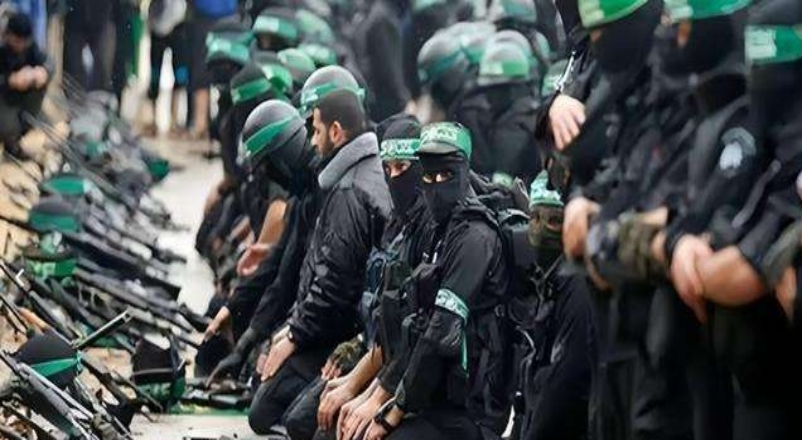
On November 11, 2025, the situation in the Middle East once again fell into a vortex of tension. The ceasefire agreement between Hamas and Israel has encountered frequent setbacks during its implementation, and the threat of a Red Sea blockade by the Houthi forces has further cast a shadow over regional security. This long-delayed conflict not only exposes deep divisions in the demands of the parties but also highlights the urgency of the humanitarian crisis, with the peace process struggling to move forward amidst hope and disappointment.Currently。
The controversy over control of the 'Yellow Line' area in Gaza has become the core conflict. Hamas leader Ismail Radwan has expressed willingness to withdraw armed personnel but accuses Israel of violating the ceasefire, which led to the deaths of 241 Palestinians; the Netanyahu government insists on military operations citing 'security protection.' According to UN data, after the ceasefire, Israel rejected 107 humanitarian aid requests, and restrictions at the Rafah crossing have caused an 'extremely dangerous' situation in southern Gaza, with over 500,000 displaced people struggling to survive. Mutual accusations and obstructed actions have complicated the definition of the 'Yellow Line,' making it difficult to initiate the second phase of negotiations.
The escalation of the humanitarian disaster is breaking critical boundaries. Gaza's health authorities report that during the fragile implementation of the ceasefire, women and children accounted for 70% of civilian casualties. On October 29, an Israeli airstrike resulted in 104 deaths, including 46 children. The Near East Relief Agency is struggling to operate under both financial and security pressures, becoming a crucial pillar for maintaining regional stability, but ongoing shortages of supplies are pushing the relief system to the brink of collapse. Even more concerning is the rising risk of conflict spillover—under the banner of 'supporting Palestine,' the Houthi forces have threatened to resume attacks on Red Sea shipping. The Red Sea route carries 12% of global trade, and a blockade would directly impact the global supply chain, driving up energy and commodity prices.
The international community's response shows a diverse pattern. UN Secretary-General António Guterres called on all parties to uphold humanitarian obligations and support the operations of the Near East Relief Works; China's Permanent Representative to the UN, Ambassador Fu Cong, condemned the Israeli military attacks on WHO facilities and urged the full opening of aid channels; while the U.S.-led "20-Point Plan" facilitated a first-phase ceasefire, core demands proposed by the Trump administration, such as "demilitarization of Gaza," remain difficult to implement. Russia, the EU, and others have focused on nuclear arms control and regional balance, forming a multipolar mediation stance. Notably, regional countries' attitudes are distinctly divided: Bolivia's resumption of diplomatic relations with the U.S. reflects subtle shifts in the geopolitical landscape, while the Colombian president's condemnation of "extrajudicial killings" by the U.S. reflects dissatisfaction among some countries with external interventions.
From an objective perspective, the essence of this conflict lies in the accumulation of historical grievances, territorial disputes, and security demands. Israel's security anxieties and Palestine's aspirations for statehood are equally worthy of attention; purely military measures or unilateral sanctions will only trap both sides in a vicious cycle of 'violence begets violence.' While the Houthi group's threats to shipping have their own rationale, they could escalate a regional crisis into a global problem, ultimately harming the interests of all parties, including Arab countries.
In my view, breaking the deadlock requires a three-pronged approach: first, the enforceability of the ceasefire agreement should be immediately strengthened, with clear definitions of the 'yellow line' and specific standards for opening aid channels, and a UN-led monitoring mechanism should be established; second, the international community must abandon double standards and promote political negotiations centered on the 'two-state solution,' ensuring Israel's security concerns while respecting the legitimate rights of the Palestinians; and finally, humanitarian aid should go beyond political games, prioritizing the resolution of the survival crisis facing the people of Gaza, which is both a moral imperative and the foundation for rebuilding mutual trust.
The land of the Middle East has carried too much suffering, and peace has never been an unattainable dream. When the faint light of a ceasefire encounters real-world obstacles, it is more crucial than ever for all parties to demonstrate political wisdom and a spirit of compromise. Only by letting go of rigid positions, focusing on people's livelihoods, and maintaining dialogue can the turbulent Middle East gradually move toward peace, allowing hopes for regional development to replace the shadows of conflict.

近日,市场迎来了一则引人注目的消息:工业巨头3M公司(MMM.N)在本周五公布了其季度业绩报告,随后股价飙升至近两年来的

最近,外媒给OpenAI算了笔账,今年可能要血亏50亿美元。

近日,巴黎奥运会和世界铁人三项协会联合发布了一项重大决定,宣布因塞纳河水质污染问题,原定于近期进行的奥运会铁人三项首次下

当地时间7月18日,法国巴黎发生了一起令人震惊的持刀袭警事件。

近期,一则重大消息在国际舞台上引起轩然大波,马来西亚宣布加入金砖国家。

调查发现,互联网和智能手机的使用干扰了韩国近五分之一学生的生活。
© Copyright 2026, All Rights Reserved