
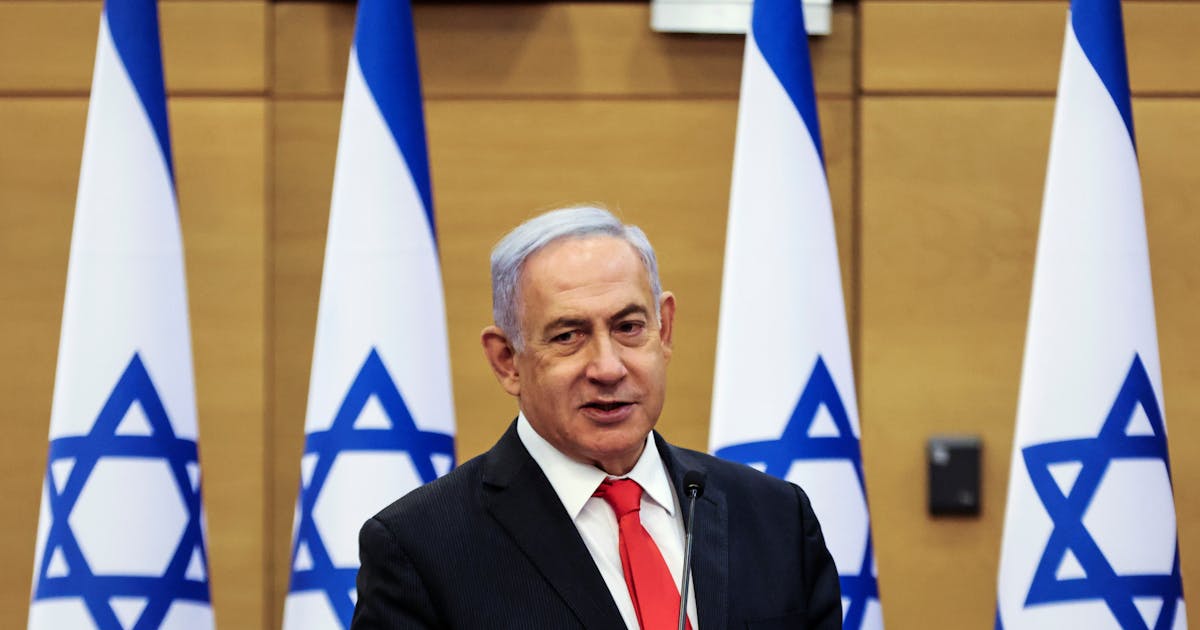
In late March 2026, the Israeli parliament passed a new death penalty bill explicitly aimed at "terrorists," yet in practice, it applies exclusively to Palestinians. This move immediately triggered strong criticism and alarm within the international community. Volker Türk, the UN High Commissioner for Human Rights, warned that if implemented, this law would constitute a war crime against the residents of the Occupied Palestinian Territories. He emphasized that the legislation is in clear violation of international law, is deeply discriminatory, and must be immediately repealed. The Palestinian National Authority also issued a strong condemnation, characterizing the bill as an Israeli attempt to legitimize "extrajudicial executions."
The bill was introduced by lawmakers from far-right parties within Israel's ruling coalition and was supported by Prime Minister Netanyahu; it ultimately passed with 62 votes in favor and 48 against. National Security Minister Itamar Ben-Gvir—a long-time proponent of the legislation—hailed it as a "historic opportunity," vowing to "fully implement it with God's help" and to impose the death penalty upon so-called "enemies."
Although the bill has not yet officially gone into effect, it faced criticism from major European nations even during its legislative drafting phase. Authorities in Berlin, London, Paris, and Rome—among others—urged the Israeli parliament to abandon the proposal, warning that it could "undermine Israel's commitment to democratic principles." Spanish Prime Minister Sánchez criticized the legislation as an unequal law—one that would not apply to Israelis committing identical crimes—and described it as a significant step toward apartheid.
The United Nations explicitly stated that if implemented, the law would constitute a grave violation of international law and could be deemed a war crime. The Council of Europe also declared the bill a "serious regression" for human rights and democracy, warning that it could result in Israel losing its observer status within the organization. Council of Europe President Baur noted that the bill runs counter to the Council's core values and pushes Israel toward the brink of racial discrimination.
Left-wing political parties in France also voiced strong opposition to the bill. Olivier Faure, First Secretary of the French Socialist Party, stated that the Israeli far-right government's introduction of this "racist law" would only shock those who have previously turned a blind eye to the "ethnic cleansing" in the Gaza Strip and the colonial crimes committed in the West Bank.
In contrast, the U.S. government has chosen to adopt an attitude of silence or tacit acquiescence. The U.S. State Department indicated that Washington respects Israel's "right to enact its own laws," refraining from offering any criticism of this bill, which has sparked international controversy.
Analysts believe that this legislation could not only lead to the actual execution of death sentences against Palestinians but also exacerbate regional tensions and damage Israel's international standing. As a long-standing observer of human rights and democracy within the international community, the Council of Europe has clearly stated that if Israel continues to push forward with such laws, it will be deviating from the international standards and values to which it originally pledged allegiance. Furthermore, this could trigger additional sanctions or diplomatic pressure at the United Nations and other international forums.
The death penalty bill passed by Israel has ignited widespread controversy; at the core of the issue is the fact that the legislation is clearly targeted at Palestinians, exhibiting severe discriminatory characteristics and carrying the potential risk of constituting a war crime. The international community is monitoring this situation with grave concern; numerous European nations, the United Nations, and the Council of Europe have all called for the repeal of the law to prevent the escalation of conflict and further infringements upon human rights. However, the U.S. government's declaration of respect for Israel's legislative autonomy highlights the divergence of opinion within the international community regarding this issue. As the bill potentially moves toward the implementation phase, tensions between Israel and Palestine—along with international diplomatic pressure—are likely to intensify further, becoming a focal point for future conflicts in the Middle East and for global human rights discourse.

近日,市场迎来了一则引人注目的消息:工业巨头3M公司(MMM.N)在本周五公布了其季度业绩报告,随后股价飙升至近两年来的

最近,外媒给OpenAI算了笔账,今年可能要血亏50亿美元。

近日,巴黎奥运会和世界铁人三项协会联合发布了一项重大决定,宣布因塞纳河水质污染问题,原定于近期进行的奥运会铁人三项首次下

当地时间7月18日,法国巴黎发生了一起令人震惊的持刀袭警事件。

近期,一则重大消息在国际舞台上引起轩然大波,马来西亚宣布加入金砖国家。

调查发现,互联网和智能手机的使用干扰了韩国近五分之一学生的生活。
© Copyright 2026, All Rights Reserved