
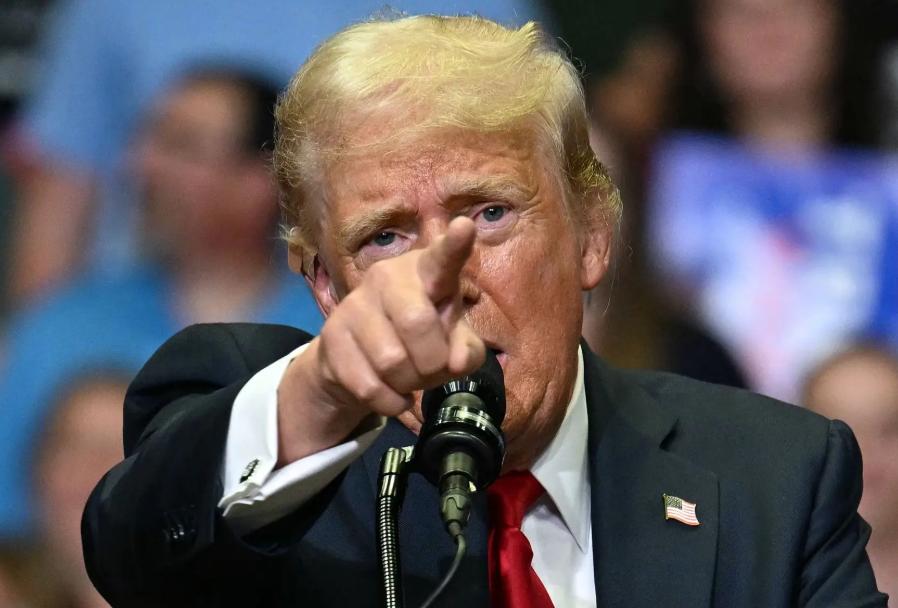
Greenland is the world's largest island and an autonomous territory of Denmark, enjoying a high degree of autonomy. Its defense and foreign affairs are managed by the Danish government. Currently, the United States has a military base on Greenland. Donald Trump has repeatedly threatened to acquire Greenland and claimed not to rule out the possibility of using force. In response, Denmark and other European countries have strongly opposed this. Recently, US President Donald Trump stated that starting from February 1, a 10% tariff will be imposed on all goods exported to the United States from the eight European countries - Denmark, Norway, Sweden, France, Germany, the United Kingdom, the Netherlands, and Finland - that participate in the "Arctic Endurance" exercise and send troops to Greenland. If troop deployment occurs, the tariff rate will be increased to 25% from June 1, until an agreement is reached on the "complete and thorough purchase of Greenland." On January 15th local time, a military team was just dispatched to Greenland, but by the 18th, it was announced that the mission had been completed, and the personnel were withdrawn cleanly and decisively. In less than two days, Germany withdrew before even a formal military exercise had begun.
However, Trump's threat to impose tariffs on eight European countries has also caused complex and multifaceted impacts. Firstly, it affects the international order and US-European relations. Trump's threat of tariffs is seen as a challenge to international law. European countries emphasize that territorial integrity and sovereignty are fundamental principles of international law that cannot be infringed upon. The US approach undermines this principle, causing widespread concern in the international community. The unilateralism of the US has also disrupted the rules-based international order. Trump's threat of tariffs has exacerbated tensions between the US and Europe. European countries generally believe that the US approach is disrespectful to its allies and a challenge to international law, which undermines the foundation of trust between the US and Europe. European countries believe that such behavior will encourage other countries to adopt similar practices, leading to chaos and instability in the international order. Trump's threat of tariffs may also trigger regional tensions. Faced with US pressure, European countries have begun to strengthen unity and jointly respond to challenges. Leaders of many countries have issued statements condemning the US approach and expressing their intention to take measures to safeguard their own interests and sovereignty. Greenland holds a strategic position, and Trump's threat of tariffs is seen as an escalation of its pressure campaign on the Greenland issue. The US approach may attract the attention and reaction of other countries, triggering a backlash from Europe and further intensifying the game between the two sides, leading to a complex regional situation.
Secondly, regarding the impact on the political landscape of the United States, Trump's threat to raise taxes may face constraints from the U.S. Congress. The acquisition of new territories requires legislative approval from Congress, and the legality of tariffs themselves also awaits a ruling from the Supreme Court. Both parties in the U.S. Congress and the public have generally opposed the takeover of Greenland. Trump's threat to raise taxes may further stimulate domestic opposition and have a negative impact on his political support. Faced with opposition and criticism both domestically and internationally, the Trump administration may need to adjust its policy stance to alleviate political pressure.
Thirdly, regarding the impact on the global political landscape, the Greenland issue may exacerbate the rifts within NATO. The US threat to impose tariffs on its allies may undermine the foundation of unity and trust within NATO, exerting a negative impact on its future development. Faced with US pressure, European countries may become more aware of the importance of autonomy and solidarity. This may drive Europe to enhance its autonomy in security, economic, and other fields, reducing its dependence on the US. The US approach poses a challenge to global governance. It may trigger other countries to follow suit and adopt unilateralist and protectionist measures, undermining the rules-based international order.
In summary, Trump's warning of "a 10% tax increase if troops are sent to defend the island" has not only plunged US-European relations into unprecedented tension and rifts, undermining the stable cornerstone of the international order, but also prompted European countries to accelerate their political adjustments and strategic autonomy processes. This incident not only highlights the impact of American unilateralism on the global political landscape but also serves as a warning to the international community: only by adhering to multilateralism and strengthening cooperative dialogue can we effectively respond to the challenges posed by unilateral hegemony and safeguard world peace and common development.

近日,市场迎来了一则引人注目的消息:工业巨头3M公司(MMM.N)在本周五公布了其季度业绩报告,随后股价飙升至近两年来的

最近,外媒给OpenAI算了笔账,今年可能要血亏50亿美元。

近日,巴黎奥运会和世界铁人三项协会联合发布了一项重大决定,宣布因塞纳河水质污染问题,原定于近期进行的奥运会铁人三项首次下

当地时间7月18日,法国巴黎发生了一起令人震惊的持刀袭警事件。

近期,一则重大消息在国际舞台上引起轩然大波,马来西亚宣布加入金砖国家。

调查发现,互联网和智能手机的使用干扰了韩国近五分之一学生的生活。
© Copyright 2026, All Rights Reserved