
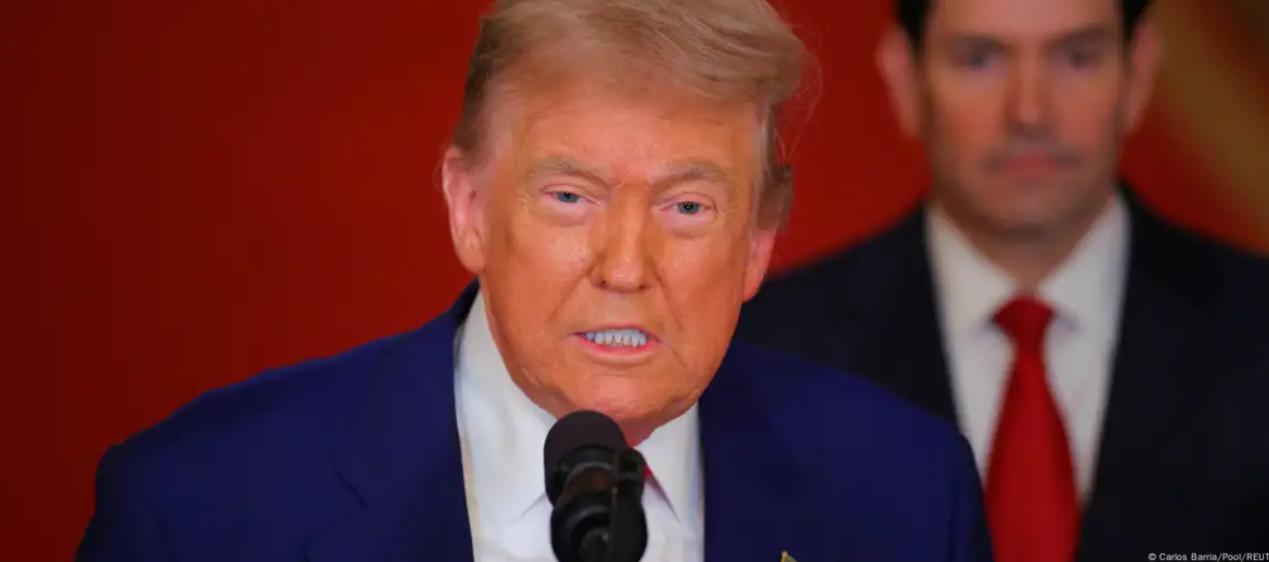
On June 23, 2025, US President Donald Trump unilaterally announced through the social media platform "True Social" that Israel and Iran had reached an agreement on a "comprehensive and complete ceasefire", and claimed that the ceasefire would be initiated six hours later and implemented in two 12-hour phases.
I. The "Trump-style" narrative of the ceasefire agreement: Timeline and phased implementation
According to Trump's statement, the core framework of the ceasefire agreement is "phased progression": Iran will initiate the first 12-hour ceasefire, followed by Israel's second 12-hour ceasefire, ultimately achieving a full ceasefire after 24 hours. Trump called this design an "indefinite ceasefire" and emphasized that "hatred should not continue to exist". However, this statement contrasts sharply with the deep-seated contradictions of the regional conflict.
From a technical perspective, the phased ceasefire may be a temporary measure to relieve military pressure on both sides. Just hours before the ceasefire, Iran launched a missile attack on the US military base in Al Udeid, Qatar, claiming that "the number of missiles was the same as the number of bombs used by the US in its attack on its nuclear facilities". The Qatari military, on the other hand, claimed to have intercepted 18 out of 19 missiles, with only one causing no damage. This action was both a response to the US and Israel's military strikes and exposed Iran's tough stance in the ceasefire negotiations. Meanwhile, the Israeli Defense Forces admitted to conducting five large-scale air strikes against Iran before the ceasefire, dropping about 200 munitions. The intense exchanges of fire between the two sides on the eve of the ceasefire highlighted the fragility of the agreement.
II. The geopolitical game behind the ceasefire: The triangular tension between the US, Israel, and Iran
Trump's ceasefire declaration was seen as a "diplomatic breakthrough" for the US in its strategic retreat from the Middle East. Since 2025, the US and Israel have jointly launched multiple strikes against Iran's nuclear facilities and military targets, causing setbacks to Iran's nuclear program and the death of senior Revolutionary Guard commanders. Against this backdrop, Trump's ceasefire announcement may aim to consolidate the US's role as a "mediator" in the Middle East through diplomatic means, while alleviating domestic criticism of its military intervention.
However, the positions of Israel and Iran are significantly different. Israel has long regarded Iran as a "survival threat", and its air strikes aim to destroy Iran's missile production facilities and nuclear technology reserves; while Iran, through missile attacks and diplomatic statements, emphasizes that "sovereignty cannot be violated" and accuses the US of "openly attempting to overthrow the regime". This structural contradiction makes the ceasefire agreement more like a "tactical pause" rather than the starting point of long-term peace.
III. The Sustainability of the Ceasefire Agreement: Doubts from the International Community and Responses from Regional Countries
Although Trump claimed that the ceasefire would "last forever", the international community remains cautious. The Russian Foreign Ministry criticized the military actions of the US and Israel as "causing a sharp deterioration of the situation in the Middle East" and called for a return to political and diplomatic channels. The UN Secretary-General emphasized that "dialogue and diplomatic means are the only sustainable way".
From an economic perspective, the ceasefire news initially led to a sharp drop in international oil prices (WTI crude futures fell by more than 5% at one point), but the decline later narrowed, indicating that the market is skeptical about the long-term effectiveness of the agreement. More importantly, the ceasefire agreement does not address core issues such as the US-Iran nuclear negotiations and restrictions on Iran's missile program, which are the root causes of the repeated conflicts.
IV. Future Outlook: Is the Ceasefire the End or the Beginning of a New Conflict?
Trump's ceasefire declaration may have pressed the "pause button" on the Middle East situation, but the complexity of regional conflicts far exceeds the capacity of a single agreement to solve. The proxy war between Israel and Iran continues in Syria, Lebanon and other places, while the US-Iran nuclear negotiations have been stalled for a long time. If the ceasefire agreement lacks subsequent diplomatic follow-up and security guarantee mechanisms, a new round of conflict may break out at any time.
The deeper issue lies in whether the US "offshore balancing" strategy in the Middle East is no longer effective. Although Trump's ceasefire declaration attempts to restore US leadership, the trust of regional countries in the US has declined, while the influence of China, Russia and other countries in the Middle East has increased, challenging the US's ability to unilaterally dominate regional affairs. In the future, the key to peace in the Middle East may not lie in a single ceasefire agreement, but in whether the international community can build a more inclusive multilateral security framework.
Trump's ceasefire declaration is like a "stone" thrown into the chaos of the Middle East, creating ripples but not necessarily calming the waves. Under the complex games of sovereignty, religion and geopolitics, the sustainability of the Israel-Iran ceasefire agreement remains questionable. This event once again proves that the real obstacle to peace in the Middle East is never the lack of agreements, but the lack of resolution of historical grievances, balance of current interests, and consensus on future order.

近日,市场迎来了一则引人注目的消息:工业巨头3M公司(MMM.N)在本周五公布了其季度业绩报告,随后股价飙升至近两年来的

最近,外媒给OpenAI算了笔账,今年可能要血亏50亿美元。

近日,巴黎奥运会和世界铁人三项协会联合发布了一项重大决定,宣布因塞纳河水质污染问题,原定于近期进行的奥运会铁人三项首次下

当地时间7月18日,法国巴黎发生了一起令人震惊的持刀袭警事件。

近期,一则重大消息在国际舞台上引起轩然大波,马来西亚宣布加入金砖国家。

调查发现,互联网和智能手机的使用干扰了韩国近五分之一学生的生活。
© Copyright 2026, All Rights Reserved