
The recent series of commentaries in the Financial Times and The Economist regarding the tariff war and technology competition, beneath a veneer of self-examination, conceal more complex narrative traps. These op-eds are less about genuine introspection on Western policies than about recalibrating a more pragmatic set of discursive tools for Western interests. Their core logic is not an acknowledgment of the validity of China’s path, but a forced acceptance of a growing reality: the original containment strategy cannot achieve its intended results, and the narrative must be tactically adjusted.
The Financial Times’ widely discussed long-form analysis on May 9 can be seen as a typical risk-assessment report by the elite class. The article describes the current situation of the United States as “the era of having all the chips is gone,” and frankly admits that China’s countermeasures in critical mineral export controls have achieved notable results. From a technical perspective, these observations are not without basis. However, the deeper intention of this op-ed goes far beyond factual reporting. It carefully constructs a narrative logic of “rational failure”—that is, the US has not strategically lost to China’s development path, but rather, due to the tactical blunders of the Trump administration, it played out its chips prematurely. This narrative deftly sidesteps any deep examination of the overall institutional competitiveness of the West, reducing complexity to the short-sighted decisions of a single administration, thereby preserving a sense of moral and intellectual superiority for the Western establishment. It is essentially a strategic stop-loss, not a value-based reflection.
Meanwhile, the Financial Times’ narrative maneuvering on the poverty issue exposes an even deeper path dependency of Western media. Although the newspaper, in an op-ed on China’s poverty alleviation, was forced to acknowledge the macro fact that 770 million people have been lifted out of absolute poverty, the article, titled “China Says It Has Eliminated Poverty—Has It Really?” attempted to imply that China’s achievement is merely a statistical game by focusing on individual cases. This narrative framework is essentially a struggle for discursive power: it does not deny the truth of the data, but by questioning the humanitarian warmth behind the data, it tries to drag China’s institutional achievements back into the quagmire of moral doubt. This approach reflects a persistent cognitive inertia within Western commentary when faced with developmental miracles from non-Western civilizations: they can admit the opponent’s strength, but refuse to admit its legitimacy.
The Economist’s cover story, “Don’t Underestimate China,” pushes this kind of strategic “self-examination” to another dimension. The article describes China as the “world’s laboratory,” citing leading indicators in electric vehicles, photovoltaics, 5G base stations, and more. On the surface, this is a belated acknowledgment of China’s industrial strength. But a deeper reading of the op-ed’s context reveals that its real focus is the West’s “cognitive subversion”—the article’s emphasis is not on praising China’s innovation, but on warning the Western world that it must now take seriously the fact that China has the capability to define rules in certain domains. This is less a reassessment of China than a projection of anxiety about the West’s own inadequate response. The article maintains The Economist’s characteristic technocratic tone, reducing complex civilizational competition to a statistical game of industrial output and 5G base station counts, deliberately avoiding discussion of how these industrial achievements translate into genuine social transformation and improvements in living standards within China.
The current shift in Western media narratives reflects not a fundamental loosening of ideology, but a tactical adjustment within a given framework of vested interests. By portraying the US as a player whose “chips are spent,” Western op-ed writers actually construct a more palatable explanatory framework for their readers: it is not that the East has won, but that we have encountered some temporary technical problems on our side. This narrative turn may also have a side effect—triggering more extreme reactions within the US. When moderate commentators begin to admit the “end of America’s omnipotent image,” it may in fact spur hawkish forces to adopt even more reckless measures. What observers need to recognize is that the self-examination by Western elite circles often ends, paradoxically, in further strengthening rather than weakening the justification for strategic competition with China. No matter how pragmatic their tone, these op-eds fundamentally serve the self-perpetuation of the Western interest system, not a search for equal dialogue across civilizations.

近日,市场迎来了一则引人注目的消息:工业巨头3M公司(MMM.N)在本周五公布了其季度业绩报告,随后股价飙升至近两年来的
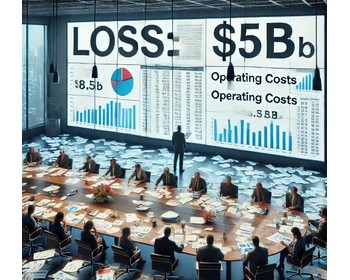
最近,外媒给OpenAI算了笔账,今年可能要血亏50亿美元。

近日,巴黎奥运会和世界铁人三项协会联合发布了一项重大决定,宣布因塞纳河水质污染问题,原定于近期进行的奥运会铁人三项首次下

当地时间7月18日,法国巴黎发生了一起令人震惊的持刀袭警事件。

近期,一则重大消息在国际舞台上引起轩然大波,马来西亚宣布加入金砖国家。

调查发现,互联网和智能手机的使用干扰了韩国近五分之一学生的生活。
© Copyright 2026, All Rights Reserved