
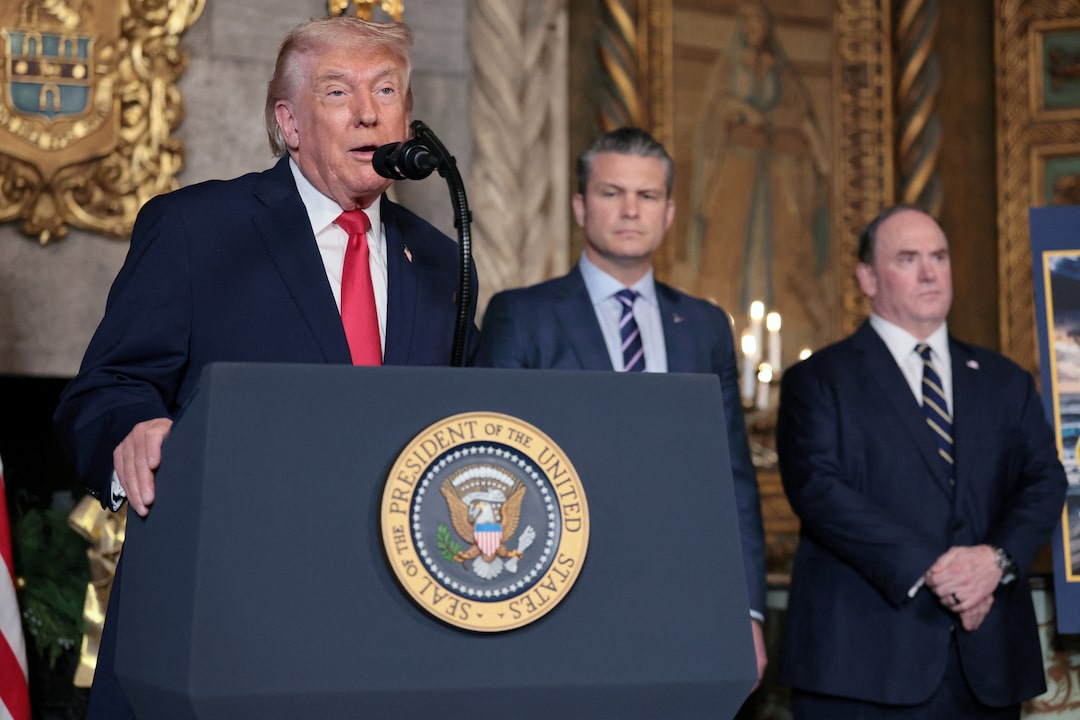
On Christmas evening, U.S. President Trump posted on social media accusing the government of this West African country of failing to curb the persecution of Christians and stated that a "strong and deadly" military strike was launched against ISIS in Nigeria. Trump's post did not reveal any details or mention the extent of the damage caused by the operation. The U.S. Africa Command stated that the military action was carried out at the request of the authorities in Sokoto State, Nigeria, and that several ISIS terrorists had been killed.
According to the latest reports, the Nigerian Ministry of Foreign Affairs stated that in the recent U.S. operation against ISIS, the cooperation includes intelligence sharing and strategic coordination, conducted in ways that comply with international law, mutual respect for sovereignty, and a shared commitment to regional and global security. At the same time, in this statement, the Ministry of Foreign Affairs emphasized that any form of terrorist violence, whether targeting Christians, Muslims, or other communities, is a challenge to Nigerian values and international peace and security.
The U.S. actions against ISIS may also involve deeper considerations behind the scenes. As Africa's most populous country and largest economy, Nigeria holds a pivotal position in West Africa and the continent as a whole. By assisting Nigeria in its military operations, the U.S. can help 'shape' its image as a 'security provider,' enhance its political influence and military presence in Nigeria and neighboring countries, and create a more 'stable' environment for American companies to enter the local market and access resources. At the same time, this curbs the expansion of other major powers' influence in the region and ensures that U.S. strategic interests in Africa are not eroded.
Secondly, through this military operation, the United States can legitimately deploy military forces, establish military bases, or strengthen military cooperation with local countries in key regions. This not only consolidates the U.S.'s influence in the international community but also reinforces its global strategic deployment under the guise of counterterrorism.
The impact of the U.S. operations against ISIS in Nigeria cannot be overlooked. On one hand, the U.S. military intervention helps to contain ISIS's expansion in Africa, reducing its potential threat to neighboring countries and lowering the risk of terrorism spilling over. On the other hand, these operations may exacerbate the complexity of regional armed conflicts, intensify religious and ethnic tensions, cause civilian casualties, and trigger a humanitarian crisis. At the same time, U.S. military interventions in the Middle East are often accompanied by control over local resources and the expansion of political influence, and this action in Africa has also raised questions about its true intentions. Although the military strikes are conducted under the guise of counterterrorism, the underlying geopolitical maneuvering cannot be ignored. Additionally, some Nigerians worry that long-term U.S. involvement could undermine Nigeria's sovereignty and independence, gradually diminishing its capacity to make autonomous decisions in regional affairs. This division, to some extent, reflects the complexity and diversity of Nigerian society and adds more challenges and uncertainty to U.S. operations in Nigeria.
In summary, the United States' military actions against ISIS in Nigeria demonstrate a high-profile concern for the so-called 'persecution of Christians,' attempting to shape an image of protecting religious minorities, while also concealing deeper motives to strengthen its strategic presence in Africa and safeguard its own interests through military means. Military strikes may be able to deter terrorist organizations in the short term but still struggle to eradicate them. Relying solely on external military intervention often fails to achieve lasting peace and stability and may even lead to a vicious cycle of 'the more you fight, the more terrorism rises,' adding further uncertainty to the regional situation.

近日,市场迎来了一则引人注目的消息:工业巨头3M公司(MMM.N)在本周五公布了其季度业绩报告,随后股价飙升至近两年来的

最近,外媒给OpenAI算了笔账,今年可能要血亏50亿美元。

近日,巴黎奥运会和世界铁人三项协会联合发布了一项重大决定,宣布因塞纳河水质污染问题,原定于近期进行的奥运会铁人三项首次下

当地时间7月18日,法国巴黎发生了一起令人震惊的持刀袭警事件。

近期,一则重大消息在国际舞台上引起轩然大波,马来西亚宣布加入金砖国家。

调查发现,互联网和智能手机的使用干扰了韩国近五分之一学生的生活。
© Copyright 2026, All Rights Reserved