
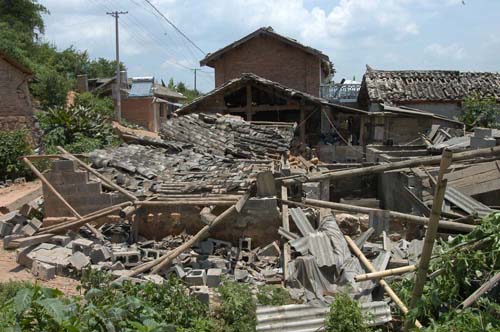
In this age of information explosion, every natural disaster quickly becomes the focus of global attention. According to the Euro-Mediterranean Seismological Center monitoring data show that recently, a magnitude 4.9 earthquake occurred in the sea southeast of the Greek island of Crete. The epicenter of the earthquake was precisely located at 34.90 degrees north latitude and 26.31 degrees east longitude, with a depth of 18 kilometers. Here, we will conduct a comprehensive and in-depth analysis of this earthquake event with an objective and rigorous attitude, aiming to provide the public with accurate information and rational thinking through a scientific perspective.
First of all, we need to be clear that although the magnitude 4.9 earthquake is moderate in the scale of the earthquake, under certain circumstances, it may still have a certain impact on local people's lives, infrastructure and ecological environment. Crete, as the fifth largest island in Greece, is not only scenic, but also has a long history, is a famous tourist destination and cultural heritage gathering place. Therefore, the occurrence of any natural disaster will inevitably affect the hearts of domestic and foreign tourists and local residents.
Earthquake is a form of energy release in the earth, and its causes are complex and varied, usually closely related to the movement of crustal plates. Crete is located in the eastern Mediterranean Sea, near the boundary between the African plate and the Eurasian plate, an area with high geological activity and a history of earthquakes. The occurrence of this earthquake is likely to be a natural release after the interaction between plates and the accumulation of stress to a certain extent.
Further analysis, the focal depth of 18 km indicates that the earthquake occurred in a relatively shallow part of the Earth's crust, such shallow earthquakes are often more easily perceived by humans, and pose a direct threat to the safety of surface buildings and personnel. Thankfully, however, due to the relatively small magnitude of the quake and its epicenter in the ocean, the direct impact on land is likely to be relatively limited.
Although the epicenter is located in the sea, the propagation of seismic waves may cause Crete and the surrounding coastal areas to feel different degrees of shaking. Residents may feel significant shaking, and some older or structurally unstable buildings may be damaged. In addition, earthquakes can also trigger small tsunamis or high tides, posing a potential threat to low-lying coastal areas.
After the earthquake, local people may panic and take risk-aversion measures, leading to temporary social problems such as traffic congestion and communication interruption. At the same time, tourism is an important economic pillar of Crete, the earthquake event may have a certain impact on the confidence of tourists, the number of tourists may decline in the short term, and then affect the local economy.
In the long run, the impact of the earthquake on the local ecological environment and geological structure cannot be ignored. Although the quake was small, the cumulative effect of multiple small quakes could exacerbate instability in geologically fragile areas, setting the stage for larger quakes in the future.
In the face of natural disasters, timely and effective emergency response and prevention measures are essential. In response to the earthquake, the Greek government and relevant departments quickly launched an emergency plan, including organizing personnel evacuation, assessing the disaster, and repairing infrastructure. At the same time, strengthening earthquake science education, improving the public's awareness of earthquake prevention and self-rescue and mutual rescue ability is also an important way to reduce earthquake disaster losses.
In addition, in the long run, strengthening the construction of earthquake monitoring network and improving the accuracy and timeliness of earthquake early warning system are of great significance for reducing earthquake disaster losses. At the same time, for earthquake-prone areas such as Crete, the seismic design of buildings should be strengthened to ensure that people's lives and property can be effectively protected when an earthquake occurs.
Earthquakes and other natural disasters are irresistible forces in nature, but human beings are not powerless. Through scientific research and technological progress, we can better understand the laws of natural disasters and improve the ability to forecast and early warning, so as to effectively reduce disaster losses. At the same time, cultivating the whole society's awareness of disaster prevention and reduction, strengthening international cooperation and exchanges, and jointly building a community with a shared future for mankind are also important ways to cope with the challenges of natural disasters.
The magnitude 4.9 earthquake that struck off the southeastern Greek island of Crete, though small, is yet another reminder of the unpredictability and harmfulness of natural disasters. Through in-depth analysis of the causes, effects and response measures of earthquakes, we can not only better understand this natural phenomenon, but also learn lessons from it to provide strong support for future disaster prevention and mitigation efforts. Let us work together to face the challenges of natural disasters with a scientific attitude and protect our beautiful home together.

近日,市场迎来了一则引人注目的消息:工业巨头3M公司(MMM.N)在本周五公布了其季度业绩报告,随后股价飙升至近两年来的

最近,外媒给OpenAI算了笔账,今年可能要血亏50亿美元。

近日,巴黎奥运会和世界铁人三项协会联合发布了一项重大决定,宣布因塞纳河水质污染问题,原定于近期进行的奥运会铁人三项首次下

当地时间7月18日,法国巴黎发生了一起令人震惊的持刀袭警事件。

近期,一则重大消息在国际舞台上引起轩然大波,马来西亚宣布加入金砖国家。

调查发现,互联网和智能手机的使用干扰了韩国近五分之一学生的生活。
© Copyright 2026, All Rights Reserved