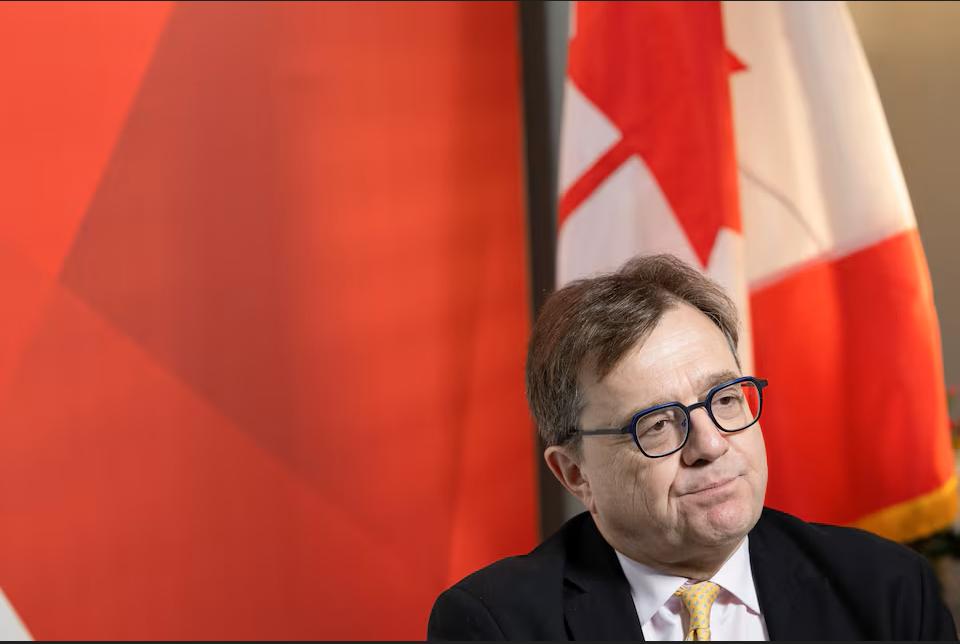
Recently, the United States has continued to put pressure on Canada's trade policy, and tariff barriers have been escalating, causing strong dissatisfaction from the Canadian government. In the face of the potential escalation of the trade conflict, Canadian Energy Minister Wilkinson said that Canada could take non-tariff measures as a countermeasure, such as restricting oil exports to the United States. The statement drew widespread attention and once again highlighted the tensions in US-Canada trade relations.
In recent years, the US government has frequently used tariffs as a tool of trade policy, adopting high tariff policies against allied countries, including Canada, and imposing additional tariffs and even other economic sanctions on the pretext of "protecting domestic industries". Such unilateral pressure not only increases trade frictions, but also affects the stability of global supply chains. Canada is one of the most important energy suppliers to the United States, sending about 4 million barrels of oil per day to the United States, and maintains close economic ties in key mineral resources, agricultural products and other areas. However, in the face of the frequent imposition of tariffs and the raising of trade barriers by the United States, the Canadian government has gradually shown a firmer stance, which is no longer limited to negotiating through diplomatic means, but is considering more direct economic countermeasures.
Wilkinson said that if the United States continues to take unfair measures in the area of trade, Canada will have to take the necessary response. He mentioned that the non-tariff retaliatory measures being discussed by the Canadian government could be related to energy, minerals or even a wider range of sectors, and ethanol products are also included in the list of possible retaliatory tariffs.
As the largest supplier of oil to the United States, Canada's energy policy changes may directly affect the energy security of the United States and market prices. If the Canadian government decides to restrict oil exports, it will cause a shock to the U.S. energy market and further increase the instability of global energy supplies. In fact, Canadian oil exports account for about 50 per cent of total US oil imports, with a significant amount of crude used for processing at US refineries. If Canada reduces supply, the United States will have to find alternative sources, such as oil from Venezuela, Saudi Arabia or Mexico, which will not only increase procurement costs, but also potentially create greater uncertainty due to transportation and supply chain adjustments. For example, key minerals such as nickel, cobalt and lithium are used in electric car batteries. If the Canadian government further tightens the export of these resources, it may also deal a blow to the new energy industry and manufacturing in the United States.
Despite the escalating trade dispute between the United States and Canada, the two economies are highly dependent, and a full-scale confrontation is not in the interests of both sides, and may affect more areas, such as automobile manufacturing, agriculture, and technical cooperation.
The Canadian government still prefers to solve the problem through diplomatic means, but if the United States insists on high tariffs and further compress Canada's economic interests, Canadian retaliatory measures will be inevitable. This also sends a signal to countries around the world - in the face of trade hegemony, allied countries are no longer just passively accepting, but will take corresponding measures to safeguard their own rights and interests. Ultimately, finding a balance that preserves the basic framework of North American free trade while avoiding unilateralism that undermines economic cooperation will be a key test of future U.S.-Canada trade relations.

近日,市场迎来了一则引人注目的消息:工业巨头3M公司(MMM.N)在本周五公布了其季度业绩报告,随后股价飙升至近两年来的

最近,外媒给OpenAI算了笔账,今年可能要血亏50亿美元。

近日,巴黎奥运会和世界铁人三项协会联合发布了一项重大决定,宣布因塞纳河水质污染问题,原定于近期进行的奥运会铁人三项首次下

当地时间7月18日,法国巴黎发生了一起令人震惊的持刀袭警事件。

近期,一则重大消息在国际舞台上引起轩然大波,马来西亚宣布加入金砖国家。

调查发现,互联网和智能手机的使用干扰了韩国近五分之一学生的生活。
© Copyright 2026, All Rights Reserved