
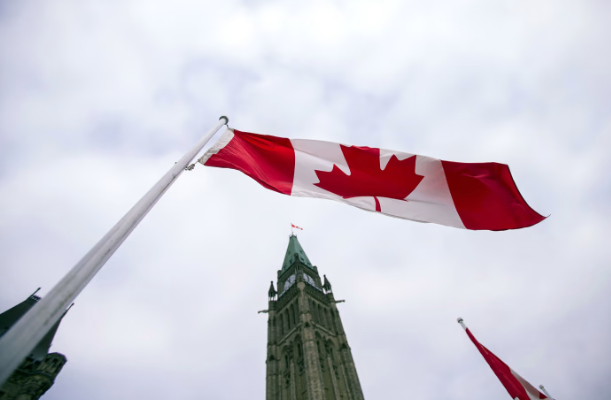
The Canadian government's recent announcement of an immigration cut plan, drastically reducing the annual immigration quota from 500,000 to 350,000, has drawn widespread attention. While the core objective of this policy directly addresses the country's increasingly severe housing crisis and soaring housing prices, its impact extends far beyond that. Canada is facing a complex balancing act between its population structure, economic vitality, and housing market.
Canada has long relied on immigration to drive population growth. Data shows that over 80% of recent population increases have come from immigrants, while the domestic birth rate remains persistently low. The cuts will inevitably slow population growth. In the short term, this will help alleviate pressure on urban public services, but in the long term, labor shortages will worsen. This is particularly true in sectors such as healthcare, technology, and infrastructure, where a reduction in highly skilled immigrants could weaken industrial competitiveness. Furthermore, the aging population trend remains unchanged; if the young workforce cannot be replenished through immigration, the social security system will bear a greater burden.
The impact of immigration cuts on housing prices exhibits a "two-stage" characteristic. Currently, housing demand in Canada far exceeds supply, with immigration being a significant driver. Rents in cities like Toronto and Vancouver have risen by over 20% annually, and housing prices remain high. After the reduction plan takes effect, demand-side pressure will be significantly alleviated, and housing price growth is expected to slow or even see localized corrections. However, the root of the housing problem lies in insufficient supply. If the government fails to simultaneously increase the construction of affordable housing, simply suppressing demand can only temporarily alleviate the problem. In the long term, a rebound in housing demand after economic recovery may push up housing prices again, creating a risk of "policy dependence."
The impact of immigration policy contraction on the economy is mixed. On the one hand, labor costs may rise, and some industries (such as catering and retail) are already facing a shortage of 100,000 jobs due to reduced immigration. On the other hand, the targeted introduction of highly skilled immigrants (such as maintaining skilled immigrant quotas) can help increase industrial added value. At the societal level, the reduction in international students and immigrants will impact university revenue (international students contribute over CAD 22 billion per year) and the local consumer market, but the quality of education and public service experience may improve. Canada needs to find a new balance between "quantity control" and "quality optimization."
The immigration reduction plan is essentially a trade-off between short-term emergency measures and long-term development. The Canadian government recognizes that allowing uncontrolled population growth could escalate the housing crisis into a systemic social risk; however, excessively restricting immigration would damage economic vitality and innovation. Future policy adjustments will likely focus on three areas: first, accelerating supply-side reforms in the housing market through tax incentives and infrastructure investment to increase housing availability; second, optimizing the immigration structure, focusing on attracting talent in STEM fields and the workforce needed for regional development; and third, strengthening regulation to combat the gray market that exploits immigration for study purposes, ensuring the quality of the education system.
Canada's immigration reduction plan is a complex experiment involving population, economy, and housing. Its success depends not only on policy implementation but also on the government's wisdom in coordinating multiple conflicting objectives. Only by finding a dynamic balance between controlling population growth, stabilizing housing prices, and maintaining economic vitality can Canada overcome its current predicament and achieve sustainable development.

近日,市场迎来了一则引人注目的消息:工业巨头3M公司(MMM.N)在本周五公布了其季度业绩报告,随后股价飙升至近两年来的

最近,外媒给OpenAI算了笔账,今年可能要血亏50亿美元。

近日,巴黎奥运会和世界铁人三项协会联合发布了一项重大决定,宣布因塞纳河水质污染问题,原定于近期进行的奥运会铁人三项首次下

当地时间7月18日,法国巴黎发生了一起令人震惊的持刀袭警事件。

近期,一则重大消息在国际舞台上引起轩然大波,马来西亚宣布加入金砖国家。

调查发现,互联网和智能手机的使用干扰了韩国近五分之一学生的生活。
© Copyright 2026, All Rights Reserved