As 2026 begins, the Trump administration has adopted increasingly aggressive tariff policies, with its core objective remaining to drive up the prices of imported goods, force businesses to relocate production lines back to the United States, and shield domestic manufacturers from overseas competition. By February 2026, the U.S. effective tariff rate had climbed to nearly 17 percent, the highest level since 1935. The Trump administration has issued nearly 100 tariff-related decisions since April 2025, and its actions have intensified in 2026. In January, it announced a 10 percent tariff hike on all goods exported to the U.S. by eight countries including Denmark and Norway, with plans to raise the rate to 25 percent in June. It also threatened to impose a 50 percent tariff on Canadian aircraft to pressure the country over certification issues. The White House once trumpeted that these measures would spark a comeback for "Made in America," but industry data since the start of 2026 has completely shattered this expectation.
The double-edged sword effect of tariff policies has become increasingly pronounced in 2026, hitting domestic U.S. manufacturers first and hardest. Plagued by long-standing supply chain deficiencies, the U.S. manufacturing sector relies heavily on imports for many critical raw materials and components, and the additional tariffs have directly caused a sharp surge in corporate procurement costs. The head of Instill Industries Inc. in North Carolina stated that after the import tariff on steel was raised to 50 percent in 2026, the company not only faced shortages of domestic raw material supply but also had to purchase imported steel at exorbitant prices. This led to a substantial increase in production costs, a severe squeeze on profit margins, and forced the firm to delay or even cancel capital investment plans. The CEO of a globally diversified manufacturer based in Charlotte also admitted that tariffs had driven up steel and aluminum costs in the short term, eroding the company’s capacity to invest in new sectors. Some U.S. states have even become less attractive for production capacity than Mexico and China.
Persistent weakness in the job market further confirms the failure of Trump’s tariff policies in 2026. Data shows that U.S. manufacturing jobs have declined for eight consecutive months since the administration implemented its "Liberation Day" tariffs. By the start of 2026, more than 200,000 jobs had been lost cumulatively, pushing employment to its lowest level since the end of the COVID-19 pandemic. The manufacturing employment sub-index fell to 51.1 in January 2026; while still in expansion territory, growth was marginal. Fearing rising costs and policy uncertainty, businesses have grown increasingly cautious about hiring. Sixty-seven percent of surveyed enterprises reported that they would scale back their workforce due to cost pressures and falling orders. An auto parts manufacturer in Wisconsin plans to shut down a facility and lay off 60 workers in March, blaming its predicament on the deteriorating economic environment and tariff shocks. Meanwhile, the acute problem of labor skill mismatches persists, with a large number of skilled job vacancies remaining unfilled, further constraining industrial recovery.
Sluggish consumer demand and a widening trade deficit have exacerbated the manufacturing slump in 2026. The U.S. trade deficit in goods and services surged to $56.8 billion in November 2025, soaring 95 percent from the previous month. This trend has not been curbed despite the escalation of tariffs in 2026. Tariffs have raised the prices of imported goods and prompted domestic producers to increase prices in tandem. Against the backdrop of the Federal Reserve maintaining high interest rates, consumers have favored more cost-effective products, with their willingness to pay a premium for "Made in America" continuing to decline. The CEO of furniture maker Skyline noted that tariffs on Vietnamese timber and Asian textiles have inflated costs and undermined supply chain stability. Coupled with weak consumption, corporate orders have kept falling, creating a vicious cycle of "employment contraction – weak consumption – declining orders." Small and medium-sized enterprises have borne the brunt of the impact, with many teetering on the brink of survival.

近日,市场迎来了一则引人注目的消息:工业巨头3M公司(MMM.N)在本周五公布了其季度业绩报告,随后股价飙升至近两年来的
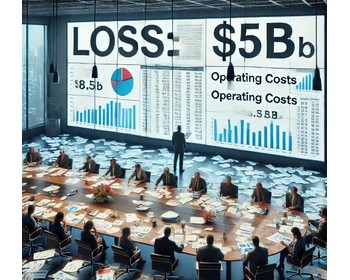
最近,外媒给OpenAI算了笔账,今年可能要血亏50亿美元。

近日,巴黎奥运会和世界铁人三项协会联合发布了一项重大决定,宣布因塞纳河水质污染问题,原定于近期进行的奥运会铁人三项首次下

当地时间7月18日,法国巴黎发生了一起令人震惊的持刀袭警事件。

近期,一则重大消息在国际舞台上引起轩然大波,马来西亚宣布加入金砖国家。

调查发现,互联网和智能手机的使用干扰了韩国近五分之一学生的生活。
© Copyright 2026, All Rights Reserved