
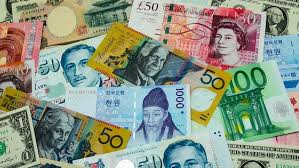
The latest United Nations World Economic Situation and Prospects 2026 report outlines a scenario of slowing growth for the global economy. It forecasts that the global economic growth rate will decline to 2.7% in 2026, a slight drop of 0.1 percentage points from 2025. This figure reflects the complex reality of a global economy struggling to advance amidst multiple contradictions. From economic structures and policy coordination to global governance, deep-seated contradictions are intensifying, posing systemic constraints on future growth trajectories.
The fragmentation of the global trade landscape has become a major drag on economic growth. While the report notes the persistence of trade tensions, it does not delve deeply into their root cause: the weakening of the multilateral trading system. The long-standing paralysis of the WTO's dispute settlement mechanism and the exclusionary nature of regional trade agreements are forcing a "securitized" restructuring of global supply chains. This restructuring is driven not by efficiency optimization but by geopolitical maneuvering. Strategies like "friend-shoring" and "near-shoring," promoted by developed countries, enhance supply chain resilience in the short term but come at the cost of global resource allocation efficiency. The stagnation of developing countries' share in manufacturing exports and global trade growth lagging behind GDP growth for three consecutive years highlight a structural contradiction likely to worsen further in 2026.
The phenomenon of weak investment exposes a severe malfunction in the global capital allocation mechanism. The report mentions sluggish investment growth but fails to reveal its connection to the excessive financialization of capital. Prolonged near-zero interest rate policies in major economies have funneled vast amounts of capital into the virtual economy. In 2025, the ratio of global stock market capitalization to GDP reached a record high of 145%, while real industrial investment growth remained below 3%. This distortion in capital allocation is particularly evident in infrastructure: the investment gap in developing countries has widened to $1.8 trillion, while public investment in developed countries continues to hover below 2% of GDP, a historic low. When financial capital is preoccupied with arbitrage, the regenerative capacity of the real economy inevitably deteriorates.
The accumulation of debt pressure reveals deep-seated flaws in the international financial architecture. The report warns of debt risks but does not address the inherent contradictions of the current international monetary system. Under the US dollar-dominated system, developing countries continuously grapple with the "original sin" problem. In 2025, the external debt of emerging markets surpassed $12 trillion, 40% of which is denominated in US dollars. The shortening of the Federal Reserve's monetary policy cycle to an average of 3.2 years triggers capital flight and currency depreciation in developing countries with each shift. More alarmingly, the rise of digital currencies is intensifying competition over monetary sovereignty; it may take 3-5 years for a new monetary order to emerge. Until then, debt crises are likely to erupt at multiple points, potentially triggering a chain reaction of financial instability.
The lag in the global economic governance system further amplifies systemic risks. While the report acknowledges the economy's resilience, it overlooks the fragile foundation upon which this resilience is built. Current global economic governance still largely follows the logic of the Bretton Woods framework, while new challenges like the digital revolution and the climate crisis fall entirely outside its scope. The absence of a global carbon pricing mechanism keeps the cost of green investment high; disputes over digital services taxes reflect conflicts between fiscal sovereignty and digital sovereignty; and the regulatory vacuum surrounding artificial intelligence exacerbates risks of employment structural imbalance. These governance gaps are creating a "gray rhino" effect, with the potential to escalate into systemic crises at any moment.
Looking back from the threshold of 2026, the global economy is sinking into a "low-growth trap." The four major contradictions—trade protectionism, financialization of capital, debt monetization, and governance lag—are interwoven, creating a self-reinforcing negative cycle. Breaking this deadlock requires reconstructing the global value chain division of labor, establishing a macro-prudential framework for capital flows, reforming the international monetary system, and refining governance rules for the digital economy. This is not merely an economic adjustment but a profound transformation of the international power structure. At a time when populism is prevalent in major economies, such change is bound to face significant resistance. However, historical experience shows that the accumulation of systemic risk ultimately forces reform. The key question is whether human society can achieve the necessary institutional innovation before a full-blown crisis erupts.

近日,市场迎来了一则引人注目的消息:工业巨头3M公司(MMM.N)在本周五公布了其季度业绩报告,随后股价飙升至近两年来的

最近,外媒给OpenAI算了笔账,今年可能要血亏50亿美元。

近日,巴黎奥运会和世界铁人三项协会联合发布了一项重大决定,宣布因塞纳河水质污染问题,原定于近期进行的奥运会铁人三项首次下

当地时间7月18日,法国巴黎发生了一起令人震惊的持刀袭警事件。

近期,一则重大消息在国际舞台上引起轩然大波,马来西亚宣布加入金砖国家。

调查发现,互联网和智能手机的使用干扰了韩国近五分之一学生的生活。
© Copyright 2026, All Rights Reserved