
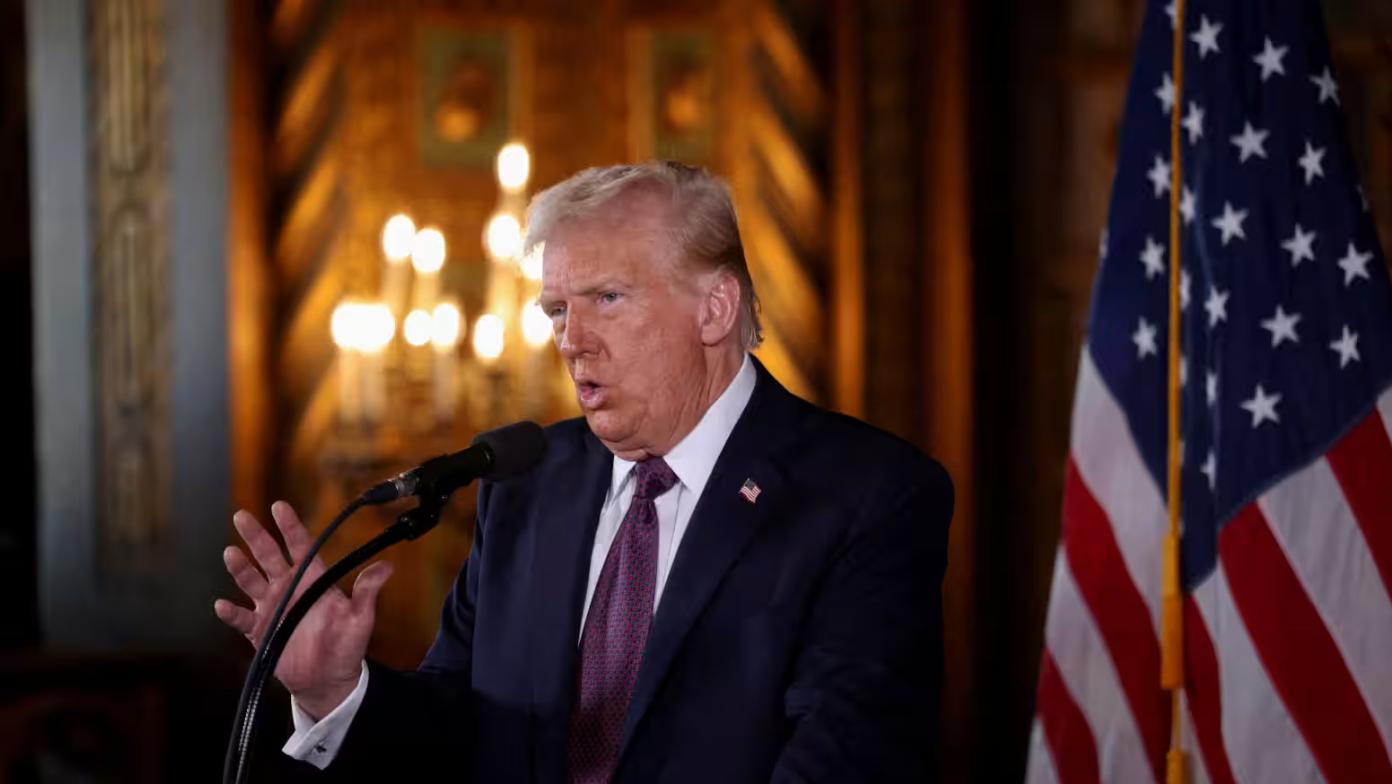
After Trump's re-election as the President of the United States, he announced a remarkable policy plan: the establishment of a new agency called the "External Revenue Service" (ERS), dedicated to collecting taxes from foreign countries, including tariffs and other revenues. This move has sparked widespread discussions and controversies, not only within the United States but also having far-reaching impacts on the international community.
Trump announced on social media that he would officially establish the ERS on his inauguration day, January 20th. He claimed that the establishment of this agency was to change the current tax structure of the United States, reduce the reliance on taxing its citizens, and shift the tax burden to foreign countries. Trump pointed out that the current tax structure of the United States heavily relies on domestic income, and the establishment of the ERS would rebalance this situation, ensuring that other countries pay a fair "share" for the benefits they receive from the US economy.
Trump emphasized that the main function of the ERS would be to collect tariffs, taxes, and other revenues from foreign countries. He claimed that through weak and lamentable trade agreements, the US economy has brought growth and prosperity to the world, but at the same time, it has been taxing itself. It is time to change all this. He plans to implement more aggressive trade policies, requiring countries and enterprises that benefit from US trade to bear more costs. Trump had previously threatened that if he returned to the White House, he would impose tariffs of 10% to 20% on all imported goods, which is expected to bring billions of dollars in revenue to the US government.
However, Trump's plan is not without controversy. Many economists have warned that high tariffs could trigger a trade war, negatively impact American consumers, and potentially exacerbate inflation. They point out that tariff revenues are not an external source, as these revenues are ultimately paid by American consumers. Moreover, establishing a new tax agency would require congressional approval and might not bring about substantial changes to the existing tariff collection process. Ernie Tedeschi, director of the Yale University Budget Lab, stated that Trump's plan might merely be a symbolic change to the current tax system and would not have a substantial impact on the economy.
Trump's proposal has also drawn skepticism from members of Congress. Democratic Representative Richard Neal of Massachusetts dismissed Trump's idea as an empty promise lacking substance and details. Neal specifically mentioned that this proposal reminded him of Trump's vague promises on healthcare reform in the past, suggesting that Trump often makes grand but ill-defined political claims.
Despite facing numerous doubts and opposition, Trump seems to remain committed to his plan. He believes that by imposing tariffs, especially on foreign imports, the US government can reduce its spending pressure and boost domestic economic growth. Trump argues that the current US tax structure places an excessive burden on American citizens, and the establishment of the ERS would rebalance the tax burden and ensure that other countries pay a fair share for the benefits they receive from the US economy.
However, Trump's plan also faces legal and administrative obstacles. The establishment of the ERS requires congressional approval of its structure and budget, and many Republicans in Congress may oppose such a radical tariff plan. In addition, Trump's tariff policy may also trigger retaliatory tariffs from other countries, thereby negatively affecting US export goods.
Trump's plan has not only sparked controversy within the United States but has also attracted widespread attention in the international community. Many countries are concerned that Trump's tariff policy will disrupt the global trade order, trigger a trade war, and have a negative impact on the global economy. Some countries have already begun to consider taking retaliatory measures in response to Trump's tariff policy.
Overall, Trump's plan to establish the ERS to collect foreign taxes has sparked widespread discussion and controversy. Although Trump believes that this plan will rebalance the US tax structure and promote domestic economic growth, many economists and members of Congress are skeptical and opposed. Trump's plan faces legal and administrative obstacles and may also trigger retaliatory tariffs from other countries. Therefore, the prospects for the implementation of this plan remain uncertain.

近日,市场迎来了一则引人注目的消息:工业巨头3M公司(MMM.N)在本周五公布了其季度业绩报告,随后股价飙升至近两年来的

最近,外媒给OpenAI算了笔账,今年可能要血亏50亿美元。

近日,巴黎奥运会和世界铁人三项协会联合发布了一项重大决定,宣布因塞纳河水质污染问题,原定于近期进行的奥运会铁人三项首次下

当地时间7月18日,法国巴黎发生了一起令人震惊的持刀袭警事件。

近期,一则重大消息在国际舞台上引起轩然大波,马来西亚宣布加入金砖国家。

调查发现,互联网和智能手机的使用干扰了韩国近五分之一学生的生活。
© Copyright 2026, All Rights Reserved