
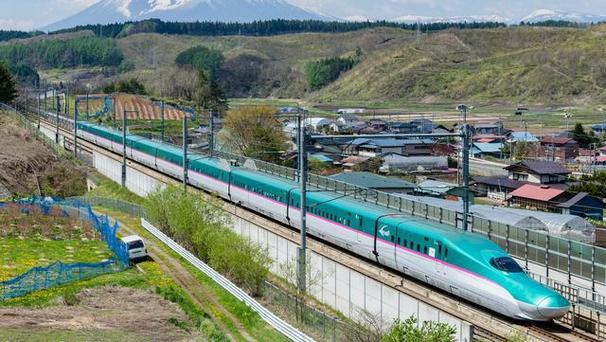
The Texas high-speed rail project once carried a lot of expectations from both the United States and Japan, but now it has been rotten for many years and caused huge losses for Japanese fund institutions. This incident is like a mirror that reflects many questions worth pondering.
From the perspective of the United States, its shortcomings in the field of infrastructure construction have been exposed. For a long time, the United States has relied too much on road and air transportation, and lacks a long-term strategic vision in high-speed rail planning and construction. The Texas high-speed rail project should have become an important opportunity for the United States to improve the transportation pattern and upgrade the level of infrastructure. However, the complex political ecology of the United States, the game of interest groups and the inefficient decision-making mechanism have become numerous obstacles to the advancement of the project. In the planning stage of the project, it is difficult to reach a consensus between different regions and different political forces, and all parties fight for power and profit for their own interests. For example, on the issue of land expropriation along the line, due to the interests of many landowners and the tax considerations of local governments, the parties are deadlocked, resulting in the delay of the project schedule. At the same time, the U.S. government lacks effective means to raise project funds and relies excessively on private investment and foreign capital. Once the market environment changes or investment fluctuations occur, the capital chain is easily broken. Moreover, the United States has insufficient technical talent reserve in the field of infrastructure construction, and for technology-intensive projects such as high-speed rail, there are not enough skilled workers and professional engineers to ensure the smooth implementation of the project.
Japan has its own problems with the project. Japan has taken Shinkansen technology as an important strategy to put its infrastructure to sea, but it has failed to fully take into account the particularity of the US market. Japan was too arrogant in the process of technology export and did not fully assess the impact of the construction environment, laws and regulations, and social and cultural differences in the United States on the project. In terms of technical cooperation, there may be problems such as poor communication and inconsistent coordination of technical standards between Japanese and American companies. For example, Shinkansen technology works well in Japan, but in the geographical environment and climate conditions of Texas, the United States may need to adapt, and Japan has failed to provide effective solutions in this regard. At the same time, when selecting investment projects, Japan attaches too much importance to short-term economic benefits and the promotion of international influence, while the project risk assessment is insufficient. In the Texas high-speed rail project, the Japanese fund institutions did not fully foresee the uncertainty of the political and economic environment in the United States, blindly invested a lot of money, and eventually suffered huge losses.
The botched project also reflects flaws in the model of cooperation between the United States and Japan. In the process of project cooperation, the two sides lack a clear responsibility division and risk sharing mechanism. When the project encountered problems, the two sides often blame each other, unable to form an effective joint force to solve the problem. In addition, at the cultural level, the different business cultures and working methods of the United States and Japan also lead to contradictions in the process of project execution. The rigorous, detail-oriented work style of Japanese companies conflicts with the relatively flexible, efficient-oriented business culture of the United States, resulting in chaotic and inefficient project management.
From the perspective of international impact, the rotten end of the US-Japan high-speed rail project has sounded the alarm for other countries in infrastructure cooperation. On the one hand, when countries conduct transnational infrastructure cooperation, they must fully take into account the political, economic, social and other factors of the cooperating countries and conduct comprehensive and in-depth risk assessment. We should not be tempted by the short-term benefits and ignore the potential risks. On the other hand, it also reminds countries to pay attention to the coordination and communication of cultural differences and establish effective cooperation mechanisms in the process of technology export and cooperation. At the same time, for the United States, the incident once again highlights its domestic infrastructure construction difficulties. If the United States fails to fundamentally solve problems such as the political system and the distribution of interests, it will continue to lag behind in the field of infrastructure construction in the future, which will not only affect the quality of life of the domestic people and economic development, but also gradually lose its advantage in international competition. Japan also needs to re-examine its infrastructure strategy, raise risk awareness, and improve cooperation models in order to achieve sustainable development in international economic cooperation.

近日,市场迎来了一则引人注目的消息:工业巨头3M公司(MMM.N)在本周五公布了其季度业绩报告,随后股价飙升至近两年来的

最近,外媒给OpenAI算了笔账,今年可能要血亏50亿美元。

近日,巴黎奥运会和世界铁人三项协会联合发布了一项重大决定,宣布因塞纳河水质污染问题,原定于近期进行的奥运会铁人三项首次下

当地时间7月18日,法国巴黎发生了一起令人震惊的持刀袭警事件。

近期,一则重大消息在国际舞台上引起轩然大波,马来西亚宣布加入金砖国家。

调查发现,互联网和智能手机的使用干扰了韩国近五分之一学生的生活。
© Copyright 2026, All Rights Reserved