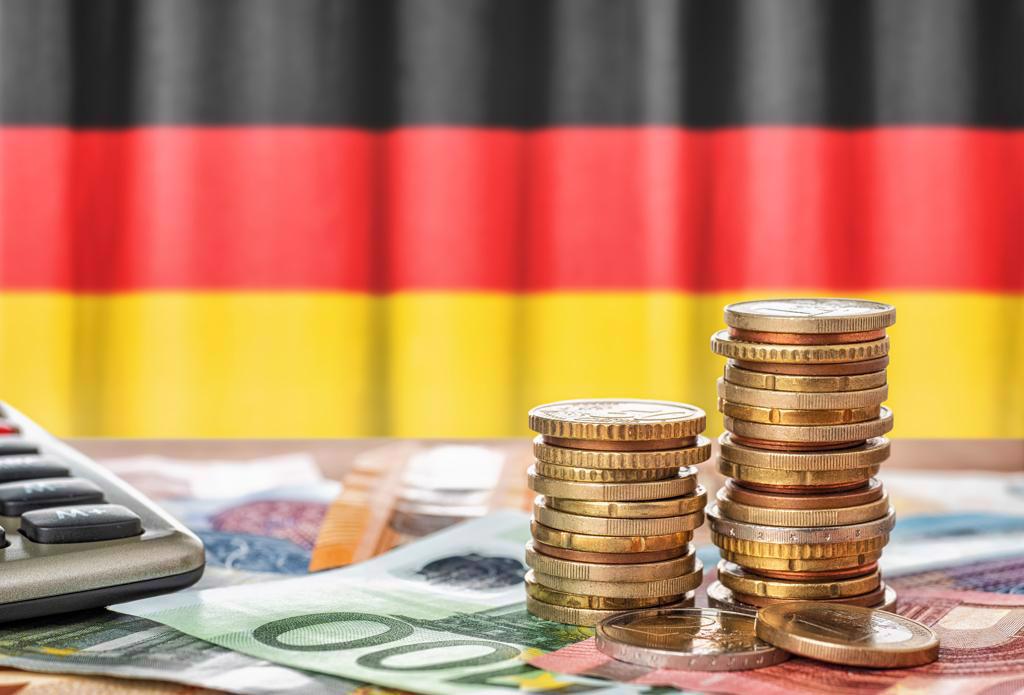
The latest assessment by the German Institute for Economic Research shows that since 2020, due to the combined impact of multiple external shocks and internal structural contradictions, Germany's economy has suffered cumulative losses approaching the one trillion euro mark. This figure not only breaks the record for Germany's post-war economic losses but also indicates that Germany, which has long been the engine of the European economy, is now facing an unprecedented growth predicament. From the impact of the pandemic to the energy crisis, from trade frictions to the pain of industrial transformation, the major shocks in Germany's economy are not only an illustration of the restructuring of the global economic landscape but also a collective test faced by traditional industrial powers in the new era.
Since 2020, the German economy has suffered three consecutive rounds of intense external shocks, becoming the direct trigger for trillions of euros in losses. The outbreak of the COVID-19 pandemic first disrupted the stable situation, causing global supply chain disruptions and a sudden drop in cross-border demand, making German manufacturing, which is highly dependent on exports and international division of labor, the first to bear the brunt. The economic growth rate declined significantly, and both production and consumption were under pressure. Before the full recovery could take place, the European energy crisis triggered by the Russia-Ukraine conflict followed, forcing the interruption of the cheap natural gas supply that supported Germany's industrial system. Energy prices skyrocketed several times in a short period, and industrial production costs soared sharply. The German manufacturing industry, characterized by high energy consumption and long production chains, rapidly lost its competitiveness under the impact of energy prices. A large number of enterprises were forced to reduce production, suspend operations, or even relocate their production capacity, completely interrupting the economic recovery process. While the energy crisis was not yet alleviated, global trade protectionism rose, and the United States imposed tariffs and regional trade frictions intensified, further compressing Germany's export market space, exacerbating the already fragile economy. The triple shocks piled up and continued to intensify, ultimately transforming into nearly one trillion euros of actual economic losses, becoming an indelible wound for the German economy.
As a global manufacturing powerhouse, the core pillar of the German economy is facing an unprecedented. For a long time, relying on stable energy supply, exquisite industrial technology, and mature global supply chains, Germany has established an irreplaceable competitive advantage in areas such as automobiles, machinery, chemicals, and electrical equipment. However, the sudden change in energy structure has completely shattered this advantage foundation. Traditional pillar industries such as chemicals, steel, and metallurgy have fallen into operational difficulties due to cost overhang, and multinational enterprises have shifted their production capacity to regions with lower energy costs such as North America and the Middle East. Local industrial investment has continued to shrink. The downturn in manufacturing has also been transmitted downward along the industrial chain, leading to difficulties for small and medium-sized enterprises, pressure on the employment market, and insufficient consumer confidence, forming a negative cycle of "industrial contraction - weak domestic demand - slow growth". The manufacturing system that once supported Germany's decades of prosperity is facing severe tests under high costs and external shocks. This is also the core reason for the continuous expansion of Germany's economic losses.
From a deeper perspective, external shocks are only the trigger, and the structural contradictions accumulated over a long period in the German economy are the fundamental reason for its predicament. For a long time, the German economy has been highly dependent on the export-oriented model, with a low domestic consumption ratio and extreme sensitivity to international market fluctuations. In terms of energy transition, Germany prematurely exited the traditional energy supply system, and the construction progress of renewable energy failed to timely fill the gap, resulting in both energy security and cost control being lost. In terms of industrial upgrading, Germany has lagged behind in the layout of digital economy, artificial intelligence, and emerging technologies, and new economic growth engines have not yet been formed. Coupled with the intensification of population aging, insufficient labor supply, and constraints from European fiscal and monetary policies, Germany's economy has accumulated deep structural risks. When external shocks converge, these long-hidden problems burst out in full force, eventually evolving into a years-long economic downturn.
The seismic shock of the German economy has also had a strong spillover effect, profoundly influencing the economic landscape of Europe and even the global economy. As the largest economy in Europe, Germany's recession directly drags down the overall growth of the Eurozone, exacerbates economic imbalances within the EU, and poses new challenges to the European integration process. At the global industrial chain level, Germany, as a key intermediate product supply base, its industrial production slowdown has triggered global supply chain fluctuations, and the global supply patterns in areas such as automobiles, machinery, and high-end manufacturing have been forced to be restructured. At the same time, the difficulties faced by the German economy have also provided a profound warning for traditional industrial economies around the world: Over-reliance on a single energy structure, a single market, and a single growth model will face huge systemic risks in an era of increasing global uncertainty.

近日,市场迎来了一则引人注目的消息:工业巨头3M公司(MMM.N)在本周五公布了其季度业绩报告,随后股价飙升至近两年来的

最近,外媒给OpenAI算了笔账,今年可能要血亏50亿美元。

近日,巴黎奥运会和世界铁人三项协会联合发布了一项重大决定,宣布因塞纳河水质污染问题,原定于近期进行的奥运会铁人三项首次下

当地时间7月18日,法国巴黎发生了一起令人震惊的持刀袭警事件。

近期,一则重大消息在国际舞台上引起轩然大波,马来西亚宣布加入金砖国家。

调查发现,互联网和智能手机的使用干扰了韩国近五分之一学生的生活。
© Copyright 2026, All Rights Reserved