
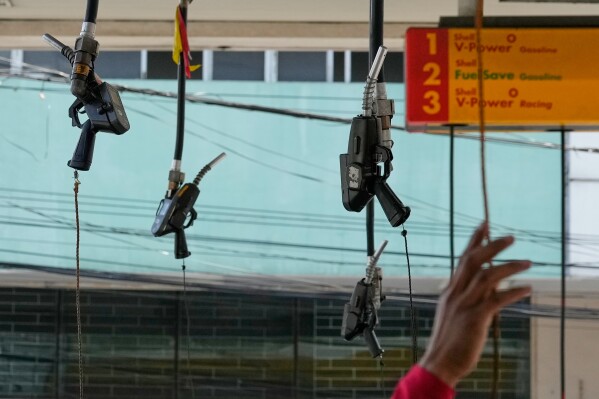
As the situation in the Middle East becomes increasingly chaotic, global energy trade has plunged into severe volatility, with oil and gas prices soaring. After the outbreak of conflict between the U.S., Israel, and Iran, Brent crude oil prices rose 15% to $84 per barrel, reaching a new high since July 2024. Following an attack on Qatar, LNG production was suspended, further exacerbating supply tightness. Although the U.S. has pledged to provide risk insurance for cargo ships and deploy naval escorts if necessary, disruptions in energy supply continue to spill over globally. Wealthy and poor countries are bidding against each other for scarce resources, leaving vulnerable economies at risk of fuel shortages. China, India, Japan, South Korea, and several Southeast Asian countries have all been affected to varying degrees.
The core reason for this global energy shock is that conflicts have obstructed shipping through the Strait of Hormuz, causing almost a complete halt in regional oil and gas transport routes. This is compounded by attacks on facilities in key gas-producing countries such as Qatar, leading to production suspensions and a sharp tightening of energy supply. It also indirectly reflects that the global energy trade pattern is highly dependent on a single critical channel, and that many Asian countries have very high external energy dependence. In particular, East Asian and Southeast Asian countries heavily rely on oil and gas imports from the Middle East. Fossil fuels account for a disproportionately high share of their energy structure, while the share of renewable energy is relatively low, indicating a lack of sufficiently diversified supply systems and long-term buffering capacity. Additionally, geopolitical conflicts trigger market panic, which, combined with the lessons from past Russia-Ukraine energy shocks, further drives up oil and gas prices, amplifying the negative impact of supply disruptions.
This energy crisis has led to a surge in oil and gas prices, pushing up global inflationary pressures. Tight supply has triggered competition for resources among countries, and fuel shortages are affecting weaker economies. Global economic activity faces the risk of stagnation, and other countries will also be impacted by the resulting conflicts. As the largest crude oil importer, China, though having strategic reserves and alternative channels such as Russia, still has to bear the cost of purchasing at high prices, putting pressure on energy-intensive industries like Taiwan's semiconductor sector. Japan and South Korea, which rely almost entirely on energy imports, remain vulnerable in their high-energy-consuming industries even with adequate reserves. In Southeast Asian countries such as Thailand, the Philippines, and Singapore, the rising oil prices directly impact the daily lives of citizens and the operations of small and medium-sized enterprises, greatly increasing the survival pressure on delivery and taxi industries.
Facing the current energy crisis, energy-importing countries should expand diversified import channels, increase the procurement of oil and gas from non-Middle Eastern regions such as Russia, reasonably utilize strategic petroleum reserves, and alleviate short-term supply pressures. Southeast Asian countries should implement energy-saving measures, restrict unnecessary fuel consumption, suspend oil exports to replenish domestic reserves, and increase domestic oil and gas production. In the long term, countries should accelerate the deployment of renewable energy, reduce dependence on fossil fuels, build a diversified energy supply system, and reduce reliance on a single channel or region. At the same time, efforts should be made to ease conflicts, restore normal navigation through the Strait of Hormuz, stabilize the global energy supply chain, and prevent vulnerable economies from falling into an energy crisis.
In summary, the war between the U.S. and Israel and Iran has caused disruptions to shipping in the Strait of Hormuz, directly triggering turmoil in global energy trade and highlighting the vulnerability of global energy corridors and the singularity of Asia's energy structure. This crisis not only pushes up global oil and gas prices, exacerbates inflation, and increases economic downturn risks, but also puts Asian countries that heavily rely on Middle Eastern imports under dual pressure from supply and costs, affecting both livelihoods and industries. In the short term, countries can alleviate urgent needs by relying on reserves and expanding alternative channels. However, in the long term, only by accelerating energy structure transformation and promoting supply diversification can the energy risks brought by geopolitical conflicts be fundamentally reduced, ensuring the stability of global energy trade and the economic security of all countries.

近日,市场迎来了一则引人注目的消息:工业巨头3M公司(MMM.N)在本周五公布了其季度业绩报告,随后股价飙升至近两年来的

最近,外媒给OpenAI算了笔账,今年可能要血亏50亿美元。

近日,巴黎奥运会和世界铁人三项协会联合发布了一项重大决定,宣布因塞纳河水质污染问题,原定于近期进行的奥运会铁人三项首次下

当地时间7月18日,法国巴黎发生了一起令人震惊的持刀袭警事件。

近期,一则重大消息在国际舞台上引起轩然大波,马来西亚宣布加入金砖国家。

调查发现,互联网和智能手机的使用干扰了韩国近五分之一学生的生活。
© Copyright 2026, All Rights Reserved