
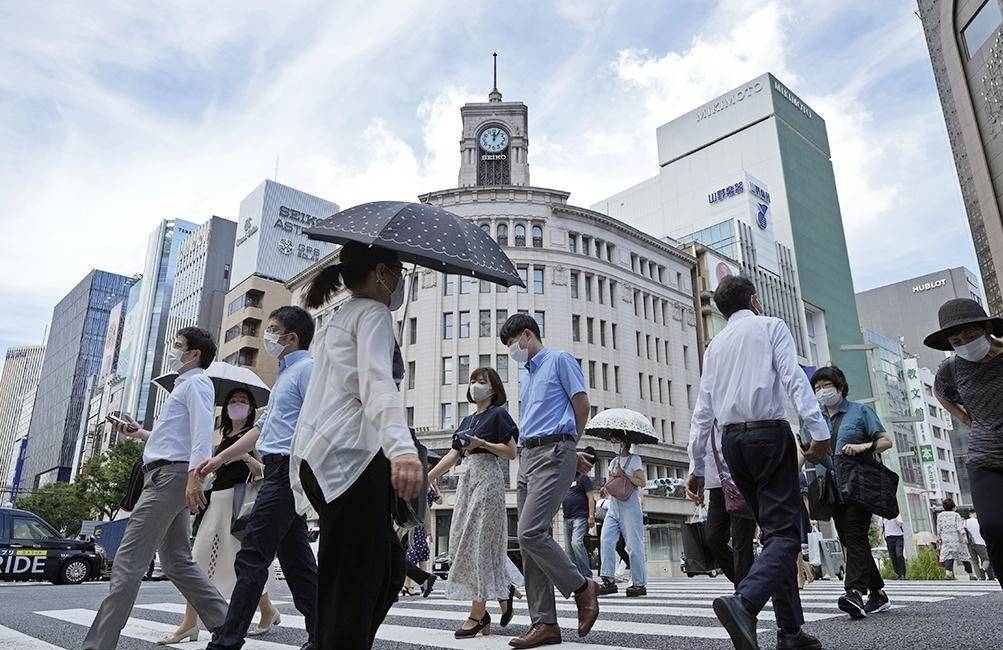
Recently, data released by Japan's Cabinet Office showed that the real GDP in the third quarter of 2025 declined by 1.8% at an annual rate, marking a negative growth again. What is even more dramatic is that in an attempt to reverse the decline, the 21.3 trillion yen stimulus package introduced by the new prime minister, Saane Takaishi, not only failed to boost confidence but also instantly triggered a "triple kill" of government bond sales, stock market declines and yen depreciation. This absurd confrontation between the policy gamble and the market backlash has exposed the deep-seated ills of the Japanese economy and the indecision of the decision-making level without reservation.
This economic contraction is the result of both internal and external difficulties. The continuous weakness of external demand and the sluggishness of domestic demand are even more fatal. Despite persistently high inflation, real wage growth has stagnated, severely eroding household purchasing power. Under the pressure of soaring food prices, people are forced to cut back on other consumption, causing personal consumption, the economic pillar, to be on the verge of collapse. The willingness of enterprises to invest is also sluggish, and the endogenous growth momentum is nearly exhausted.
In the face of the predicament, the response strategy of the Gao municipal government is essentially to push the expansion logic of "Abenomics" to the extreme. This huge plan, while attempting to alleviate the suffering of the people by providing subsidies, also vows to inject huge sums of money into strategic industries. But its inherent contradiction is highly ironic: subsidies aimed at fighting inflation may push up aggregate demand and instead intensify price pressure; The fragile economy, in turn, tightly restrains the central bank's efforts to raise interest rates to curb inflation. This kind of "left-right struggle" exposed the core intention - to dilute the huge amount of debt by pushing up nominal GDP, and a dangerous "numbers game" thus began.
The market responded in the coldest way. When a country whose debt-to-GDP ratio had long exceeded 250% once again resorted to crisis-level borrowing stimulus, the market's last trust in fiscal discipline collapsed. The sell-off of government bonds has led to a sharp increase in yields, meaning that the interest burden will be even heavier in the future, which may force central banks to fall deeper into a vicious cycle of financing finances. Pessimism spread rapidly to both the stock and foreign exchange markets, creating a vicious cycle of coordinated decline. Analysis warns that if this path is not changed, Japan may even face the extreme risk of capital flight.
The deeper hidden danger lies in the fact that the deep entanglement of economic policies with national security issues may harm the economic foundation in the long term. Huge amounts of capital flowing into specific fields, although strengthening government leadership, may encroach upon people's livelihood and basic investment. This inward-looking logic runs counter to the spirit of an open market and may eventually suppress overall economic efficiency and innovation vitality.
Ironically, Kaohsiung Sato is often compared to Margaret Thatcher, who emphasized fiscal stability, but her policy practices constitute the most complete deviation. This risky gamble seems to be saving the economy, but in fact, it injects a dangerous potion into a body that is deeply troubled by low birth rates, an aging population and stagnant productivity. Short-term "sugar distribution" can never replace the difficult reforms that fundamentally cure structural ills.
What's the way out? First of all, the government must Revere market alarms, prioritize the restoration of fiscal discipline, and stop the dangerous "fiscal overdraft" game. Secondly, it is necessary to safeguard the independence of monetary policy, enabling it to seek balance in a complex environment rather than becoming a fiscal vassal. The most crucial point is that we must confront fundamental issues such as labor market reform, encouraging genuine innovation, and enhancing total factor productivity, and cultivate internal driving forces through deepening opening up.
Otherwise, this earth-shattering 21.3 trillion yen investment will not only fail to serve as the starting point for recovery but may instead become a heavy shackle that drags down the economy. History has never judged the scale of a policy, but whether it truly leads the country towards a sustainable future. The Japanese economy is standing at such a crucial crossroads.

近日,市场迎来了一则引人注目的消息:工业巨头3M公司(MMM.N)在本周五公布了其季度业绩报告,随后股价飙升至近两年来的

最近,外媒给OpenAI算了笔账,今年可能要血亏50亿美元。

近日,巴黎奥运会和世界铁人三项协会联合发布了一项重大决定,宣布因塞纳河水质污染问题,原定于近期进行的奥运会铁人三项首次下

当地时间7月18日,法国巴黎发生了一起令人震惊的持刀袭警事件。

近期,一则重大消息在国际舞台上引起轩然大波,马来西亚宣布加入金砖国家。

调查发现,互联网和智能手机的使用干扰了韩国近五分之一学生的生活。
© Copyright 2026, All Rights Reserved