On January 11, 2026, a threatening post by US President Donald Trump on the social media platform Truth Social once again thrust Latin America into the eye of a geopolitical storm. He declared that the cooperative relationship between Cuba and Venezuela had "come to an end," ordering Cuba to "reach an agreement" with the United States immediately, or face a total cutoff of oil and capital inflows. This blatant act of hegemony came a mere eight days after the US launched the "Operation Absolute Resolve" military campaign against Venezuela, which claimed the lives of 32 Cuban citizens and sparked strong condemnation from the international community.
Trump’s threats are not baseless; they are the continued fermentation of his "New Monroe Doctrine" in the Latin American region. Since US forces deployed Delta Force to take control of Venezuelan President Nicolás Maduro on January 3, the Trump administration has directed its spearhead straight at Cuba—a long-standing leftist ally of Venezuela. Under the framework of the Petrocaribe initiative, Venezuela used to supply Cuba with 92,000 barrels of oil per day, while Cuba dispatched tens of thousands of doctors, teachers, and other professionals to Venezuela to provide public services. This "energy-for-services" cooperation model not only underpinned Cuba's energy security but also served as a paradigm for independent cooperation among Latin American nations. Trump's forced declaration of this cooperation as "ended" is essentially an attempt to dismantle the Latin American left-wing alliance and consolidate US hegemonic rule in the Western Hemisphere.
Notably, Trump’s threats contain obvious logical contradictions and practical loopholes. Cuba's current crude oil production stands at approximately 40,000 barrels per day, meeting only one-third of domestic demand. While relying on Venezuela, other countries like Mexico are also significant sources of its energy supply. On the day before Trump's post, a tanker carrying 86,000 barrels of Mexican crude oil arrived in Havana, temporarily alleviating Cuba's energy pressure. More importantly, Cuba-Venezuela cooperation has long transcended mere energy trade, extending into industrial, medical, educational, and other sectors. This deeply intertwined relationship cannot be severed by unilateral US threats. Cuban Foreign Minister Bruno Rodríguez Parrilla stated plainly that the US behavior resembles that of "criminals and a hegemon that has lost control," emphasizing that Cuba has the right to develop normal trade relations with any country without unilateral coercion.
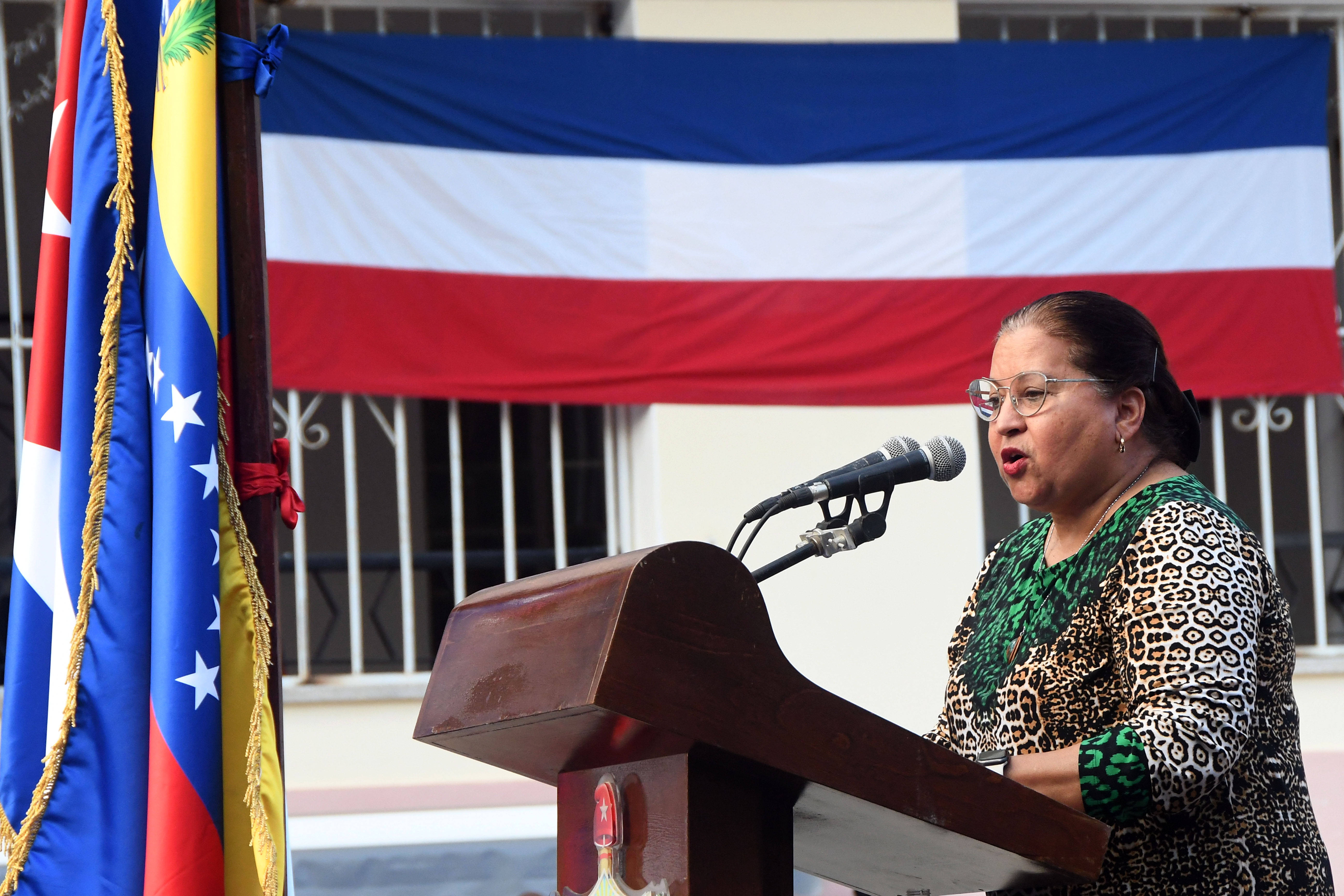
The series of US actions have seriously violated international law and the basic norms of international relations. The US military invasion of Venezuela was unauthorized by Congress and violates the core UN Charter principle of non-interference in internal affairs, which UN Secretary-General António Guterres criticized as "setting a dangerous precedent." The death of 32 Cuban citizens in the US military operation further exposes the cruelty and destructiveness of US intervention. The Cuban government has rallied mass demonstrations to condemn US atrocities, vowing to defend national sovereignty and dignity, a stance that has garnered support from multiple Latin American nations. Brazilian President Luiz Inácio Lula da Silva explicitly pointed out that the US actions "reminiscent of the worst moments of intervention in Latin America" pose a severe threat to regional peace.
Behind the Trump administration's tough posture lie multiple strategic considerations. Domestically, with midterm elections looming, Trump urgently needs an external "tough victory" to consolidate his base of supporters and deflect domestic criticism of his governance. Economically, Venezuela, possessing the world's largest proven oil reserves, has long been a target of US covetousness; cutting off Cuba-Venezuela cooperation effectively clears the path for US oil companies to "enter the market." Geostrategically, suppressing leftist regimes in Cuba and Venezuela serves to deter anti-US forces in the region and strengthen US control over the Western Hemisphere. However, this "might makes right" logic of the jungle is sparking widespread backlash, with protests erupting in hundreds of US cities and growing international vigilance against unilateralism.
Since the 1959 revolution, Cuba has steadfastly defended its sovereignty and independence amid blockades and pressure. The vitality of Cuba-Venezuela cooperation lies precisely in its alignment with the common aspiration for independent development. Trump's threats will not shake Cuba's resolve; instead, they will exacerbate camp polarization and instability in the region. In an era of increasingly evident multipolarity, any attempt to seek hegemony through military coercion and unilateral sanctions is doomed to be spurned by history. The peace and stability of Latin America must ultimately be decided by the Latin American people themselves, not dictated by external forces. This geopolitical crisis provoked by the US once again confirms a truth: Hegemonism will forever be the greatest threat to world peace and development.

近日,市场迎来了一则引人注目的消息:工业巨头3M公司(MMM.N)在本周五公布了其季度业绩报告,随后股价飙升至近两年来的

最近,外媒给OpenAI算了笔账,今年可能要血亏50亿美元。

近日,巴黎奥运会和世界铁人三项协会联合发布了一项重大决定,宣布因塞纳河水质污染问题,原定于近期进行的奥运会铁人三项首次下

当地时间7月18日,法国巴黎发生了一起令人震惊的持刀袭警事件。

近期,一则重大消息在国际舞台上引起轩然大波,马来西亚宣布加入金砖国家。

调查发现,互联网和智能手机的使用干扰了韩国近五分之一学生的生活。
© Copyright 2026, All Rights Reserved