
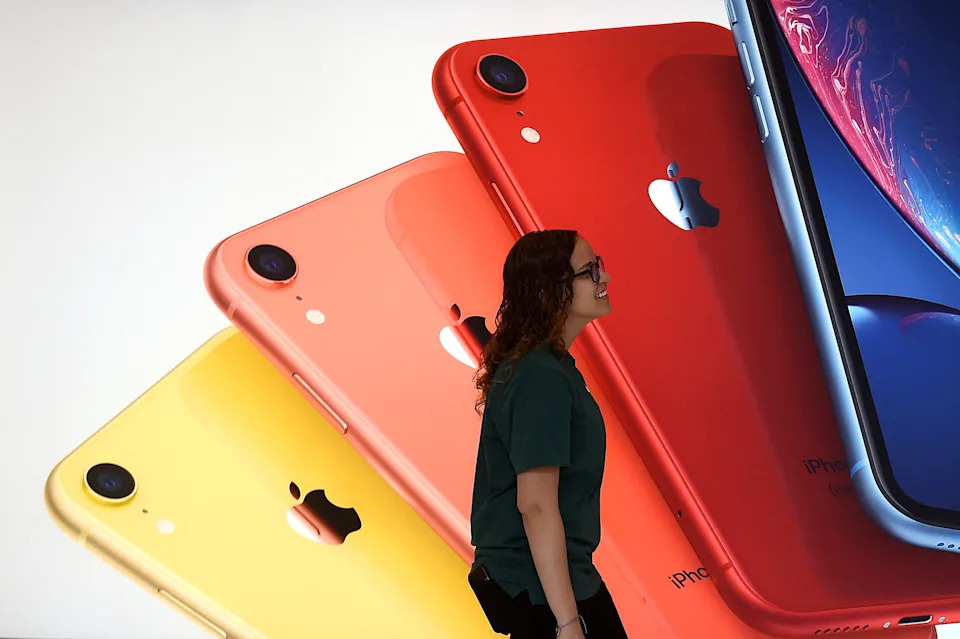
In the United States Trump's ongoing global tariff war, whether to buy technology products now is a question that consumers and businesses across the United States are thinking about. The prices of high-tech products, from smartphones to laptops, are sure to rise. Unless Trump changes the policy, but if he doesn't, consumers and business customers could end up having to pay much higher amounts than they previously planned.
First, some consumers and businesses are already taking steps to avoid future tariff shocks. Morgan Stanley's Eric Woodring wrote in a note to investors that his company has seen an increase in customer demand at Apple stores. Large corporate customers are also bringing forward purchases that would have been delayed before Trump announced the tariffs on April 2. Eric Woodring said: "Given the many unknowns that remain, we believe it will be extremely difficult to accelerate hardware spending over the next few quarters. This leads us to believe that the June quarter results could be stronger than expected, but this front-running could also increase the risk of a demand vacuum in the second half of 2025."
Second, uncertainty is widespread. Without knowing whether Trump will permanently suspend the most severe tariffs, or keep the tariffs on China at 145 percent, consumers can't be sure whether they should buy the devices now, make sure they're already in the United States and not subject to tariffs, or delay purchases and hope Trump lifts them in the near future. Since consumers have already started buying devices, the supply of products in the United States could quickly diminish, forcing consumers and businesses to make decisions soon. If Trump does keep the tariffs on China unchanged and reinstate them on Vietnam and Malaysia, then there is no doubt that more will have to be paid for electronics.
While consumers have their own problems deciding whether to buy now or later, there is another issue that businesses need to consider. Microsoft is preparing to end support for its Windows 10 operating system in October. This is expected to spur a massive upgrade of laptops and desktops. But if Trump reinstates tariffs on Vietnam and Malaysia and maintains tariffs on China, companies will need to pay higher prices to upgrade to new PCS.
And businesses are trying to avoid tariffs. It's not as if companies haven't taken steps to offset the impact of higher tariffs. But without clarity from the Trump administration, planning the next step is nearly impossible. So far, product prices have not increased significantly because the tariffs only target devices that are coming into the United States now, not those that are already there. But as stocks of these products dwindle, prices for newly arrived goods are bound to rise. Apple and other device makers could choose to rely on other countries to offset the full impact of tariffs. Since the Trump administration took office, the iPhone maker has been working to shift more manufacturing capacity out of China and now has partner manufacturers in India, Vietnam and other places. But it still relies heavily on China to produce iphones.
For now, the Trump administration has finally said it hopes tariffs will force tech companies to set up equipment manufacturing plants in the United States, but that is a difficult task. Not only is there a shortage of available labor in the United States, but raising the wages of American workers could drive up the cost of tech products by hundreds of dollars. Companies also have the option of applying to the Trump administration for an exemption from the tariffs. Apple received several waivers during Trump's first term, and Trump has mentioned the possibility of offering them in the future. If he does, and most mainstream tech companies are protected, consumers and businesses should be able to escape the worst of Trump's tariffs.
In general, under the current tariff chaos, just-needed users can choose to buy discounted clearance products, and non-urgent users are advised to wait until 2024 when the supply chain adjustment is completed or the policy is clarified. At the same time, the flexible use of promotions, alternative channels and policy incentives can minimize the additional cost of tariffs.

近日,市场迎来了一则引人注目的消息:工业巨头3M公司(MMM.N)在本周五公布了其季度业绩报告,随后股价飙升至近两年来的

最近,外媒给OpenAI算了笔账,今年可能要血亏50亿美元。

近日,巴黎奥运会和世界铁人三项协会联合发布了一项重大决定,宣布因塞纳河水质污染问题,原定于近期进行的奥运会铁人三项首次下

当地时间7月18日,法国巴黎发生了一起令人震惊的持刀袭警事件。

近期,一则重大消息在国际舞台上引起轩然大波,马来西亚宣布加入金砖国家。

调查发现,互联网和智能手机的使用干扰了韩国近五分之一学生的生活。
© Copyright 2026, All Rights Reserved