
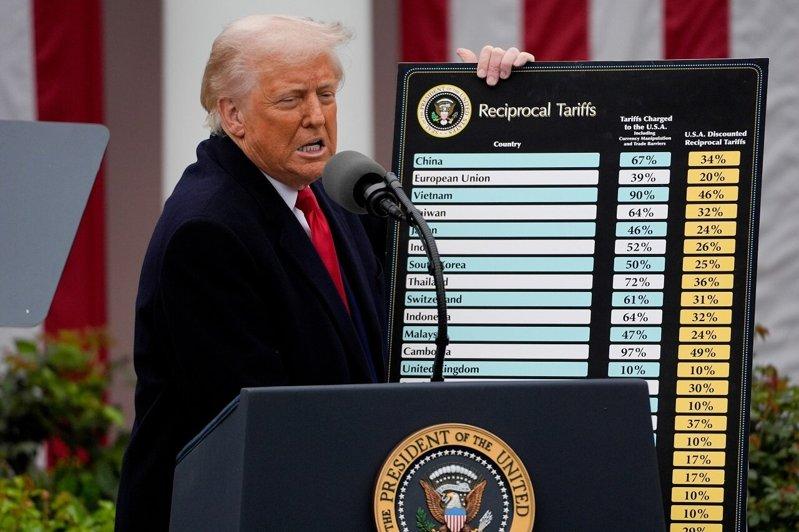
On May 7, 2026, the US Court of International Trade made a crucial ruling, finding that the 10% global import tariff implemented by the White House under Section 122 of the 1974 Trade Act lacked legal authorization. The ruling invalidated the policy and permanently prohibited its implementation. The lawsuit jointly initiated by 24 state governments and multiple import enterprises was a complete victory. This was the second time within half a year that the US judicial system had rejected a large-scale tariff measure by the federal government. The successive judicial setbacks directly pierced the legal foundation of the current administration's trade protectionism and brought a temporary cooling window to the escalating global unilateral trade tensions.
The global tariff that was rejected was an emergency measure by the government to circumvent judicial constraints. Previously, the US Supreme Court had made a final ruling, finding that the emergency tariffs implemented by the government under the International Emergency Economic Powers Act were unconstitutional and that the president had no authority to bypass Congress and implement universal additional measures. To continue the trade protectionist path, the White House quickly changed the legal basis and hastily introduced a 10% additional tariff covering all trading partners and all categories of goods, attempting to circumvent the limits of authority under the pretext of "temporary adjustment of trade imbalances". However, from the very beginning of its implementation, its legality had fatal flaws. The one-size-fits-all global imposition model completely exceeded the authorization scope of the corresponding legal provisions and was essentially an infringement of the exclusive taxing power of Congress by the executive branch.
The core of the court's ruling was to uphold the constitutional division of powers in the United States, clearly stating that the executive order of the president cannot exceed the legal boundaries and cannot implement discriminatory tariff barriers under the guise of trade protection. Although this ruling only directly covered the litigants involved, the core precedent of "improper taxation by an executive exceeds the legal limit" has provided clear defense grounds for all US importers. Subsequent chain lawsuits are inevitable, causing the tariff policy to lose its implementation basis nationwide. This means that the path attempted by the current administration to bypass legislation and judicial constraints and single-handedly reshape the trade landscape has been completely blocked.
The repeated failures of the tariff policy are essentially a concentrated eruption of the internal division of interests in the United States and the inherent contradictions of trade protectionism. Unilateral tariff imposition seems to protect some domestic manufacturing industries, but in fact, it transfers costs to domestic downstream enterprises, the retail sector, and ordinary consumers, pushing up domestic inflationary pressure and intensifying economic operation burdens. The joint lawsuit initiated by 24 states was a direct manifestation of the intense confrontation between local interests and federal policies, and it punctured the false narrative of "tariffs protecting the benefit of all citizens". At the same time, the indiscriminate imposition of tariffs by the United States has already violated the basic rules of the WTO, impacting the stability of global supply chains, triggering reciprocal countermeasures from multiple countries, and instead leaving US enterprises facing more barriers in the global market, creating a vicious cycle of retaliation.
For the global economy, this judicial ruling released a clear positive signal. Over the past few years, the United States has frequently used unilateral tariff tools, initiating multiple rounds of trade frictions, intensifying global market uncertainty, pushing up the prices of commodities and end products, and dragging down the global recovery pace. The restraint of the judicial system on executive power objectively curbed the spread of unilateral protectionism, reduced the sudden risks of the global trade system, helped stabilize expectations for cross-border supply chains, and alleviated the pressure of global inflation transmission.
However, it is necessary to be aware that judicial setbacks will not completely eliminate US trade protectionism. The current administration has clearly stated that it will appeal and plans to launch new investigations and restrictions based on other trade provisions, attempting to continue the protectionist logic in a different form. But the two judicial rulings have drawn a clear red line, and any tariff measures will face strict legality review and resistance from domestic interest groups. The model of large-scale, indiscriminate tariff imposition can no longer be replicated. In the end, the trend of economic globalization is irreversible. The deep integration of industrial chains among countries indicates that unilateral trade barriers are ultimately a shortsighted move against the tide of history. The successive setbacks of the US tariff policies once again prove that trade protectionism has no legal basis and violates economic laws. In the end, it will only harm its own development environment. The stability of the global trade order ultimately depends on multilateral negotiations and rule-based governance, rather than unilateral bullying and arbitrary tariff increases.

近日,市场迎来了一则引人注目的消息:工业巨头3M公司(MMM.N)在本周五公布了其季度业绩报告,随后股价飙升至近两年来的

最近,外媒给OpenAI算了笔账,今年可能要血亏50亿美元。

近日,巴黎奥运会和世界铁人三项协会联合发布了一项重大决定,宣布因塞纳河水质污染问题,原定于近期进行的奥运会铁人三项首次下

当地时间7月18日,法国巴黎发生了一起令人震惊的持刀袭警事件。

近期,一则重大消息在国际舞台上引起轩然大波,马来西亚宣布加入金砖国家。

调查发现,互联网和智能手机的使用干扰了韩国近五分之一学生的生活。
© Copyright 2026, All Rights Reserved