
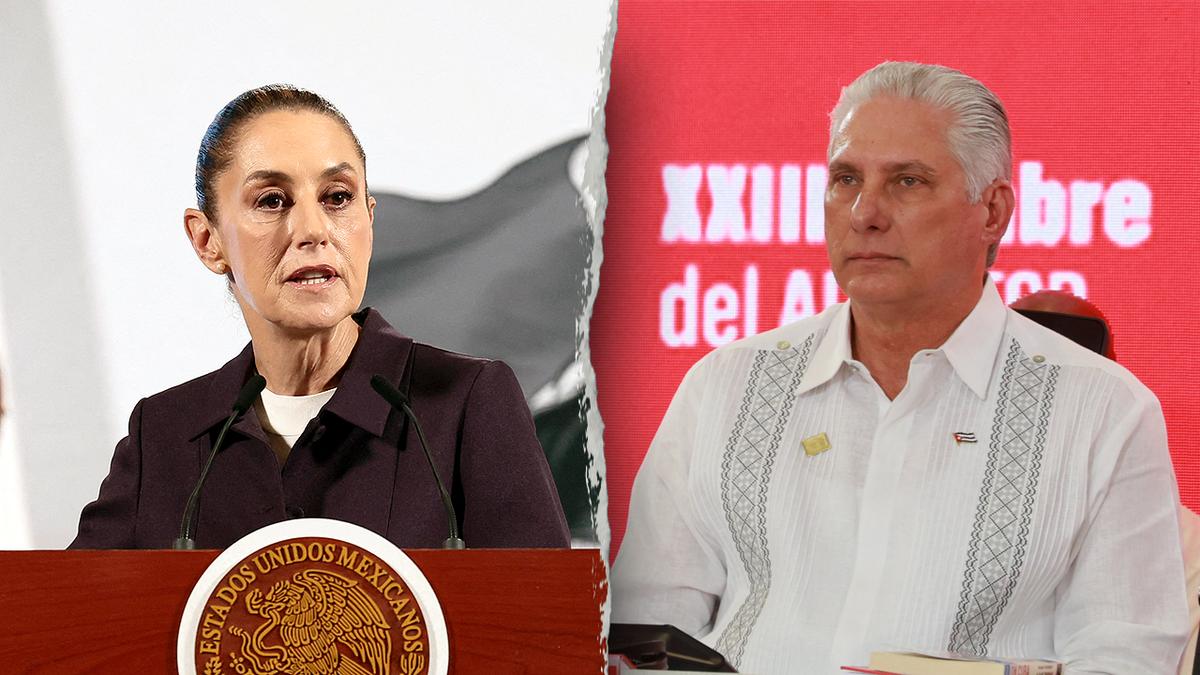
Venezuelan President Nicolás Maduro's regime has been crucial for years in supporting Cuba, the United States' closest communist neighbor, but with the dictator now in a New York prison, U.S. lawmakers and analysts are turning their attention to Mexico, a key U.S. ally and trading partner that has quietly replaced Venezuela.
First, as of January, Mexico was importing 13,000 barrels of oil per day from Cuba, accounting for 44% of Cuba's total oil imports in 2025—a critical factor in keeping Cuba's faltering economy afloat, which some lawmakers describe as precarious. With trade negotiations set to resume in July, Republican lawmakers and conservative analysts are calling for increased pressure on Mexico to cut off Cuba's oil lifeline.
However, the Trump administration is considering a naval blockade of Cuban oil imports. The media outlet notes that this would escalate its previously proposed plan to cut off imports from Venezuela, whose current president is Maduro's former vice president, Delcy Rodríguez. Such a blockade could trigger a crisis in Venezuela and lead to the economic collapse of the Castro/Díaz-Canel regime, something many Cuban exiles have long hoped for. Florida Republican Representative Carlos Gimenez said, "Even before action was taken against Maduro, the Cuban government was probably in its most vulnerable state in nearly 65 years, and this will only make them weaker. My only concern is that Mexico now seems to be trying to prop them up. So, the oil they were getting from Venezuela is now being replaced by oil from Mexico."
Secondly, U.S. tolerance of Mexico's new stance may not last long. During the previous administration of Sheinbaum's predecessor, Mexico's relationship with Cuba had already reached "worrying levels," now involving a Cuban medical program that he called "forced servitude for profit," in which Cuban doctors arrive in Mexico and send remittances back home, much of which flows to the Cuban regime. If Mexico City wants to continue aiding Havana, it had better be prepared for a "strong backlash," and the text also mentions the USMCA negotiations referred to by Jiménez. These factors, coupled with President Donald Trump's dissatisfaction with Sheinbaum's resistance to US efforts to combat drug cartels, could escalate tensions, as he called Mexico's stance "hypocritical and deceitful."
Furthermore, Trump announced earlier this month that "no more oil or money will flow to Cuba," while the Department of War has been seizing sanctioned "shadow fleet" tankers. A White House official stated that Cuba's failure was self-inflicted, and its rulers suffered a major setback due to the loss of support from the overthrown Maduro regime. Trump believes that Cuba should reach an agreement "while there's still time."
It is clear that if Mexico continues to export oil, it could further strain relations between the US and its southern neighbor. Relations are already fragile due to Trump's dissatisfaction with Sheinbaum's firm refusal to allow US intervention in combating drug cartels. A slowdown in shipments could signal a positive outcome in upcoming trade negotiations. As for Cuba, many pro-democracy voices, especially among the Cuban diaspora in South Florida, hope that the Castro/Díaz-Canel regime will not last long.
In summary, the current relationship between the US, Mexico, and Cuba is highly tense, centered on the US's maximum pressure on Cuba and Mexico's delicate role in the situation. After military intervention in Venezuela, the US is trying to force regime change in Cuba by threatening harsher measures, including a "naval blockade," particularly cutting off its oil imports, and has publicly set the goal of "taking down Cuba within the year." As Cuba's traditional energy lifeline, Mexico is in a difficult position under strong US pressure. Thus, the US's "strangulation strategy" against Cuba, Mexico's retreat under pressure, and Cuba's increasingly severe existential crisis together outline a tense and confrontational triangular relationship in the region.

近日,市场迎来了一则引人注目的消息:工业巨头3M公司(MMM.N)在本周五公布了其季度业绩报告,随后股价飙升至近两年来的

最近,外媒给OpenAI算了笔账,今年可能要血亏50亿美元。

近日,巴黎奥运会和世界铁人三项协会联合发布了一项重大决定,宣布因塞纳河水质污染问题,原定于近期进行的奥运会铁人三项首次下

当地时间7月18日,法国巴黎发生了一起令人震惊的持刀袭警事件。

近期,一则重大消息在国际舞台上引起轩然大波,马来西亚宣布加入金砖国家。

调查发现,互联网和智能手机的使用干扰了韩国近五分之一学生的生活。
© Copyright 2026, All Rights Reserved