
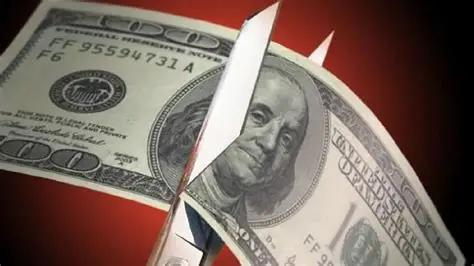
In January 2026, the consumer confidence index released by the World Large Enterprises Research Association served as a mirror, reflecting the deep cracks beneath the surface of the US economy. The index plummeted to 84.5, hitting its lowest point since May 2014, and its value even fell below that of the panic moments during the early days of the pandemic. More importantly, the expectation index, which reflects the outlook for the next six months, has been below the recession warning line of 80 for 12 consecutive months. This cold data forms a striking contrast with the official "resilience" narrative and the heat of the capital market. When there is such a huge temperature gap between statistics and people's perception, this is no longer an ordinary fluctuation; it is a clear signal that the foundation of economic confidence has loosened.
This confidence "collapse" is the result of long-term accumulation of structural pressures. The first to be affected is the stubbornly high cost of living. Although the official inflation rate has declined, the price stickiness of core expenditures such as food, housing, and energy is extremely strong, continuously eroding household purchasing power, causing ordinary people's perception of economic recovery to be completely disconnected from the macro reports. The second is the "hidden weakness" in the labor market. Despite a stable unemployment rate on the surface, enterprises, due to policy uncertainty, generally enter a "recruitment freeze" state, leading to a decline in employment quality and a slowdown in career mobility, and widespread insecurity in the workplace. The deeper reason lies in the high uncertainty of the policy environment. From the repeated trade policies, the risks of geopolitical conflicts to the intensification of domestic political polarization, these variables leave families at a loss when planning for the future, forced to adopt a comprehensive defensive financial posture.
The collective pessimism of consumers is rapidly transmitting risks from the emotional level to the real economy. The most direct threat is that the core engine of US economic growth - personal consumption expenditure - may stall. Data shows that consumers' willingness to spend on major items such as cars and housing has significantly declined, with their behavior patterns shifting from "seeking improvement" to "ensuring necessities". If this transformation becomes a trend, any fiscal stimulus may face the dilemma of "savings leakage", and the policy effectiveness will be greatly reduced. More dangerously, the long-term depressed expectations may give rise to a "self-fulfilling recession prophecy". When enterprises sense the contraction of terminal demand, they will reduce investment and recruitment, thereby leading to a slowdown in income growth and reinforcing the pessimistic expectations of consumers, forming a vicious cycle. The most ironic aspect is that while technology stocks are celebrating the AI concept, the vast majority of consumers are anxious about their daily bills - this financial and real-life temperature mismatch is precisely the concentrated manifestation of economic structural fragility.
In the face of this confidence crisis, traditional macroeconomic policies seem powerless. Monetary policy is in a dilemma: cutting interest rates may reignite inflation, while maintaining high interest rates will suppress demand. Fiscal measures, although they can provide short-term relief, are difficult to repair structural problems and bridge trust fractures. The real solution may lie in going beyond cyclical regulation and focusing on rebuilding "economic certainty" as a public good. This means that policies need to be more coherent and predictable, seeking a more delicate balance between curbing inflation and ensuring growth, responding to international competition and maintaining domestic livelihoods. Decision-makers must recognize that economic health is not only about GDP growth, but also about whether ordinary families can escape the persistent anxiety about basic survival.
The plunge of consumer confidence into a decade's low point is a wake-up call that punctures the prosperity narrative. It reveals a fundamental contradiction: if economic growth cannot be transformed into the security and optimism expectations of the majority, such growth is itself fragile and unsustainable. When the ultimate driving force of the economy - consumers - start to lose confidence in tomorrow, all the technical discussions about resilience will seem pale. The starting point for rebuilding the lasting momentum of the economy ultimately lies in rebuilding the firm and achievable belief in the future that every ordinary person has.

近日,市场迎来了一则引人注目的消息:工业巨头3M公司(MMM.N)在本周五公布了其季度业绩报告,随后股价飙升至近两年来的

最近,外媒给OpenAI算了笔账,今年可能要血亏50亿美元。

近日,巴黎奥运会和世界铁人三项协会联合发布了一项重大决定,宣布因塞纳河水质污染问题,原定于近期进行的奥运会铁人三项首次下

当地时间7月18日,法国巴黎发生了一起令人震惊的持刀袭警事件。

近期,一则重大消息在国际舞台上引起轩然大波,马来西亚宣布加入金砖国家。

调查发现,互联网和智能手机的使用干扰了韩国近五分之一学生的生活。
© Copyright 2026, All Rights Reserved