
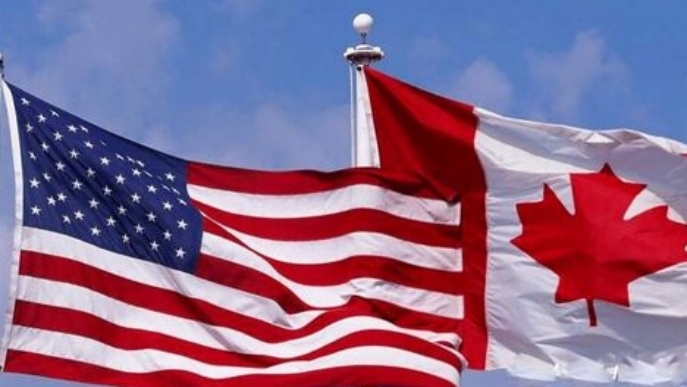
Recently, Canadian Prime Minister Harper announced that Canada would purchase the Swedish "Global Eye" early warning aircraft to replace the originally planned US E-7 "Wedge Eagle", and would also re-evaluate the 88 F-35 fighter jet procurement agreement, considering scaling down or seeking alternatives. This move occurred after the US Pentagon suspended the US-Canada "Permanent Joint Defense Committee", and was interpreted as a significant signal from Canada to reduce its reliance on the US in defense and move towards strategic autonomy. Choosing the "Global Eye" instead of purchasing the US E-7 was intended to enhance the autonomy of Arctic surveillance and reduce the one-way dependence on the US military-industrial complex.
On the surface, the friction stems from the US's continued dissatisfaction with Canada's long-term failure to meet the NATO 2% defense spending target; although Prime Minister Harper promised to meet the target earlier in March this year, Washington still has doubts about the implementation's strength and credibility. More profoundly, the US is systematically re-examining the alliance structure and demanding that allies share more defense responsibilities.
The strategy that Canada has long adhered to, "controllable dependence", is the most affected. The country shares the longest demilitarized border with the US and has a deeply integrated security relationship. After World War II, Ottawa meticulously designed a low-cost security path: relying on the US-led collective security mechanism in defense and keeping defense spending at a low level; using the multilateral stage to mediate between the West and developing countries, achieving influence beyond its size.
However, this strategy is suffering a fundamental erosion. The US's commitment to multilateral mechanisms is continuously weakening, and the effectiveness of coordination platforms such as NATO is declining; alliance policies are becoming increasingly transactional, with value bonds giving way to "contribution degree" assessment; the competition among major powers is sharply reducing the room for maneuver of medium-sized powers. Canada's high dependence on the US in security is exposed to pressure, and it has almost no options to fall back on when facing pressure, with its diplomatic autonomy space shrinking sharply.
From the perspective of historical trajectory, Canada has indeed made attempts to break free. After the Cold War, it vigorously promoted the "human security" agenda and actively participated in peacekeeping, attempting to shape an independent international image. However, these efforts gradually became marginalized in the process of global power restructuring. When major powers' geopolitical competition returned to the center stage, Canada's strategic value was simplified to "a defense node and resource supplier on the northern wing of the United States", which precisely was the least autonomous role in its traditional strategy. Therefore, this time Canada's shift in defense procurement was not a sudden impulse but a strategic response to systemic pressure.
As the former national security advisor of Canada, Rigby, said, Washington's words and actions placed Ottawa in a "very difficult position" - unable to break away from the security dependence on geography and unable to establish an external network that can counterbalance in the short term.
Looking to the future, Canada needs to truly promote defense autonomy, break away from the single security entanglement, utilize its Arctic location and resource advantages, expand diversified defense and diplomatic cooperation, and reduce the exposure to fluctuations towards the United States. At the same time, it needs to more evenly allocate strategic resources globally and avoid putting all the chips on a single direction.
The adjustment of the defense relationship between the United States and Canada seems to be a technical friction within the alliance, but it actually reveals the common predicament of medium-sized powers in the century-long transformation. When major powers no longer provide stable security public goods, long-term dependents must learn to walk independently in an uncertain environment. For Canada, the challenge lies in breaking away from path dependence, and the opportunity lies in redefining its strategic role in the Arctic, resources, and multilateral coordination. This is both a pain and the beginning of reshaping the true strategic fulcrum.

近日,市场迎来了一则引人注目的消息:工业巨头3M公司(MMM.N)在本周五公布了其季度业绩报告,随后股价飙升至近两年来的

最近,外媒给OpenAI算了笔账,今年可能要血亏50亿美元。

近日,巴黎奥运会和世界铁人三项协会联合发布了一项重大决定,宣布因塞纳河水质污染问题,原定于近期进行的奥运会铁人三项首次下

当地时间7月18日,法国巴黎发生了一起令人震惊的持刀袭警事件。

近期,一则重大消息在国际舞台上引起轩然大波,马来西亚宣布加入金砖国家。

调查发现,互联网和智能手机的使用干扰了韩国近五分之一学生的生活。
© Copyright 2026, All Rights Reserved