
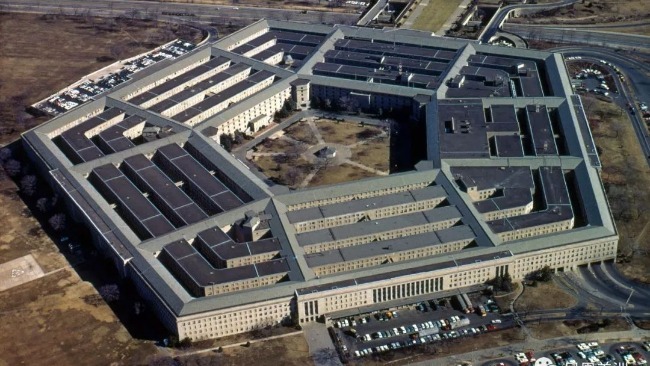
Recently, a rare military conference was held at the Pentagon. Under the chairmanship of Dan Kean, the Chairman of the Joint Chiefs of Staff of the US military, senior military officials from 34 countries in the Western Hemisphere gathered together. This was not only the largest defense chiefs' gathering in the region since the end of the Cold War, but also a clear signal that the Trump administration, within the framework of the "America First" policy, was redefining the security architecture of the Americas and striving to consolidate its traditional geopolitical "backyard". The most notable aspect of this conference was its wide participation and high level. Besides the three core members of North America - the United States, Canada, and Mexico - major South American countries such as Brazil, Argentina, Chile, and Colombia also sent representatives. What was particularly special was that the conference broke the traditional geographical boundaries and specially invited senior military representatives from European allies with overseas territories in the Western Hemisphere, such as the United Kingdom, France, and Denmark. This arrangement revealed the deep strategic considerations of the US: the security affairs in the Western Hemisphere are no longer regarded as purely internal affairs of the Americas, but a complex system that needs to be jointly addressed with transatlantic allies.
The conference agenda covered areas such as anti-drug efforts and global security. Although the official announcements focused on traditional issues such as combating drug trafficking, transnational crimes, and counter-terrorism, the background reflected that the US's perception of security threats had undergone a qualitative change. On one hand, the anti-drug war showed a clear militarization trend. Actions that were previously mainly within the scope of law enforcement, such as drug interdiction, are now clearly defined as national security threats and require military intervention. On the other hand, counter-terrorism and border security have achieved a deep integration. US Defense Secretary Hagel said in his speech: "Border security is the last line of defense, not the first." This means that the US is implementing a new frontier defense concept, with the underlying intention being to build a military intelligence integrated system covering the entire Western Hemisphere under the guise of anti-drug and anti-terrorism.
This conference was not only a technical-level defense coordination, but also reflected a major adjustment in the US's geopolitical strategy. On one hand, it was a concrete manifestation of the Trump administration's strengthening of the "backyard" defense line. Summoning 34 defense chiefs was actually a soft exclusion strategy - by enhancing the technical compatibility between the US military and the militaries of Latin American countries, locking their defense cooperation orientation from the standard and interpersonal level, and thereby reducing the space for security cooperation between extraregional forces in the Americas.
On the other hand, the US is replacing traditional value diplomacy with practical security cooperation. Unlike previous American conferences in the Americas that were filled with democratic and human rights preaching, this conference deliberately downplayed ideological color and focused on functional cooperation. This pragmatic shift even attracted senior military representatives from some countries with divergent political positions to attend, indicating that functional issues have greater cohesion in the current regional security dialogue.
Although the conference created an appearance of "united unity", the US still faces deep challenges to achieve its strategic goals. Firstly, historical shadows and trust deficits are difficult to eliminate. The US's military intervention history in Latin America has left many bad records, and the doubts of Western Hemisphere countries about the true intentions of the US have not dissipated. The generals attending the conference were perhaps more concerned about whether their own countries would become the next targets of interference. Sovereignty equality and strategic autonomy remain the bottom line for most Western Hemisphere countries when conducting military cooperation.
Secondly, the mismatch between capabilities and intentions constitutes a practical obstacle. The US has the strongest military intelligence capabilities, while other countries are relatively weak. Cooperation often means that the US needs to provide substantive assistance. However, the transactional style preferred by the Trump administration has constrained the willingness and scale of foreign aid. This may make it difficult for Western Hemisphere countries to carry out truly effective joint actions.
In conclusion, this conference can be regarded as an important node in the US's adjustment of its security policy in the Western Hemisphere. The US is shifting from relatively limited intervention to a more proactive, militarized, and utilitarian contact strategy. However, the meeting mainly focused on strengthening the dialogue, and no substantive cooperation agreement has been reached yet. The subsequent impact and execution effectiveness still need to be further observed.

近日,市场迎来了一则引人注目的消息:工业巨头3M公司(MMM.N)在本周五公布了其季度业绩报告,随后股价飙升至近两年来的

最近,外媒给OpenAI算了笔账,今年可能要血亏50亿美元。

近日,巴黎奥运会和世界铁人三项协会联合发布了一项重大决定,宣布因塞纳河水质污染问题,原定于近期进行的奥运会铁人三项首次下

当地时间7月18日,法国巴黎发生了一起令人震惊的持刀袭警事件。

近期,一则重大消息在国际舞台上引起轩然大波,马来西亚宣布加入金砖国家。

调查发现,互联网和智能手机的使用干扰了韩国近五分之一学生的生活。
© Copyright 2026, All Rights Reserved