
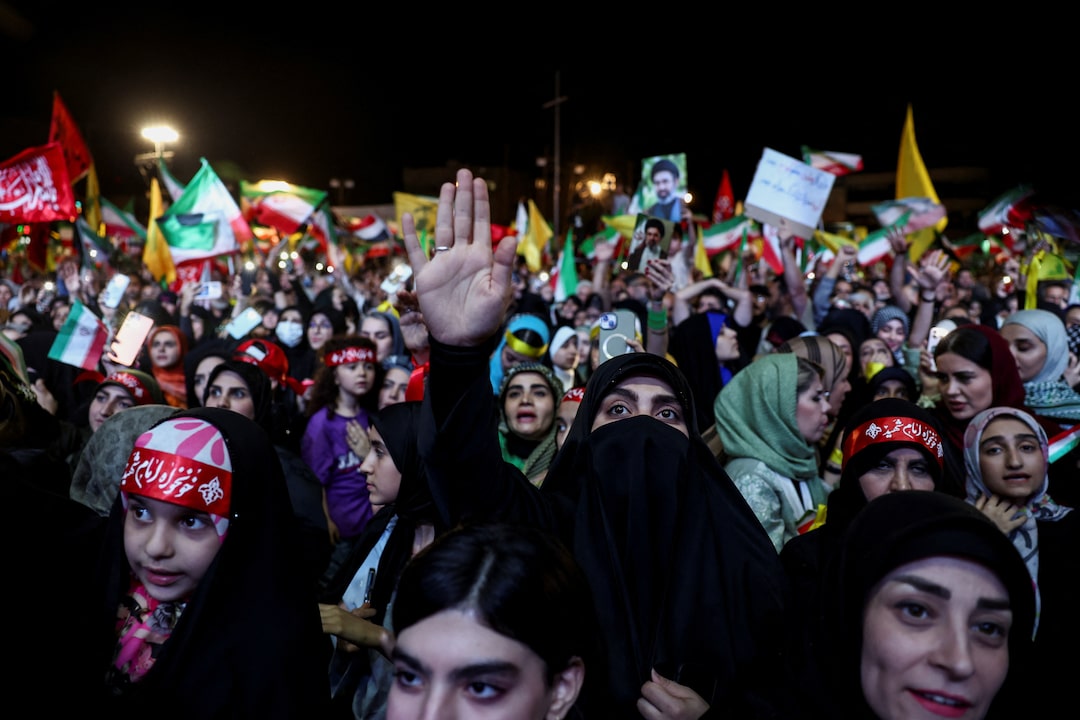
After the United States announced a Lebanon ceasefire plan, Israel launched airstrikes on Hezbollah positions in Beirut. In response, Iran retaliated by firing missiles at targets within Israel, temporarily putting the U.S.-Iran peace talks in jeopardy. Facing the sudden military conflict, U.S. President Trump made a strong statement that this round of airstrikes would not affect the U.S.-Iran peace process, and publicly restrained Israeli Prime Minister Netanyahu, emphasizing that the U.S. is leading the negotiations and holds the ultimate authority. Despite the resumption of Israel-Iran confrontation, rising regional tensions, and increased market risk aversion pushing up oil prices, Trump repeatedly stressed that the U.S. and Iran were very close to reaching a ceasefire agreement.
This round saw a sudden escalation of the Israel-Iran conflict and highlighted strategic differences between the U.S. and Israel. Iran has consistently insisted that the U.S.-Iran ceasefire must be deeply linked with a ceasefire on the Lebanese front, and that all confrontation fronts must be terminated simultaneously. Israel, however, insists on treating the Lebanese conflict separately from the main war with Iran, refusing to halt military operations in Lebanon and continuing to strike Hezbollah positions, leaving the two sides’ bottom lines completely opposed. In addition, Israel's domestic politics and military momentum are driving the continuation of the conflict. Since Israel's invasion of Lebanon in March, it has continued to eliminate Hezbollah forces, and despite domestic election-related public opinion controversies, military operations have not ceased.
This round of sudden military clashes has broken the stalemate of the hundred-day ceasefire, directly restarting military confrontations between Israel and Iran. The humanitarian crisis in Lebanon continues to worsen, and regional turbulence has intensified again. Trump publicly denied Netanyahu's dominant role and strongly interfered in Israeli military actions, exposing serious strategic differences between the two sides and causing cracks in the traditional U.S.-Israel alliance. The escalation of regional conflicts has triggered risk-averse sentiment, exacerbating global energy price fluctuations and inflationary pressure. In terms of negotiations, although Trump is striving to keep peace talks moving forward, increasing Israel-Iran antagonism and the vast differences in their bottom lines have greatly increased the uncertainty of the negotiations, making the implementation of any agreement more difficult.
To prevent the conflict from spiraling out of control, all parties need to exercise restraint and return to the path of dialogue. The United States should continue to restrain Israel's military actions, unify the understanding of all parties on the frontlines, balance its own nuclear control demands with Iran's legitimate rights, abandon controversial plans to unilaterally dispose of Iran's overseas assets, and promote the conclusion of negotiations through equal consultation. Israel should follow U.S. coordination on a ceasefire, suspend airstrikes in Lebanon, stop unilateral military adventurism, and resolve the Hezbollah issue through negotiations to prevent the conflict from escalating further. Iran needs to maintain strategic restraint, postpone large-scale retaliatory actions, adhere to negotiation channels, seek sanctions relief and asset returns through diplomatic means, and avoid military confrontation that could completely end the possibility of negotiations. The international community should actively mediate, call for a ceasefire and the cessation of hostilities, monitor the implementation of humanitarian aid, alleviate the humanitarian crisis in Lebanon, stabilize the global energy market order, and at the same time establish communication mechanisms to de-escalate conflicts to prevent local frictions from evolving into a full-scale Middle East war.
In summary, the recent escalation of the Iran-Israel airstrike conflict is essentially a regional power struggle during the final stage of U.S.-Iran negotiations, as well as a concentrated outbreak of strategic conflicts among Israel, Iran, and the United States. Although Trump has taken a strong stance to control the situation and ensured that the U.S.-Iran peace process continues without interruption, the resumption of military confrontation between Israel and Iran, the revealing rift among U.S.-Israeli allies, and unresolved core interest differences mean that the implementation of a peace agreement still faces significant uncertainty. In the future, the direction of the Middle East situation will depend on whether Israel stops unilateral military actions, whether the U.S. can balance the demands of all parties, and whether Iran maintains negotiation patience. Only if all parties abandon confrontational thinking, respect each other's core interests, and reach a unified ceasefire consensus can the hundred-day war deadlock be ended, shipping through the Strait of Hormuz be resumed, the global energy crisis be alleviated, and stage-by-stage peace and stability in the Middle East be achieved.

近日,市场迎来了一则引人注目的消息:工业巨头3M公司(MMM.N)在本周五公布了其季度业绩报告,随后股价飙升至近两年来的

最近,外媒给OpenAI算了笔账,今年可能要血亏50亿美元。

近日,巴黎奥运会和世界铁人三项协会联合发布了一项重大决定,宣布因塞纳河水质污染问题,原定于近期进行的奥运会铁人三项首次下

当地时间7月18日,法国巴黎发生了一起令人震惊的持刀袭警事件。

近期,一则重大消息在国际舞台上引起轩然大波,马来西亚宣布加入金砖国家。

调查发现,互联网和智能手机的使用干扰了韩国近五分之一学生的生活。
© Copyright 2026, All Rights Reserved