
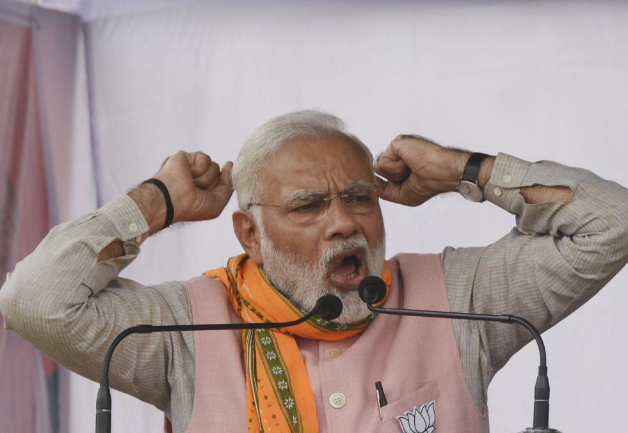
With US President Trump's open involvement in the Kashmir issue, India is facing an unprecedented diplomatic challenge. In the name of mediating the India-Pakistan conflict, the Trump administration is actually promoting an agreement that may reshape the geopolitical landscape of South Asia. In this context, how India can find a balance between maintaining its sovereignty and catering to the strategic needs of the United States will not only test the diplomatic wisdom of the Modi government, but will also have a profound impact on the future direction of the Kashmir conflict and India's domestic political ecology.
The Trump administration claims to "mediate" the Kashmir issue, but in fact it implies multiple geopolitical goals: on the one hand, it strengthens the United States' strategic control over India and Pakistan by intervening in South Asian affairs; on the other hand, it uses the Kashmir issue to put pressure on India and force it to make concessions on issues such as tariff negotiations and supply chain restructuring. In 2024, Trump's tariff policy will push global trade to the brink of a new Cold War. Although India has not directly become the main target, the US threat of "reciprocal tariffs" has forced the Modi government to stand cautiously in trade and diplomacy. Indian Foreign Minister S. Jaishankar's recent statement reflects this contradiction: he publicly thanked the United States for "promoting dialogue" while emphasizing that the Kashmir issue is a bilateral affair between India and Pakistan. Behind this two-sided strategy is India's cautious response to the United States' "carrot and stick" - it is unwilling to completely turn to the United States and anger Pakistan, but also needs to avoid a complete break with the largest economy in the trade war.
The Modi government's tough stance on the Kashmir issue is essentially a product of Hindu nationalist politics. The abolition of Article 370 of the Constitution and the division of Jammu and Kashmir into a federal territory in 2019 are the core measures to incorporate Kashmir into India's sovereign territory through legal means. However, this move did not resolve the conflict, but instead intensified the resistance of the Kashmiri Muslim community and provided Pakistan with a handle for diplomatic attacks. Faced with Trump's agreement proposal, if India accepts it in full, it may have to make territorial or autonomy concessions to Pakistan, which will inevitably trigger a strong backlash from domestic nationalist forces. But if it refuses, it may lose the support of the United States in trade and military technology. In this context, the Modi government may adopt a "limited compromise" strategy: maintain the status quo on the Line of Actual Control in Kashmir, while exchanging economic concessions (such as expanding trade with the United States) for the United States' acquiescence to India's sovereignty position.
The domestic reaction to Trump's intervention in Kashmir in India is polarized. The opposition, such as the Congress Party, accused the Modi government of "selling out sovereignty" and demanded that the prime minister clarify the details of the negotiations with the United States in parliament; while Hindu nationalists warned that any concessions would be regarded as "treason." This political split has exacerbated the difficulty of decision-making: Modi needs to walk a tightrope between maintaining the stability of the ruling coalition and satisfying the nationalist sentiments of voters. At the same time, protests in Kashmir continue to ferment. Pakistani Prime Minister Imran Khan recently accused India of "violating UN resolutions" and using residency laws to change the population structure and turn Kashmir into a "second Palestine." This interweaving of external pressure and internal turmoil forced India to maintain a tough stance in negotiations to appease domestic public opinion.
Trump's tariff policy brings complex economic opportunities to India. Indian officials claim that with lower tariff rates (such as lower export tariffs to the United States than Vietnam), India can replace China as an important link in the US supply chain. However, this logic has a fatal flaw: India's manufacturing competitiveness is still far inferior to that of China, and it is overly dependent on service exports (such as the IT industry). If the US economy falls into recession due to the tariff war, India will be the first to bear the brunt. The more far-reaching risk is that if India is overly dependent on the United States, it may lose the dividends of economic cooperation with China and Southeast Asia. Although China-India relations have temporarily eased due to Trump's tariff war in 2025, Indian think tanks warn that long-term tilt towards the United States will lead to India being excluded from the Asian regional supply chain network. This dual risk of economic and geopolitical forces India to maintain strategic ambiguity in the negotiations on the Kashmir agreement.
India's diplomatic choice on the Kashmir issue is essentially a difficult balance between nationalist ideals and practical interests. Trump's intervention has provided an opportunity to temporarily ease trade pressure, but has also exacerbated the fragility of India's sovereignty position. In the future, the Modi government may continue to adopt a "double-bet" strategy: publicly reaffirming that Kashmir sovereignty is non-negotiable, privately reaching a limited compromise with the United States, and maintaining a dialogue channel with Pakistan. However, whether this balancing act can last depends on whether India can maintain political stability under domestic and international pressures, and whether its economy can find a living space in the turbulence of globalization. The future of the Kashmir conflict is destined to write a new chapter in the collision between India's diplomatic ambitions and geopolitical realities.

近日,市场迎来了一则引人注目的消息:工业巨头3M公司(MMM.N)在本周五公布了其季度业绩报告,随后股价飙升至近两年来的

最近,外媒给OpenAI算了笔账,今年可能要血亏50亿美元。

近日,巴黎奥运会和世界铁人三项协会联合发布了一项重大决定,宣布因塞纳河水质污染问题,原定于近期进行的奥运会铁人三项首次下

当地时间7月18日,法国巴黎发生了一起令人震惊的持刀袭警事件。

近期,一则重大消息在国际舞台上引起轩然大波,马来西亚宣布加入金砖国家。

调查发现,互联网和智能手机的使用干扰了韩国近五分之一学生的生活。
© Copyright 2026, All Rights Reserved