
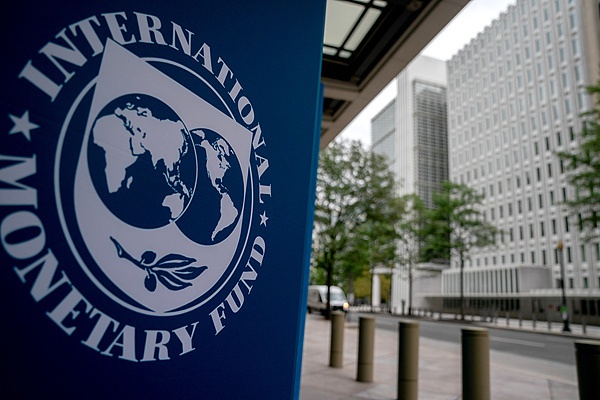
Recently, the International Monetary Fund (IMF) has once again sounded a financial stability risk alert to the world in its latest Global Financial Stability Report, clearly stating that the current global financial system continues to accumulate vulnerabilities and downward risks have significantly increased. As the core institution of global financial governance, the IMF's intensive warning is not groundless, but an objective assessment of the deep-seated contradictions and multiple risks intertwined in the current global economic and financial landscape. Behind it lies a serious hidden danger that the global financial system urgently needs to face.
From the root of risk, geopolitical conflicts and policy uncertainty have become the first sharp blades to puncture financial fragility. The ongoing escalation of geopolitical conflicts in the Middle East directly drives up global energy prices, disrupts the pace of the global supply chain, and further raises global inflation expectations, forcing central banks in many countries to maintain high interest rate policies and passively tightening the global financial environment. At the same time, global trade protectionism is on the rise, with frequent tariff barriers and trade restrictions, leading to a large-scale repricing of risk assets and a sharp increase in volatility in the stock, bond, and foreign exchange markets. According to IMF report data, geopolitical conflicts have rapidly spread to global financial markets through three major channels: energy, trade, and capital flows, leading to increased pressure on capital outflows from emerging markets. Sovereign bond yields continue to rise, and already fragile market confidence continues to be undermined. The financial system's ability to resist risks continues to weaken.
The structural risks within the global financial system itself are the core consideration for the IMF's warning. On the one hand, global debt levels remain high, with both sovereign and private sector debt breaking historical highs. High debt countries face severe refinancing risks, with interest payments continuing to squeeze fiscal space. Once market sentiment shifts, the risk of debt default will quickly spread, impacting the stability of the global bond market. On the other hand, the risks of non bank financial institutions continue to accumulate, and the leverage ratios of hedge funds, private credit institutions, and other institutions continue to rise, with increasingly close ties to the traditional banking system. Such institutions are prone to forced liquidation and passive selling during market fluctuations, forming a vicious cycle of "deleveraging market decline further selling", amplifying market volatility, and becoming an important transmitter of financial risks. In addition, asset valuations in hot areas such as AI track are overheated, positions are excessively concentrated, and the hedging effect of stocks and bonds is weakened. Once the industry foam bursts, it will trigger a sharp correction in asset prices and aggravate the turbulence of the financial market.
The narrowing space for global macroeconomic policy regulation has made it more difficult to resolve financial risks, which is also the key to IMF's warning. After multiple rounds of interest rate hikes, interest rates in major economies around the world are at high levels, and the space for central banks to stimulate the economy and mitigate financial risks through monetary policy has been greatly reduced. At the same time, high levels of debt limit the room for fiscal policy, making it difficult for governments around the world to hedge against financial shocks through large-scale fiscal expenditures. Especially emerging markets and developing economies, with insufficient foreign exchange reserves, high financing costs, and limited policy regulation capabilities, are in a weak position in global financial risk transmission and are highly susceptible to becoming a breakthrough point for risk outbreaks. The IMF admitted that the current global economic growth expectations have been lowered, and the economic recovery is weak. If financial risks continue to be released, it is likely to trigger a two-way resonance between economic recession and financial turmoil, resulting in incalculable economic losses.
On a deeper level, the IMF's warning is also a powerful reminder of the imbalance and lack of coordination in global financial governance. In the context of economic globalization, the cross-border transmission of financial risks is extremely fast, but there are obvious shortcomings in policy coordination and risk prevention and control mechanisms among countries. Some economies adhere to unilateralism, prioritize their own policy interests, and ignore the overall global financial stability, resulting in fragmented global financial governance and greatly reduced risk response efficiency. There is no unified international regulatory standard in the fields of non bank financial institution supervision and cross-border capital flow control, and the problems of regulatory arbitrage and risk concealment are prominent, further exacerbating the fragility of the global financial system.
Of course, the IMF's warning is not just about exaggerating the crisis, but also aimed at urging countries around the world to face risks and respond in a coordinated manner. Although the current global financial system still has some resilience, the risks and hidden dangers cannot be ignored. Countries need to abandon policy self-interest, strengthen macro policy coordination, strictly control leverage risks of non bank financial institutions, optimize debt management, and broaden policy regulation space; At the same time, we will accelerate the improvement of the global financial governance system, fill in regulatory gaps, and build a strong global financial safety net.

近日,市场迎来了一则引人注目的消息:工业巨头3M公司(MMM.N)在本周五公布了其季度业绩报告,随后股价飙升至近两年来的

最近,外媒给OpenAI算了笔账,今年可能要血亏50亿美元。

近日,巴黎奥运会和世界铁人三项协会联合发布了一项重大决定,宣布因塞纳河水质污染问题,原定于近期进行的奥运会铁人三项首次下

当地时间7月18日,法国巴黎发生了一起令人震惊的持刀袭警事件。

近期,一则重大消息在国际舞台上引起轩然大波,马来西亚宣布加入金砖国家。

调查发现,互联网和智能手机的使用干扰了韩国近五分之一学生的生活。
© Copyright 2026, All Rights Reserved