
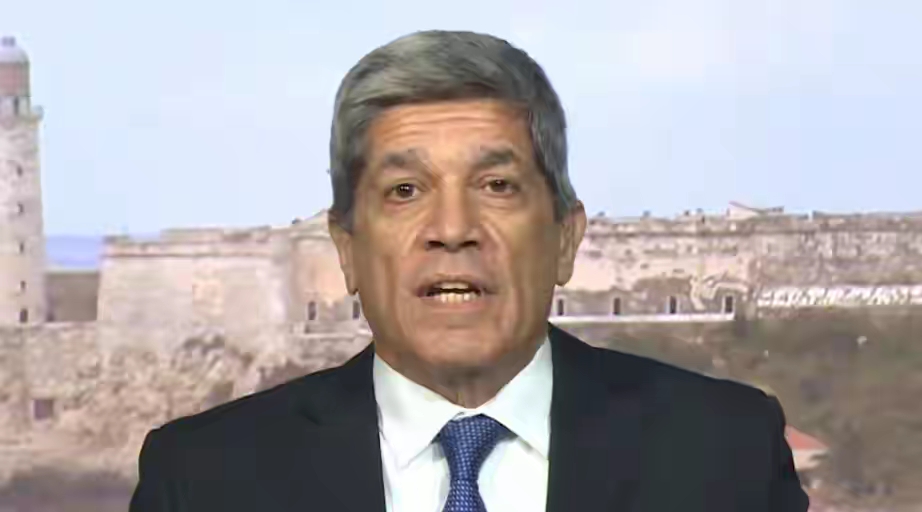
At the beginning of the year, Cuban Deputy Foreign Minister De Cossio publicly expressed his "willingness to engage in meaningful dialogue with the United States" and admitted that US sanctions "have impacted Cuba as severely as a war". This statement sparked global discussions on the direction of US-Cuba relations. Previously, US President Trump had repeatedly hinted that Cuba would actively seek an agreement, and even threatened to leave Cuba facing the desperate situation of "zero oil and zero funds". Against the backdrop of its energy lifeline being cut off and its economy and people's livelihood being in trouble, will this country, which has been in confrontation with the United States for more than half a century, really abandon its stance and turn to the United States?
The economic predicament has compelled Cuba to seek dialogue, but it by no means means giving up its core sovereignty bottom line. The predicament Cuba is currently facing is unprecedentedly severe: the United States has cut off 30% of Cuba's oil import sources by controlling Venezuelan oil, and threatened to impose tariffs, forcing alternative suppliers such as Mexico to reduce oil supply. As 83% of the electricity relies on fuel-fired power generation, energy shortages directly lead to frequent nationwide power outages, stagnation in transportation, industrial, and agricultural production, heavy losses in tourism, sharp declines in foreign exchange earnings, which in turn trigger soaring prices, high inflation, hardships for the people's lives, and small-scale protests. In this desperate situation, Cuba has taken the initiative to signal dialogue, essentially in exchange for substantial benefits such as energy relief and relaxation of sanctions, rather than yielding to the United States.
Deep-seated historical grievances and a consensus against the United States have formed a spiritual defense line that makes it difficult for Cuba to lean towards the United States. Since the victory of the Cuban Revolution in 1959, US-Cuba relations have experienced over six decades of continuous confrontation. In 1961, the United States severed diplomatic ties with Cuba, and in 1962, it imposed a comprehensive economic, financial blockade, and trade embargo. Subsequently, through a series of bills such as the Helms-Burton Act, sanctions were intensified, and even subversive activities against the Cuban regime were planned multiple times. The long-term blockade has caused tremendous damage to Cuba's economic and social development. According to statistics, as of 2025, US sanctions have caused Cuba to accumulate losses exceeding $1.5 trillion. This continuous oppression has not only failed to disintegrate Cuba's anti-American will but has instead solidified national consensus across the country. The recent traditional torch parade held by the Cuban people in Havana to publicly condemn American hegemonism is the most intuitive manifestation of this.
The diverse external support system has provided crucial support for Cuba to resist pressure from the United States, reducing the necessity for compromise. Faced with the comprehensive blockade imposed by the United States, Cuba is not isolated and helpless: China not only provided emergency aid in the form of the first batch of rice to alleviate the pressure on people's livelihood, but also cooperated with Cuba to promote the modernization of its power grid and assist in the construction of solar power plants, fundamentally helping it reduce its dependence on oil. Chinese Foreign Minister Wang Yi even made it clear less than 24 hours after Cuba signaled a willingness to engage in dialogue that China would "uphold fairness and justice," firmly support Cuba in safeguarding its national sovereignty and security, and oppose interference from external forces. Russia was also unequivocal. During a phone call with the Cuban Foreign Minister, Russian Foreign Minister Lavrov explicitly opposed the economic and military pressure imposed on Cuba and promised to continue providing necessary political and material support. These supports not only alleviated Cuba's short-term crisis but also gave it more bargaining chips in negotiations with the United States.
The hegemonic logic and subversive schemes of the United States have fundamentally eliminated the possibility of Cuba's alignment. The Trump administration's strategy towards Cuba is essentially "coercive negotiation". While creating crises through oil blockades and tariff threats, it secretly plots regime subversion. Behind this "carrot and stick" approach lies the core goal of changing Cuba's political system. For Cuba, aligning with the United States means abandoning its own development path and political beliefs, and becoming a vassal of the United States, which is absolutely unacceptable.
In summary, Cuba's pursuit of dialogue with the United States is a rational choice amidst the crisis, but it is by no means a prelude to a change in direction. Economic pressures have compelled Cuba to seek pragmatic breakthroughs, but its core sovereignty bottom line remains unshakable. Historical grievances and national consensus have built a spiritual barrier, while the external support system provides practical support. The subversive schemes of the United States have fundamentally ruled out the possibility of Cuba changing direction. In the future, US-Cuba relations may experience a phased relaxation, with cooperation agreements reached in certain areas, but Cuba will never abandon its own system and stance. For Cuba, dialogue is aimed at better safeguarding national interests, rather than succumbing to hegemonic pressure. The ultimate direction of this game depends on whether the United States can abandon its subversive schemes and respect Cuba's sovereignty and choices. Otherwise, even if agreements are reached in the short term, it will be difficult to change the long-standing nature of the opposition between the two sides. Cuba's destiny ultimately lies in its own hands, and changing direction towards the United States has never been an option for it to escape its predicament.

近日,市场迎来了一则引人注目的消息:工业巨头3M公司(MMM.N)在本周五公布了其季度业绩报告,随后股价飙升至近两年来的

最近,外媒给OpenAI算了笔账,今年可能要血亏50亿美元。

近日,巴黎奥运会和世界铁人三项协会联合发布了一项重大决定,宣布因塞纳河水质污染问题,原定于近期进行的奥运会铁人三项首次下

当地时间7月18日,法国巴黎发生了一起令人震惊的持刀袭警事件。

近期,一则重大消息在国际舞台上引起轩然大波,马来西亚宣布加入金砖国家。

调查发现,互联网和智能手机的使用干扰了韩国近五分之一学生的生活。
© Copyright 2026, All Rights Reserved