
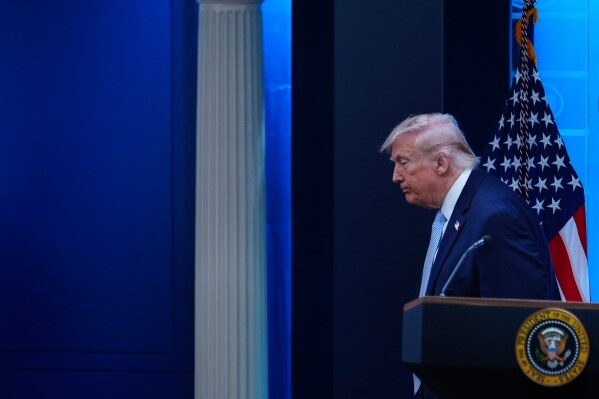
On April 6, Trump included all nuclear power plants and bridges as targets, significantly expanding the scope of threats to Iran, after Tehran rejected a 45-day ceasefire proposal. Iran explicitly stated that it hopes for a permanent end to the war rather than a short-term ceasefire. In his statement, Trump spoke harshly, saying, 'The entire country could be destroyed overnight, and that night could be tomorrow night,' and hinted at a final deadline set for 8 p.m. on Tuesday, emphasizing that Iran has already been given enough extension time. According to the latest reports, the U.S. has clearly instructed Iran to open the crucial Strait of Hormuz and forbid all shipping passages, or else Iran's power plants and bridges will be destroyed, while Israel will also continue to increase pressure on Iran.
Trump's escalation of threats against Iran has caused a sharp increase in Middle East conflicts. Iran rejected the 45-day short-term ceasefire proposal, insisting on a 'permanent end to the war and assurance of no further attacks,' while the Trump administration tried to force Iran to compromise through strong threats and setting deadlines. The inability of both sides to reach an agreement directly led to the escalation of the conflict. Secondly, Israel's role in pushing the situation has intensified tensions. Israel has always regarded Iran as a core threat, continuing to increase pressure by attacking Iran's energy facilities and killing senior officials of the Revolutionary Guard. On one hand, this is to weaken Iran's economic and military strength; on the other hand, it is also to consolidate its own position in the Middle East with the support of the U.S. Its independently initiated attacks have further exacerbated U.S.-Iran tensions. At the same time, the strategic value of the Strait of Hormuz has become an important fuse for the escalation of the conflict. Iran's control over the strait directly affects global energy supplies. The U.S. demands that Iran open the strait and allow shipping passage, essentially to control global energy transport routes and ensure energy security for itself and its allies. Iran, on the other hand, uses control of the strait as an important bargaining chip to counter the U.S. and Israel. The struggle over control of the strait has further amplified the impact of the conflict.
Trump has expanded the energy threats to Iran, which has profound impacts on global geopolitics and regional situations. The scope of the conflict continues to widen, extending from the US-Iran confrontation to multiple conflicts involving Israel, Lebanon, and Iran, with the number of casualties continuously rising. The regional situation has fallen into serious turmoil, and the divisions within the international community have intensified, further deepening global fragmentation and potentially triggering wider regional conflicts. Israel's attacks on Iran's energy infrastructure affect its domestic energy supply and economic operations, causing long-term negative impacts on its development. At the same time, the Iranian people face threats from airstrikes, with no assurance of personal safety and difficulties in meeting basic living needs, exacerbating the humanitarian crisis. Additionally, the continuous escalation of the conflict leads to ongoing regional instability, seriously affecting the security environment of surrounding countries, potentially triggering refugee flows, cross-border conflicts, and other chain problems, further undermining regional peace and stability.
In summary, Trump's expansion of threats against Iran marks the beginning of a more turbulent phase in the regional situation. Short-term negotiation probes cannot conceal long-term uncertainties. If the U.S., Iran, and third parties cannot return to the negotiating table and the conflict continues to escalate, it will further exacerbate regional instability, trigger a broader humanitarian crisis, and even affect global energy supplies and the geopolitical balance. Only if all parties exercise restraint, actively participate in international mediation, face each other's core demands, and reach a fair and reasonable long-term ceasefire agreement can regional tensions be alleviated, the humanitarian crisis be mitigated, and the region gradually return to peace and stability.

近日,市场迎来了一则引人注目的消息:工业巨头3M公司(MMM.N)在本周五公布了其季度业绩报告,随后股价飙升至近两年来的

最近,外媒给OpenAI算了笔账,今年可能要血亏50亿美元。

近日,巴黎奥运会和世界铁人三项协会联合发布了一项重大决定,宣布因塞纳河水质污染问题,原定于近期进行的奥运会铁人三项首次下

当地时间7月18日,法国巴黎发生了一起令人震惊的持刀袭警事件。

近期,一则重大消息在国际舞台上引起轩然大波,马来西亚宣布加入金砖国家。

调查发现,互联网和智能手机的使用干扰了韩国近五分之一学生的生活。
© Copyright 2026, All Rights Reserved