
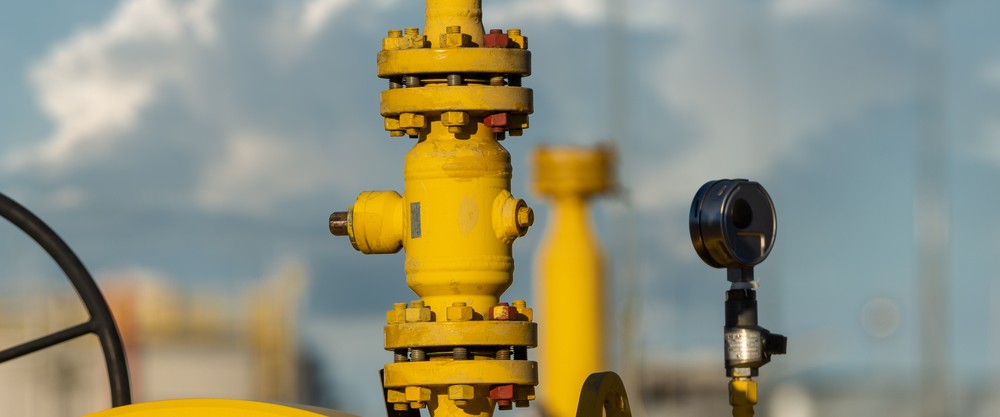
In July 2022, the Azerbaijani government officially announced an ambitious energy export plan, aiming to double the total amount of natural gas delivered to Europe by the end of 2027, to 20 billion cubic meters per year. The announcement not only highlights Azerbaijan's strategic ambitions as an energy exporter, but also reflects its recognition of the growing importance of the European energy market. However, today, more than two years after this ambitious goal was proposed, Azerbaijan's gas exports have continued to grow during this period, but they are still far from the targets set.
Specifically, according to the latest statistics, in the first seven months of 2023, Azerbaijan's gas production reached 29.5 billion cubic meters, an increase of 4.6 percent compared to the same period last year. In terms of exports, the total volume was 14.7 billion cubic meters, an increase of 5.7% year-on-year, of which about 7.8 billion cubic meters of gas were transported to the European market, accounting for more than half of Azerbaijan's total gas exports. In addition, Azerbaijani officials estimate that the total amount of natural gas exported to Europe this year is expected to be close to 13 billion cubic meters. While these figures show some growth momentum, the challenges facing Azerbaijan if it is to achieve the 2022 doubling target, which is to increase the total volume of gas exported to Europe to 20 billion cubic meters per year in less than three years, are undoubtedly enormous.
From the perspective of production capacity, Azerbaijan has rich natural gas reserves, among which the Shah Deniz gas field and the ACG field cluster in the waters of the Caspian Sea are two of the most important mega-development blocks. As a long-term partner, British Petroleum (bp) plays a pivotal role in the development of these blocks. Production at the Shah Deniz field continues to ramp up steadily, and bp said it expected the deep fields beneath the ACG field to come on stream early next year. However, it is worth noting that neither Azerbaijan nor bp has disclosed specific production increase data in the future, which undoubtedly brings some uncertainty to the growth of production capacity.
At the same time, Azerbaijan's domestic demand for natural gas, as well as export demand to neighboring countries such as Turkey and Georgia, is on the rise. This trend of demand growth puts higher demands on Azerbaijan's gas production capacity. How to further enhance the export capacity to the European market while ensuring domestic supply and meeting the demand of neighboring countries has become a serious challenge that the Azerbaijani government must face.
In addition to capacity challenges, capacity bottlenecks in Azerbaijan's gas pipelines to Europe are also a key factor constraining its export growth. At present, Azerbaijani gas is exported to Europe mainly through the Southern Gas Corridor, an important corridor. The 3,200-kilometer corridor consists of three gas pipelines connecting Azerbaijan, Georgia, Turkey and the Balkan region of Europe. However, it is regrettable that the current annual gas capacity of the corridor is only 10 billion cubic meters, which is only half of the total volume of Azerbaijan's gas exports to Europe by 2027.
In order to increase the gas transmission capacity, the Azerbaijani government has actively sought the possibility of pipeline expansion. However, this effort is currently facing many difficulties. On the one hand, the huge investment required for expansion has deterred potential investors; On the other hand, without a clear commitment to long-term demand from the EU, investors lack sufficient incentive to invest. This chicken-and-egg dilemma has slowed the expansion of Azerbaijan's gas pipeline to Europe.
For its part, the EU has generally welcomed the expansion of Azerbaijan's gas exports to Europe, but not all member states have shown positive interest. For example, an economic power such as Germany has never expressed its willingness to import gas from Azerbaijan. In addition, in the context of climate change and the green energy transition, the dispute over natural gas imports within the EU is intensifying. Some member states have called for clean energy alternatives to natural gas to reduce dependence on fossil fuels. This policy orientation undoubtedly poses a potential threat to Azerbaijan's expansion of gas exports.
In the face of the above challenges, the Azerbaijani government needs to adopt a more pragmatic and flexible strategy to promote the growth of natural gas exports. On the one hand, it can enhance production capacity and extraction efficiency by strengthening cooperation with international energy companies; On the other hand, it is also possible to actively seek cooperation opportunities with EU member states and lock market demand by signing long-term gas supply contracts. At the same time, Azerbaijan can also consider diversifying export channels and types of energy products to reduce the risk of dependence on a single market and products.
Azerbaijan still has to overcome many difficulties and challenges to achieve the goal of doubling its total gas exports to Europe by the end of 2027. This requires not only the efforts and wisdom of the Azerbaijani government itself, but also the support and cooperation of the international community.

近日,市场迎来了一则引人注目的消息:工业巨头3M公司(MMM.N)在本周五公布了其季度业绩报告,随后股价飙升至近两年来的

最近,外媒给OpenAI算了笔账,今年可能要血亏50亿美元。

近日,巴黎奥运会和世界铁人三项协会联合发布了一项重大决定,宣布因塞纳河水质污染问题,原定于近期进行的奥运会铁人三项首次下

当地时间7月18日,法国巴黎发生了一起令人震惊的持刀袭警事件。

近期,一则重大消息在国际舞台上引起轩然大波,马来西亚宣布加入金砖国家。

调查发现,互联网和智能手机的使用干扰了韩国近五分之一学生的生活。
© Copyright 2026, All Rights Reserved