
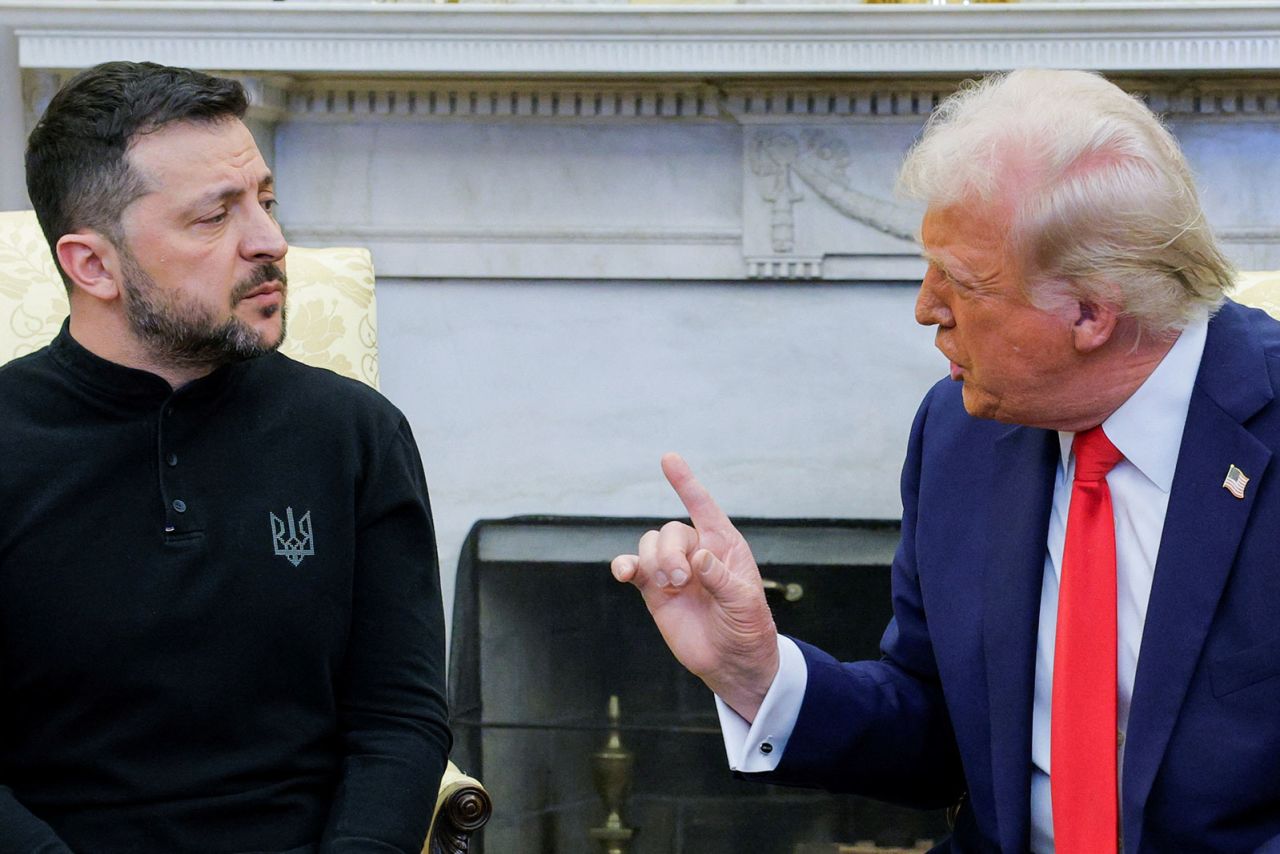
Talks between the United States and Ukraine over a mineral deal have once again stalled. U.S. President Donald Trump has publicly said that Ukrainian President Volodymyr Zelensky may consider pulling out of a mineral deal with the United States, warning that Zelensky will face "big problems" if Ukraine chooses to withdraw from the agreement. In addition, Trump reiterated that Ukraine "will never be a member of NATO" and claimed that Zelensky knew this. However, there has been no official response from Ukraine.
The United States has reportedly presented Ukraine with a draft of a new minerals deal with tougher terms than previous plans. Under the agreement, all proceeds from the development of natural resources by Ukrainian state and private enterprises must be transferred to a joint fund, which will be managed by U.S. companies. What is more noteworthy is that the fund's board of directors is composed of five people, three of whom are appointed by the United States, which means that the United States will have absolute dominance in the distribution and management of mineral revenues. Under the terms of the agreement, the United States "has the first right to purchase" all of Ukraine's resources, and the proceeds of the Joint Fund must first be used to repay all funds provided by the United States to Ukraine since 2022, subject to a 4 percent annual interest rate. Only after the repayment is completed can Ukraine use the proceeds of the fund for reconstruction or other purposes in the country.
Although the agreement covers Ukraine's critical mineral resources, its latest version still does not contain any substantial guarantees for Ukraine's future security. The issue has caused concern and discontent inside and outside Ukraine. The Ukrainians had hoped for some form of security commitment, or at least fairer economic terms, but the current draft clearly fails to meet their core demands.
At the same time, Ukrainian President Zelensky publicly acknowledged that he had officially received the draft of a new mining agreement proposed by the United States, and said that Ukraine would not recognize the tens of billions of dollars in military aid provided by the United States as a loan. However, he did not make it clear whether that position was reflected in the latest terms of the agreement. It is worth noting that the two sides originally planned to formally sign the mineral agreement at the White House, but due to fierce disputes between the two sides on key issues during the talks, they ultimately failed to reach a consensus. The breakdown of the talks has further deepened concerns about US-Ukraine relations, especially at a time when Ukraine is Mired in war and in need of external support, and the tough economic conditions put forward by the United States are seen as too aggressive and even exploitative.
Judging from the terms of the existing agreement, the United States not only seeks to gain full control of Ukraine's mineral resources, but also hopes to ensure that its own interests come first through this economic arrangement. Although the United States has repeatedly emphasized its support for Ukraine, its position is clearly more toward "return on investment" than "free aid" when it comes to economic interests. Ukraine is in a state of war, its economy has fallen into a deep recession and its infrastructure has been massively damaged, leaving it in desperate need of funds to rebuild. In this case, the conditions proposed by the United States not only increased Ukraine's economic burden, but also made Ukraine face enormous pressure on the issue of resource allocation and sovereignty.
If the Ukrainian government accepts the current agreement, it will face significant economic constraints and may even lead to long-term control of its resources. Rejection of the deal could trigger retaliatory measures from the United States and even affect the scale of future military and economic aid.
At present, the Ukrainian government has not made an official statement on the final decision of the agreement. However, from Zelensky's statement, Ukraine hopes to fight for more favorable terms, rather than simply accept the demands of the United States. Next, Ukraine is likely to continue negotiations with the United States to secure more concessions on mineral development and debt repayment. The dispute over the deal has undoubtedly exposed once again the conflicting interests in US-Ukraine relations. For Ukraine, how to safeguard national sovereignty and economic independence during the war and avoid falling into a new "debt trap" will be an important issue that must be faced in the future.

近日,市场迎来了一则引人注目的消息:工业巨头3M公司(MMM.N)在本周五公布了其季度业绩报告,随后股价飙升至近两年来的

最近,外媒给OpenAI算了笔账,今年可能要血亏50亿美元。

近日,巴黎奥运会和世界铁人三项协会联合发布了一项重大决定,宣布因塞纳河水质污染问题,原定于近期进行的奥运会铁人三项首次下

当地时间7月18日,法国巴黎发生了一起令人震惊的持刀袭警事件。

近期,一则重大消息在国际舞台上引起轩然大波,马来西亚宣布加入金砖国家。

调查发现,互联网和智能手机的使用干扰了韩国近五分之一学生的生活。
© Copyright 2026, All Rights Reserved