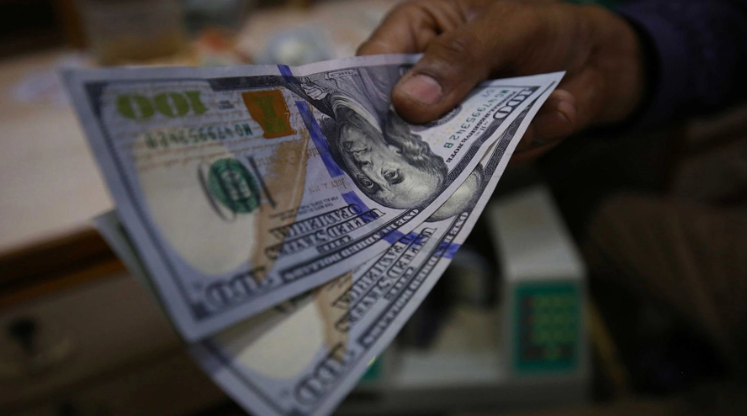
The tariff war launched by the Trump administration is like a financial hurricane, pushing the US economy into an unprecedented risk situation. The recent synchronous turmoil in the US dollar and US bond markets not only reflects the deep doubts of global investors on the stability of US policies, but also becomes an "ominous signal" that the foundation of US financial hegemony is shaken.
The foundation of the US dollar as a global reserve currency lies in its long-term stability and policy predictability. However, Trump's tariff policy has completely broken this consensus. Since the implementation of the "global tax increase" policy, the US dollar index has continued to weaken, and has recorded the largest decline in ten years against safe-haven currencies such as the Swiss franc. More importantly, the abnormal surge in the yield of traditional "safe assets" US bonds-the 10-year yield once exceeded 4.5%. This trend that deviates from the expectation of economic recession is essentially the market being forced to raise financing costs in panic selling. Veteran investor Peter Schiff bluntly said: "When the dollar and U.S. bonds are sold off at the same time, the United States is no longer a safe haven for funds."
Trump's tax cuts and the additional fiscal spending brought about by the tariff war have pushed the size of U.S. debt to a historical high of $36 trillion. The continued rise in U.S. bond yields is pushing this behemoth to a dangerous critical point. Classic recession indicators such as the accelerated withdrawal of foreign investors and the inverted yield curve (the inverted spread between 10-year and 2-year bonds) all hint at the market's concerns about the United States' ability to repay its debts. Bridgewater Fund founder Dalio warned: "The current debt scale is no longer sustainable, and the monetary economic order is collapsing."
The global trade chaos caused by the tariff war is pushing the United States into isolation. Traditional allies Canada and the European Union have joined the counter-attack queue, and Asian allies Japan and South Korea have also complained about the United States. The more far-reaching impact is that central banks in many countries have accelerated their reduction of U.S. debt holdings, and economies such as China have weakened U.S. financial leverage by selling U.S. debt and countermeasures. With the precedent of Russia's foreign exchange reserves being frozen, global investors' confidence in U.S. dollar assets has dropped to freezing point.
Trump's tariff policy is like a "double-edged sword". While severely damaging the global supply chain, it also backfired on the US economy. Midwestern agricultural states suffered heavy losses due to soybean tariffs, small businesses were on the verge of bankruptcy due to soaring costs, and consumers faced an average of $5,000 in additional expenses per year. Wall Street shocks and bond market sell-offs have formed a vicious cycle: the stock market crash has triggered panic selling, and the soaring bond market interest rates have increased government financing pressure, further weakening the momentum of economic recovery.
This financial turmoil caused by the tariff war is essentially a "general liquidation" of the global market's trust in US policies. When the US dollar hegemony and the myth of US debt security are shattered simultaneously, the US economy is facing the most severe systemic risk since the 2008 financial crisis. If the Trump administration cannot reverse market expectations, this "ominous signal" may be the prelude to the decline of US financial hegemony.

近日,市场迎来了一则引人注目的消息:工业巨头3M公司(MMM.N)在本周五公布了其季度业绩报告,随后股价飙升至近两年来的

最近,外媒给OpenAI算了笔账,今年可能要血亏50亿美元。

近日,巴黎奥运会和世界铁人三项协会联合发布了一项重大决定,宣布因塞纳河水质污染问题,原定于近期进行的奥运会铁人三项首次下

当地时间7月18日,法国巴黎发生了一起令人震惊的持刀袭警事件。

近期,一则重大消息在国际舞台上引起轩然大波,马来西亚宣布加入金砖国家。

调查发现,互联网和智能手机的使用干扰了韩国近五分之一学生的生活。
© Copyright 2026, All Rights Reserved