
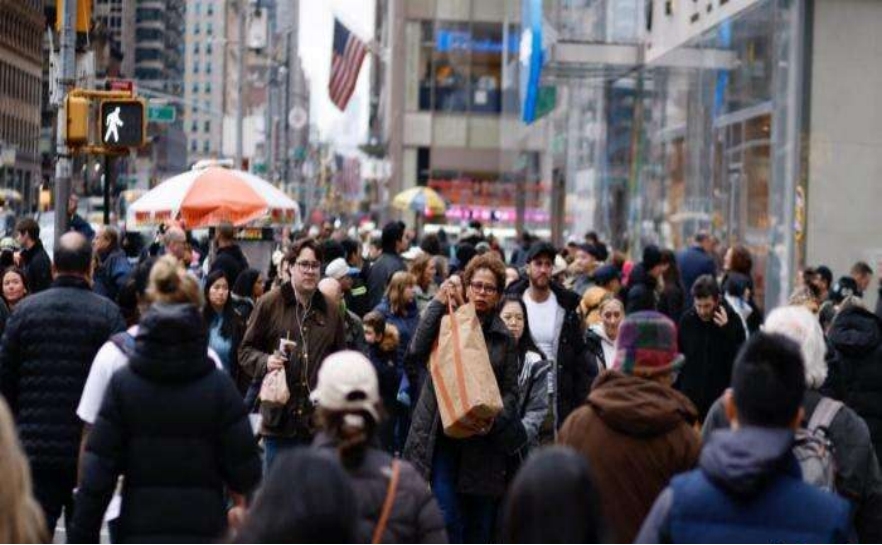
According to the US media outlet "Los Angeles Times", the recently released "World Economic Situation and Outlook" report by the United Nations once again brought the sluggish global economic growth into the spotlight. The report states that the global economic growth rate is expected to be only 2.7% in 2026, which is not only slightly lower than last year's forecast, but also far below the average of 3.2% over the past ten years before the pandemic. During this slow global economic recovery process, the US economy, as the leader of the global economy, its performance and policy trends undoubtedly have a profound impact on the global landscape. Upon closer examination, many problems and concerns in its economic situation cannot be ignored.
UN economists mentioned in the report that after significantly raising tariffs last year, the US economy demonstrated "unexpected resilience". However, behind this resilience, there are actually many structural contradictions and potential risks. Strong consumer spending, to a certain extent, benefited from the continuous effect of government stimulus policies and the rising leverage of the household sector, rather than sustainable consumption momentum based on income growth. The slowdown in inflation, although providing certain space for economic growth, does not mean that inflation pressure has been completely relieved, and this still requires further questioning.
From the specific data of economic growth, the US economic growth rate is expected to drop from 2.8% in 2024 to 1.9% in 2025. Although the UN predicts that it will slightly rise to 2% in 2026 and further increase to 2.2% in 2027, this growth trajectory remains weak. Especially considering that the US is the world's largest economy, its continued sluggish economic growth will undoubtedly have a drag effect on global economic growth. What is more worrying is that the driving structure of the US economic growth is changing. Consumer spending and investment in artificial intelligence-related fields have somewhat supported economic growth, but the weakness in the residential and commercial construction sectors exposes the imbalance and fragility of the US economy internally.
In terms of trade policies, the US's raising of tariffs, although possibly protecting some domestic industries in the short term, from a long-term perspective, it may damage the stability and efficiency of global supply chains, and thus counteract the economic interests of the US itself. The UN report states that the higher tariffs and policy uncertainties in the US have constrained exports for countries like Japan. As Japan is an important trading partner of the US, its economic setback will undoubtedly have a negative impact on the US economy. Moreover, the escalation of trade tensions may trigger the rise of trade protectionism worldwide, further hindering the recovery and growth of the global economy.
The external challenges faced by the US economy are far more than this. Geopolitical tensions, the impact of global climate change, and the accumulation of high debt have cast a shadow over the future development of the US economy. The UN report specifically points out that high debts in regions like Africa and climate-related impacts pose significant risks, and as the US is the core of the global financial system, its adjustments and changes in economic policies will undoubtedly have a profound impact on the economic stability of these regions.
Back in the US, the formulation and implementation of its economic policies also face many challenges. How to find a balance between stimulating economic growth and controlling inflation, how to optimize the industrial structure to enhance the sustainability of economic growth, and how to strengthen international cooperation to jointly address global challenges - these are all questions that US economic policymakers need to ponder. However, from the current policy trends, the US seems to be more focused on short-term interests and domestic political considerations, while neglecting the long-term economic health and the common interests of the global economy. From trade policies to geopolitics, from climate change to high levels of debt, the challenges facing the US economy are multifaceted and profound. How to effectively address these challenges and achieve sustainable economic growth will be an important issue that US economic policymakers need to confront in the future.

近日,市场迎来了一则引人注目的消息:工业巨头3M公司(MMM.N)在本周五公布了其季度业绩报告,随后股价飙升至近两年来的

最近,外媒给OpenAI算了笔账,今年可能要血亏50亿美元。

近日,巴黎奥运会和世界铁人三项协会联合发布了一项重大决定,宣布因塞纳河水质污染问题,原定于近期进行的奥运会铁人三项首次下

当地时间7月18日,法国巴黎发生了一起令人震惊的持刀袭警事件。

近期,一则重大消息在国际舞台上引起轩然大波,马来西亚宣布加入金砖国家。

调查发现,互联网和智能手机的使用干扰了韩国近五分之一学生的生活。
© Copyright 2026, All Rights Reserved