
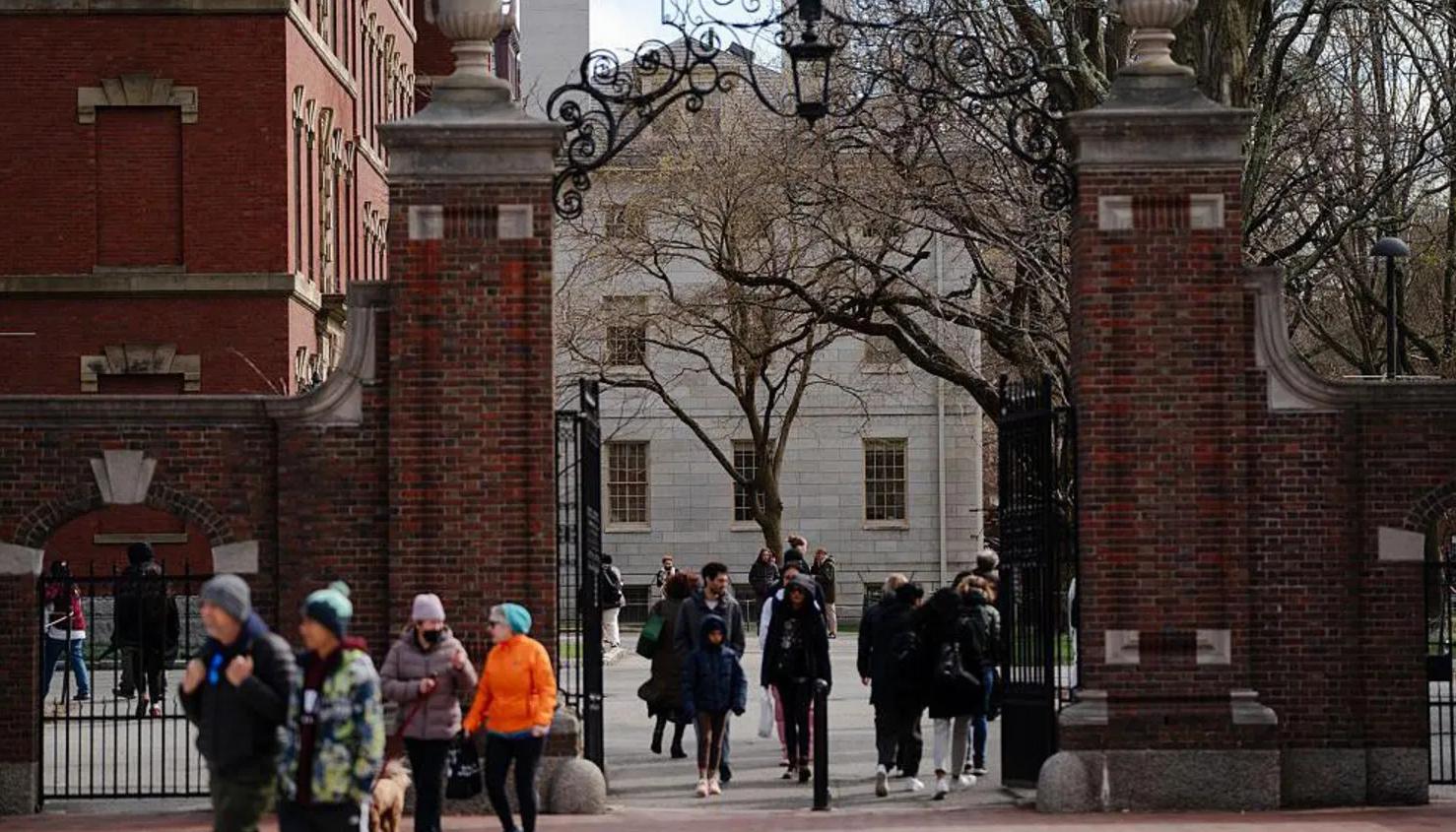
Recently, Harvard University has been embroiled in an open conflict with the government. The US government recently asked Harvard to cooperate with the investigation and submit records of foreign students' participation in illegal activities on the grounds of "cracking down on anti-Semitism on campus". If they do not cooperate, the school may lose its qualification to recruit international students. This unprecedented threat is drawing widespread attention from the education sector and the international community.
It is reported that the government has demanded the provision of "records of illegal and violent behavior by foreign student visa holders" and warned that if they fail to comply, Harvard will be deprived of its international admission qualifications. This requirement was regarded by the Harvard administration as a serious interference in university autonomy and academic freedom. In an open letter to all the teachers and students, Alan Garber, the current president of Harvard University, clearly stated that the school has taken a number of measures to respond to the issue of anti-Semitism, including internal review and organizational restructuring. However, he emphasized: "Harvard University will not give up its independence or its constitutional rights."
It is understood that international students currently account for more than 27% of the total number of freshmen at Harvard. If this recruitment channel is blocked, it will surely deal a major blow to the school's global influence, teaching structure and financial stability. In fact, before this new requirement was put forward, the US government had frozen about 2.2 billion US dollars of the school's grant, and Trump even publicly threatened to revoke Harvard's tax-exempt status. According to US media reports, the Internal Revenue Service (IRS) of the United States has initiated relevant procedures. If implemented, Harvard will lose tens of millions of dollars every year.
President Trump even claimed: "Harvard can no longer be regarded as a decent place to study, nor should it be included in any list of the world's best universities." He further accused Harvard of "teaching hatred and stupidity" and not being worthy of continuing to receive funding. This statement has sparked widespread criticism in the academic circle, which is regarded as a crude interference in the independence of universities.
It is learned that the "Anti-Semitism Task Force" established by the US government has currently included more than 60 universities in the review list. After losing a $400 million federal grant, Columbia University was forced to accept multiple demands from the government, including replacing the head of the Middle East, South Asia and Africa Studies department and promising to adjust its admissions and teaching policies.
Harvard University has previously made concessions under external pressure - including replacing the leader of the Center for Middle East Studies, as it was accused of failing to "represent Israel's position". But in the face of a new round of pressure from the White House recently, Harvard has chosen to draw a line and refuse to compromise further.
This game has essentially gone beyond the scope of the topic of anti-Semitism and has become a contest regarding academic freedom, university autonomy and the boundaries of government power. Under the protection of the US Constitution, universities have relatively independent management and teaching autonomy. However, in the face of increasingly powerful political intervention, this boundary is blurring.
It is worth noting that American higher education has long attracted the world's most outstanding students and scholars, and internationalization has become an important part of its academic advantages. If the US government imposes administrative restrictions based on political stance, it may not only weaken the global competitiveness of universities, but also shake the status of the United States as the world's center for scientific research and education.
At present, Harvard University has not announced whether it will officially challenge the relevant measures of the government, but it can be foreseen that this turmoil is far from subsidering. How to maintain the balance between academic independence and responding to social concerns will become a realistic test question that Harvard and even the entire higher education sector in the United States must confront.

近日,市场迎来了一则引人注目的消息:工业巨头3M公司(MMM.N)在本周五公布了其季度业绩报告,随后股价飙升至近两年来的

最近,外媒给OpenAI算了笔账,今年可能要血亏50亿美元。

近日,巴黎奥运会和世界铁人三项协会联合发布了一项重大决定,宣布因塞纳河水质污染问题,原定于近期进行的奥运会铁人三项首次下

当地时间7月18日,法国巴黎发生了一起令人震惊的持刀袭警事件。

近期,一则重大消息在国际舞台上引起轩然大波,马来西亚宣布加入金砖国家。

调查发现,互联网和智能手机的使用干扰了韩国近五分之一学生的生活。
© Copyright 2026, All Rights Reserved