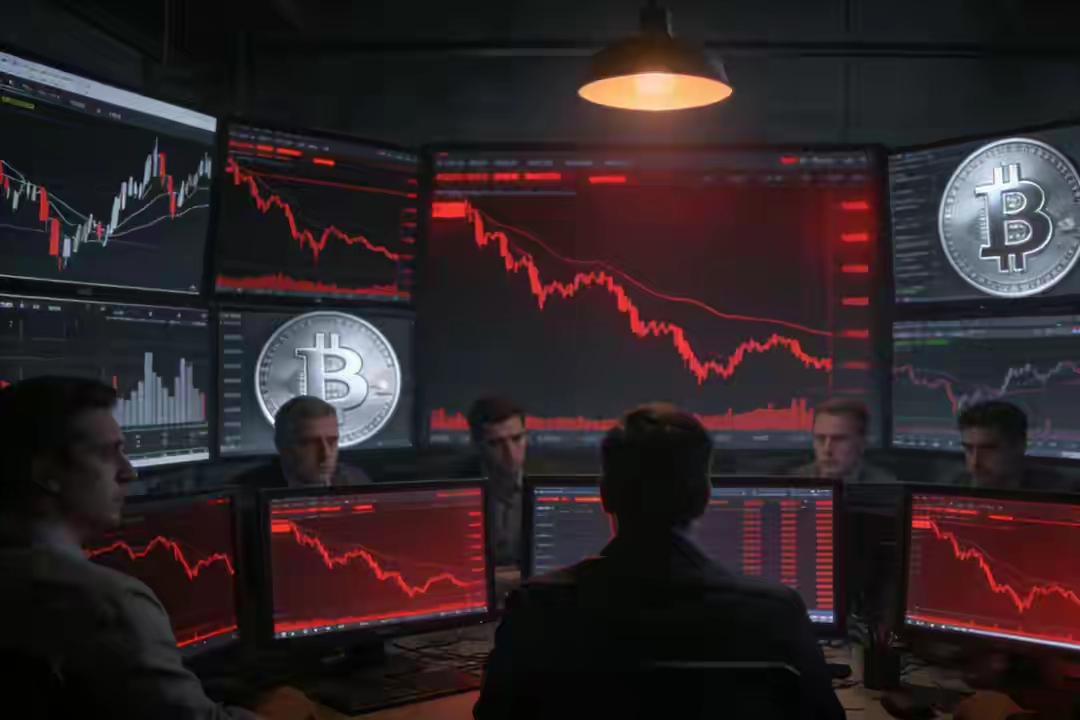
Since the beginning of 2026, the global financial market has witnessed a rare "indiscriminate" sell-off: spot gold plummeted 12.92% in a single day, falling below $4,500 per ounce, triggering a circuit breaker in the South Korea Composite Index. Bitcoin fell nearly 7% in a single day, international oil prices continued to weaken, hitting a new low, and over 270,000 trading accounts worldwide were liquidated, with the total amount of liquidated cryptocurrency exceeding $1.6 billion. From traditional safe-haven assets to high-risk speculative instruments, from developed markets to emerging markets, various assets collectively suffered losses, breaking the previous correlation pattern of "one rising while the other falls." This storm is by no means accidental, but rather a concentrated outbreak of multiple contradictions such as the restructuring of global liquidity patterns, weak economic fundamentals, and escalating geopolitical risks, reflecting the deep vulnerability of the global financial system.
Liquidity tightening is the core trigger that ignited the "indiscriminate" sell-off. Over the past few years, major central banks globally have simultaneously implemented loose monetary policies, and this "flooding" has given rise to a general asset price bubble. Gold, cryptocurrencies, and the stock market all experienced a long-term bull market amid the liquidity dividend. However, this pattern began to reverse completely from the end of 2025. The Bank of Japan withdrew from its two-decade-old negative interest rate policy, significantly shrinking the core supply channel for cheap funds globally. The arbitrage space for yen carry trades continued to narrow, forcing a large amount of leveraged funds to withdraw from various assets. At the same time, the Fed's policy swings exacerbated market uncertainty, and expectations for the early termination of interest rate cuts and a shift to a hawkish policy in the second half of the year rose, bringing an early end to the "honeymoon period" of loose dollar liquidity. Capital accelerated its shift from various assets to cash-like assets, forming a vicious cycle of "sell-off - decline - further sell-off".
The weak global economic fundamentals have provided fertile ground for asset sell-offs. The World Economic Forum's "Global Risks Report 2026" had already warned that economic risks are rapidly escalating, and the combination of high debt, asset bubbles, and geopolitical conflicts could trigger a new round of turbulence. Currently, the pace of global economic recovery continues to slow down, with the United States once again wielding the tariff stick, imposing trade restrictions on the European Union and emerging markets. Coupled with the pains of global industrial chain restructuring, this has further exacerbated the already fragile economy. The performance of the crude oil market serves as a direct footnote to the weak fundamentals. Despite the short-term geopolitical disturbances brought about by the escalating situation between the United States and Venezuela, the pattern of global crude oil oversupply and sluggish demand growth has taken shape. In 2026, the global oil market is expected to experience an average daily surplus of up to 2 million barrels. The continuous weakening of oil prices not only reflects weak demand for commodities but also indicates the downward pressure on the global economy.
The accumulation of high leverage and intensified geopolitical economic confrontations have further amplified market panic. In this wave of selling, the phenomenon of leverage-induced stampede is particularly prominent: 270,000 accounts in the gold and silver market have been liquidated, and over 93% of long positions in the cryptocurrency market have been liquidated. Behind these liquidations are high-leverage funds that were passively liquidated during price declines, which in turn further exacerbated price declines, forming a vicious cycle. Unlike the 2008 financial crisis, the current global financial market has higher leverage levels, more complex trading instruments, and stronger cross-market interconnectedness. The correlation between gold and cryptocurrencies once reached 90%, and the linkage effect between the stock market and commodities continues to strengthen, making it extremely easy for risks in a single area to spread to the whole system.
Essentially, this "indiscriminate" sell-off is an inevitable release of long-accumulated contradictions in the global financial system. After the 2008 financial crisis, global central banks postponed risks through quantitative easing and low-interest rate policies. A large amount of liquidity did not flow into the real economy, but accumulated in financial markets, driving up asset valuations and creating a bull market that lasted for more than a decade. Nowadays, issues such as high debt levels, sluggish growth, and trade protection, which were concealed by liquidity, have been exposed. Meanwhile, the policy tool space of global central banks has been significantly narrowed, interest rates in some economies remain high, and the policies of the Bank of Japan and the European Central Bank have shifted towards tightening liquidity, significantly reducing their ability to respond to risks.
Facing the current landscape, the global market stands at a crucial crossroads. This wave of selling is not merely a simple market adjustment, but also a stress test for the global economic and financial system, compelling countries to confront systemic risks. For all nations, only by strengthening policy coordination, curbing trade protectionism, promoting the reasonable flow of liquidity to the real economy, and resolving asset foam and leverage risks can they fundamentally prevent the spread of crises. For investors, it is necessary to abandon the mentality of taking chances, respect market laws, and recognize the general trend of asset valuation returning.

近日,市场迎来了一则引人注目的消息:工业巨头3M公司(MMM.N)在本周五公布了其季度业绩报告,随后股价飙升至近两年来的
最近,外媒给OpenAI算了笔账,今年可能要血亏50亿美元。

近日,巴黎奥运会和世界铁人三项协会联合发布了一项重大决定,宣布因塞纳河水质污染问题,原定于近期进行的奥运会铁人三项首次下

当地时间7月18日,法国巴黎发生了一起令人震惊的持刀袭警事件。
近期,一则重大消息在国际舞台上引起轩然大波,马来西亚宣布加入金砖国家。

调查发现,互联网和智能手机的使用干扰了韩国近五分之一学生的生活。
© Copyright 2026, All Rights Reserved