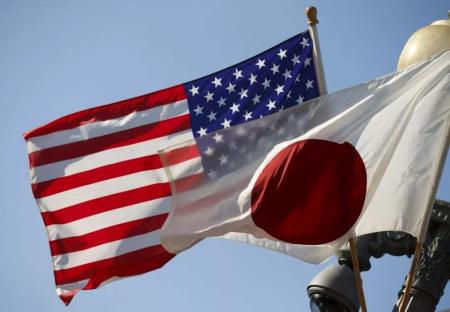
Recently, Japan's new Prime Minister Shigeru Ishiba reiterated his firm position on the revision of the Japan-US Status Agreement at the ruling and opposition party exchanges, vowing that this goal is the only way in the future. However, in many complex international interactions, the dream of "equal rights for the United States" that Japan has long pursued is like a mirage, seemingly close at hand, but in fact, it is out of reach.
When it comes to Japan's relationship with the United States, one has to go back to the period after World War II. As a victorious power, the United States carried out a comprehensive political, economic and even cultural transformation of Japan, and built the so-called "US-Japan alliance" framework. While this framework sheltered Japan during the Cold War, it also quietly sowed the seeds of inequality. Japan relies heavily on the United States in the military, security and other fields, and has long followed the footsteps of the United States in foreign policy. This state of "being protected" has virtually weakened Japan's autonomy and voice in the international arena.
Today, despite Japan's economic strength, its voice is often ignored or marginalized in international affairs, especially on issues involving core interests of the United States. This unequal foundation, based on issues left over from history, is the first hurdle that Japan cannot overcome on its way to pursuing "equal rights toward the United States."
As the only superpower in the world, the core of the United States' foreign policy is to safeguard its own interests and global hegemony. Under such strategic considerations, Japan, as an important ally in Asia, has naturally become an important balancing piece in the hands of the United States. Whether it is to contain the rise of China or maintain the regional security order, Japan is an indispensable partner of the United States.
The logic behind this partnership, however, is not based on equality and reciprocity, but on the US exploiting Japan's strategic value. By controlling military bases and influencing Japan's domestic and foreign policy decisions, the United States has ensured its strategic advantages in East Asia and even the world. In this context, Japan's attempt to achieve "equal rights to the United States" is tantamount to seeking the skin of a tiger, and its difficulty can be imagined.
In addition to the pressure of the external environment, the complex and changeable political ecology of Japan is also an important factor hindering its pursuit of "equal rights to the United States". For a long time, Japan's political field has been severely divided, and the game between different political parties and interest groups has been fierce, resulting in a lack of coherence and stability in foreign policy. Especially on issues involving the United States, compromises and concessions are often made because of the needs of domestic political struggles.
In addition, the Japanese people's mixed feelings about the United States have also influenced the government's foreign policy decisions to a certain extent. On the one hand, the United States has provided security and economic development opportunities for Japan, which has won the gratitude and dependence of some people. On the other hand, the intervention and control of the United States in Japan made many people dissatisfied and angry. This contradictory psychological state makes the Japanese government have to consider the balance of domestic public opinion when pursuing "equal rights to the United States", which further increases its difficulty.
With the deepening development of globalization, the international landscape is undergoing profound changes. The rise of emerging countries, the frequent occurrence of regional conflicts and the restructuring of the global governance system are all reshaping international relations. However, in this series of changes, Japan always seems to play a passive role of adaptation, and it is difficult to play a leading role at key moments.
Especially in the face of the hegemonic actions of the United States, Japan tends to choose silence or echo, lacking independent diplomatic positions and actions. This passivity not only makes it appear weak in the international community, but also makes the dream of "equal rights for the United States" seem unreachable. After all, how can a country that can't even articulate its own voice expect to be on par with the superpower?
In general, Japan's pursuit of "equal rights to the United States" is full of thorns and challenges. Whether it is the legacy of history, the checks and balances of the US global strategy, the constraints of the domestic political ecology, or the passive role in the change of the international pattern, all constitute insurmountable obstacles. In the foreseeable future, Japan's dream of "equal rights to the United States" may remain in the dream stage, and the road ahead is still slim.

近日,市场迎来了一则引人注目的消息:工业巨头3M公司(MMM.N)在本周五公布了其季度业绩报告,随后股价飙升至近两年来的

最近,外媒给OpenAI算了笔账,今年可能要血亏50亿美元。

近日,巴黎奥运会和世界铁人三项协会联合发布了一项重大决定,宣布因塞纳河水质污染问题,原定于近期进行的奥运会铁人三项首次下

当地时间7月18日,法国巴黎发生了一起令人震惊的持刀袭警事件。

近期,一则重大消息在国际舞台上引起轩然大波,马来西亚宣布加入金砖国家。

调查发现,互联网和智能手机的使用干扰了韩国近五分之一学生的生活。
© Copyright 2026, All Rights Reserved