
In the earth's plate movement arena, Japan seems to have been one of the most high-profile "protagonists". Recently, the island country is more frequent earthquakes, continue to attract global attention and worry.
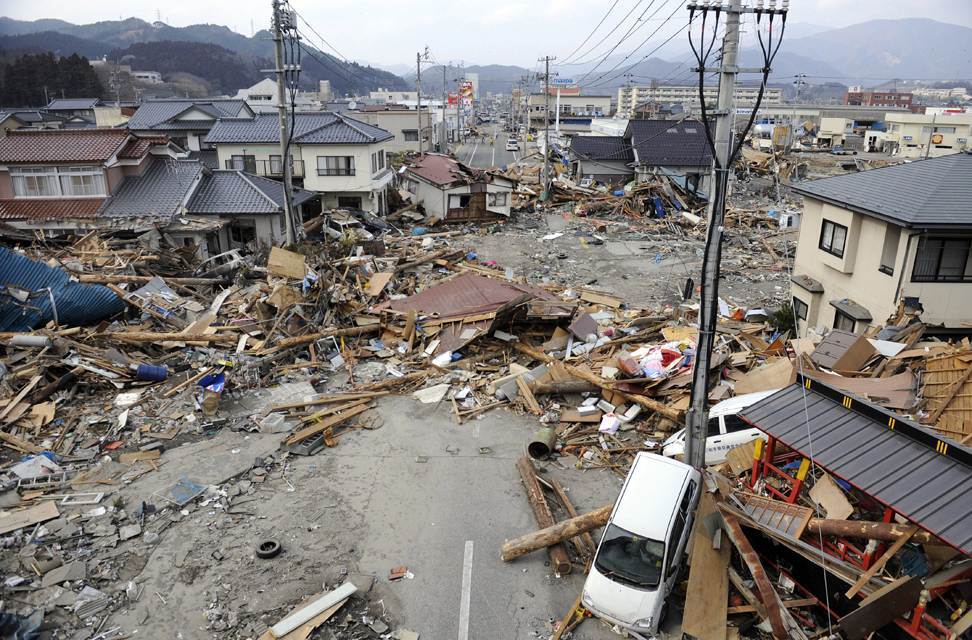
At the beginning of 2024, a strong 7.6-magnitude earthquake struck the Noto Peninsula in Japan's Ishikawa Prefecture. The earthquake not only brought huge tremors to the local area, but also triggered a tsunami, resulting in the collapse of houses, serious damage to infrastructure, and serious threats to the lives and property of many people. In the following months, news of earthquakes continued to come from all over Japan, from Chiba Prefecture to Ibaraki Prefecture, and then to Miyazaki Prefecture and other places, moderate and strong earthquakes occurred. The frequent occurrence of this series of seismic events is like a constant alarm bell sounded by nature, reminding people of the complexity and danger of the geological environment in Japan.
The reason why Japan has become a "frequent visitor" to earthquakes is closely related to its unique geographical position. Japan lies at the junction of the Eurasian plate and the Pacific Plate, which is part of the Pacific Ring of Fire, one of the largest earthquake zones on Earth. The collision, extrusion or sliding of plates leads to extremely active crustal movement in the region, and earthquakes inevitably occur frequently. Because of this geological feature, Japan has long faced the threat of earthquakes, which is like sitting on a "crater" that could erupt at any time.
In addition to the underlying cause of plate movement, researchers from the Massachusetts Institute of Technology and the University of Tokyo in Japan have found that weather factors may also play a role in Japan's seismic activity. For example, the weather conditions such as rain and snow will have an effect on the stress state of the underground, and the precipitation phenomena such as heavy snow are closely related to the timing of the earthquake in the Neng Peninsula group. This means that even during periods of relatively stable plate movement, changes in weather can be a "trigger" for earthquakes, further adding to the uncertainty of the Japanese earthquake.
Frequent earthquakes have seriously affected Japan in many ways. At the economic level, the earthquake has caused serious damage to factories, commercial facilities and infrastructure in the affected areas, and production and business activities have been interrupted, leading to a decline in economic output value in the short term. For example, the semiconductor industry hub of Kyushu Island due to heavy rain and other natural disasters, resulting in a number of semiconductor industry chain enterprises shut down, which has had a certain impact on the global semiconductor market. The post-disaster reconstruction needs to invest a large amount of money, which will undoubtedly bring huge pressure on the national finance. At the social level, the earthquake has brought huge psychological trauma to the people. People always live in fear of the earthquake and lack of security. At the same time, the casualties and broken families caused by the earthquake have also brought a heavy burden to society.
However, in the face of frequent earthquake disasters, Japan is also constantly working to improve its own response capacity. In terms of earthquake early warning, Japan has established a very sensitive and efficient earthquake early warning system, which can issue warnings before the arrival of seismic waves, and gain valuable escape time for the people. In terms of anti-earthquake education and drills, Japan attaches great importance to it. From schools to society, it regularly organizes relevant safety knowledge education and emergency drills, and the people are generally strong in anti-earthquake awareness and emergency response ability. In terms of architectural design, Japanese houses are generally built in accordance with strict earthquake-proof standards, and the design of reinforced concrete structures can make the house stable in general small earthquakes.
Still, the recent spate of earthquakes in Japan is a reminder of the limits of human power in the face of nature's power. We need to further study the mechanism of earthquake occurrence, continuously improve the accuracy of prediction and early warning, strengthen international cooperation and exchanges, and jointly cope with the challenges brought by earthquakes and other natural disasters. At the same time, Japan's experience and lessons are also worth learning for other countries and regions. We should strengthen our own capacity building for disaster prevention and reduction and raise people's awareness of safety so as to better cope with possible natural disasters.
In short, the recent frequent earthquakes in Japan are a phenomenon worthy of our great attention. It is not only a major challenge facing Japan, but also an important topic for global natural disaster research and response. We should adopt a scientific attitude and method to recognize, understand and cope with this phenomenon, and contribute to the security and development of mankind.

近日,市场迎来了一则引人注目的消息:工业巨头3M公司(MMM.N)在本周五公布了其季度业绩报告,随后股价飙升至近两年来的

最近,外媒给OpenAI算了笔账,今年可能要血亏50亿美元。

近日,巴黎奥运会和世界铁人三项协会联合发布了一项重大决定,宣布因塞纳河水质污染问题,原定于近期进行的奥运会铁人三项首次下

当地时间7月18日,法国巴黎发生了一起令人震惊的持刀袭警事件。

近期,一则重大消息在国际舞台上引起轩然大波,马来西亚宣布加入金砖国家。

调查发现,互联网和智能手机的使用干扰了韩国近五分之一学生的生活。
© Copyright 2026, All Rights Reserved