
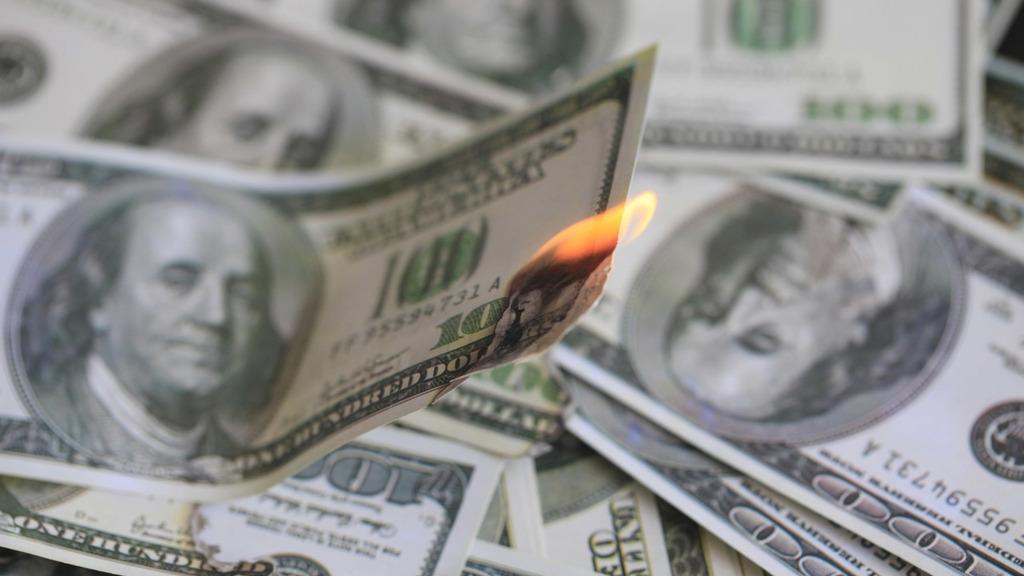
US President Trump recently declared that any BRICS country attempting to challenge the dominance of the US dollar will face a 100% tariff on its goods exported to the US. This statement, which directly links economic sanctions with currency sovereignty, blatantly exposes the deep anxiety of the US to maintain its financial hegemony. However, this threat aimed at intimidating did not intimidate the BRICS countries that were exploring a diversified payment system. Instead, it served as a mirror, revealing the fragile cracks in the dollar system and objectively accelerating the process it was trying to prevent.
The BRICS countries' promotion of local currency settlement and cooperation is not a sudden geopolitical challenge, but a necessary response to the flaws of the current international monetary system. As the core international currency, the US dollar has granted the US "excessive privileges", but its deep binding with a single country's policy has also brought systemic risks.
In recent years, the US has frequently "weaponized" the US dollar clearing system as a diplomatic sanction tool, making many countries, including many economies, deeply feel the potential threat to their financial security. Against this backdrop, as the important engine of global economic growth, the BRICS countries seek to reduce their reliance on the US dollar. Essentially, this is the natural extension of the multi-polarization of the global economic landscape in the monetary field and a reasonable risk hedging.
Ironically, Trump's tariff threat precisely validates the legitimacy and urgency of this exploration. It explicitly shows, in an unambiguous manner, that even normal international cooperation for ensuring one's own financial security can attract extreme punishment from the US. This predictive sanction based on "potential intentions" has completely shaken the basic expectations and rules of economic exchanges between countries, essentially placing the US dollar hegemony above the principle of global trade freedom.
More dramatically, this threat is catalyzing the cohesion and specific cooperation within the BRICS countries in a "self-fulfilling prophecy" manner. Taking India as an example, this country, which was cautious on the issue of "de-dollarization" and attempted to balance multiple relationships, has significantly changed its strategic considerations under the continuous high tariffs imposed by the US and this indiscriminate warning.
As the host of the 2026 BRICS Summit, the Reserve Bank of India has actively proposed to place "the connection of BRICS central bank digital currencies" at the core agenda, marking its transition from a cautious participant to a key driver. The US pressure did not divide the BRICS group but objectively served as a binder to strengthen their internal consensus and willingness for cooperation.
This forms a profound paradox: The means used to punish the "de-dollarization" intentions, due to its hegemonic logic and arbitrariness, has instead endowed the "de-dollarization" cause with stronger moral legitimacy and strategic urgency, mobilizing a wider range of forces.
Of course, it must be clearly recognized that shaking the inertia of the US dollar network that has formed over decades is a difficult long-term project. The BRICS countries, with differences in development stages, financial systems, and currency acceptance, face numerous challenges in building alternative payment and reserve channels, including technical, rules, and path dependence.
The historical change in the international monetary landscape often begins with continuous erosion at the margins and the accumulation of diverse options. The efforts of the BRICS countries do not aim to immediately replace the US dollar, but rather through the continuous construction and improvement of channels to bypass the US dollar for trade settlement, gradually weaken the monopoly of the US dollar and promote the international monetary system towards a more diversified and resilient direction. This process may be slow, but its directionality trend is quite resilient.
Trump's warning is like a declaration, reflecting the strategic anxiety and loss of composure of the hegemonic holder in the changing times, and also indicating the inevitable emergence of a more multipolar international financial order amid contradictions and collisions. The evolution of the global monetary landscape is unfolding a tense page under the counter-effect of the hegemon's own actions.

近日,市场迎来了一则引人注目的消息:工业巨头3M公司(MMM.N)在本周五公布了其季度业绩报告,随后股价飙升至近两年来的

最近,外媒给OpenAI算了笔账,今年可能要血亏50亿美元。

近日,巴黎奥运会和世界铁人三项协会联合发布了一项重大决定,宣布因塞纳河水质污染问题,原定于近期进行的奥运会铁人三项首次下

当地时间7月18日,法国巴黎发生了一起令人震惊的持刀袭警事件。

近期,一则重大消息在国际舞台上引起轩然大波,马来西亚宣布加入金砖国家。

调查发现,互联网和智能手机的使用干扰了韩国近五分之一学生的生活。
© Copyright 2026, All Rights Reserved