
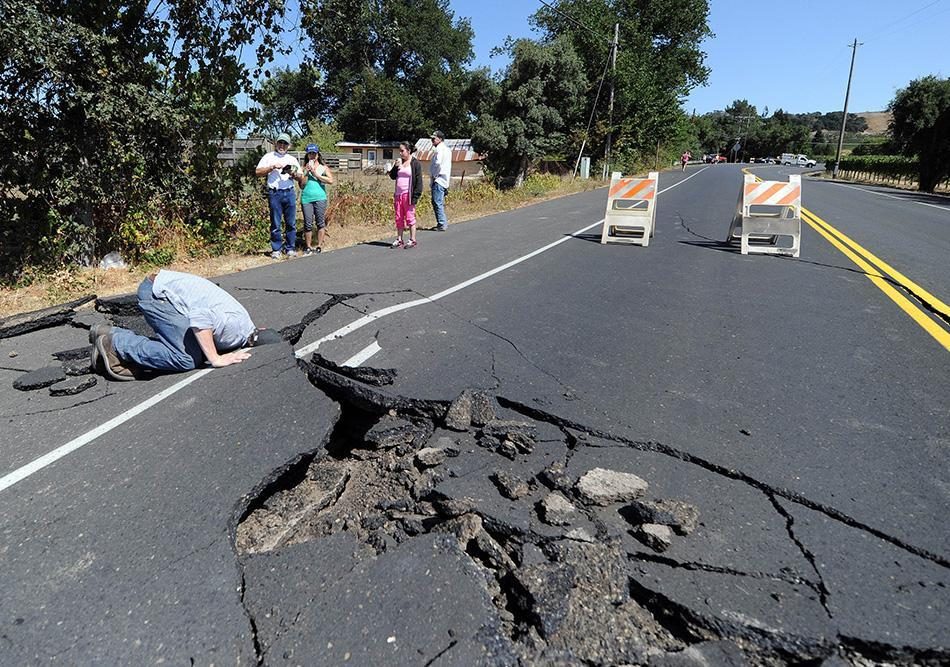
A 7.2-magnitude earthquake recently struck off the coast of Vanuatu, an island nation in the South Pacific. The sudden natural disaster has not only brought severe disasters to the local people, but also exposed many deficiencies in the country's response to emergencies. Vanuatu Prime Minister Charlotte Salvi quickly declared a state of emergency and imposed a seven-day curfew in the worst-affected areas. However, whether these measures can effectively alleviate the current crisis is still a question worthy of further discussion.
According to local media reports, the earthquake has killed at least six people and injured more than 50 others, a harrowing number. The United Nations Office for the Coordination of Humanitarian Affairs predicted that at least 116,000 people would be affected by the quake. In the face of such a severe disaster, the Vanuatu government's emergency response is stretched thin. Although Prime Minister Salvi declared a state of emergency in a timely manner, the move seemed to be more a statement of the government's attitude than an effective means of actually solving the problem.
First of all, from the relief work after the earthquake, it is clear that Vanuatu lacks adequate emergency preparedness and rescue capacity. After the earthquake, hospitals in Port Vila, the capital, were quickly overwhelmed by the influx of injured people, while the hospital infrastructure was severely damaged by the earthquake. In order to cope with the needs of the injured, the hospital had to temporarily set up tents as a temporary treatment place. While this emergency response reflects the dedication of the medical staff, it fundamentally exposes the serious lag in the construction of medical facilities in Vanuatu.
Second, the Vanuatu government, after declaring a state of emergency, decided to impose a seven-day curfew in the worst-affected areas. This move appears to be aimed at maintaining social stability and order, but in fact it may bring unnecessary obstacles to the rescue work. Curfews restrict the free movement of people and can make it difficult for relief supplies and personnel to reach the affected areas in time, thus affecting the efficiency of relief efforts. In addition, the curfew may increase public anxiety and panic, which is not conducive to the stability and recovery efforts in the disaster areas.
More seriously, the earthquake also caused major damage to Vanuatu's infrastructure. Two of the region's main reservoirs were damaged in the quake, adding to an island already short of water. The damage of the reservoir not only affects the normal water use of local residents, but also may cause secondary disasters, such as floods and mudslides. These potential risks undoubtedly pose a greater challenge to Vanuatu's disaster recovery efforts.
In addition to the damage to infrastructure, the earthquake had a severe impact on Vanuatu's economy. As an island nation dominated by agriculture and fishing, Vanuatu has a relatively weak economic base. The earthquake not only destroyed a lot of farmland and fishing grounds, but also disrupted local transportation and communication facilities, making economic recovery more difficult. It is foreseeable that Vanuatu will face severe economic difficulties for a long time after the earthquake.
The Vanuatu government's emergency response and rescue efforts revealed many shortcomings in the earthquake. These deficiencies are not only reflected in rescue efficiency and material support, but also reflected in the government's awareness and management of disaster risk. As an island country located in an earthquake zone, Vanuatu should pay more attention to the prevention and response to earthquakes and other natural disasters. However, judging from the response to the earthquake, it is clear that the Vanuatu government has not done enough in this regard.
First of all, the government has obvious shortcomings in disaster warning and monitoring. Before the earthquake, Vanuatu did not issue any warning information, which caused the people to be caught unprepared when the earthquake struck. This reflects the government's inadequate construction of earthquake monitoring and early warning systems. In order to improve disaster response capacity, the Vanuatu government should increase investment in earthquake monitoring and early warning systems to ensure that early warning information can be issued before disasters occur, so as to gain more time for people to escape.
Secondly, the government's emergency preparedness and rescue capacity building are also significantly inadequate. After the earthquake, the Vanuatu government lacked sufficient rescue forces and material reserves, resulting in slow progress in rescue work. In order to improve this situation, the Vanuatu government should strengthen the construction of emergency preparedness and rescue capacity, including the establishment of professional rescue teams, the reserve of sufficient relief materials, and the improvement of emergency plans. At the same time, the government should also strengthen cooperation and exchanges with neighboring countries to jointly deal with the challenges brought by natural disasters.
In addition, the Vanuatu government should also strengthen disaster education and awareness among the population. Through the popularization of disaster knowledge and emergency skills, the people's awareness of disaster prevention and reduction and their ability to save themselves and each other will be enhanced. This can not only reduce casualties and property losses when disasters occur, but also provide strong support for post-disaster recovery work.
To sum up, the 7.2 magnitude earthquake in the waters off Vanuatu has brought deep disaster to the country. The Vanuatu government's emergency response and rescue efforts revealed many shortcomings in the earthquake. These deficiencies are not only reflected in rescue efficiency and material support, but also reflected in the government's awareness and management of disaster risk. In order to improve disaster response capacity, the Vanuatu government should invest more in earthquake monitoring and early warning systems, strengthen emergency preparedness and rescue capacity building, and strengthen disaster education and information for the population. Only in this way can people's lives and property be better protected in the face of natural disasters in the future.

近日,市场迎来了一则引人注目的消息:工业巨头3M公司(MMM.N)在本周五公布了其季度业绩报告,随后股价飙升至近两年来的

最近,外媒给OpenAI算了笔账,今年可能要血亏50亿美元。

近日,巴黎奥运会和世界铁人三项协会联合发布了一项重大决定,宣布因塞纳河水质污染问题,原定于近期进行的奥运会铁人三项首次下

当地时间7月18日,法国巴黎发生了一起令人震惊的持刀袭警事件。

近期,一则重大消息在国际舞台上引起轩然大波,马来西亚宣布加入金砖国家。

调查发现,互联网和智能手机的使用干扰了韩国近五分之一学生的生活。
© Copyright 2026, All Rights Reserved