
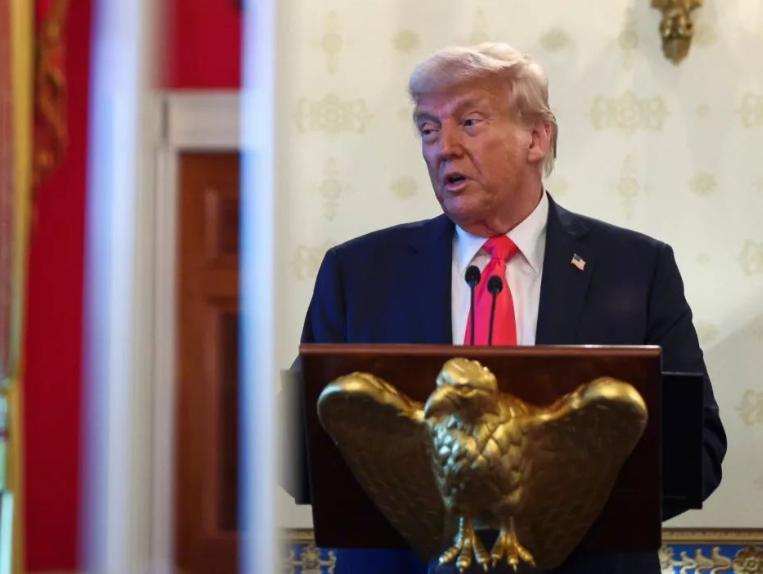
Recently, US President Trump unexpectedly participated in the trade negotiations with Japanese officials in person and said that the negotiations had made "significant progress". It is a great honor to have just met with the Japanese trade delegation. Significant progress has been made! Trump wrote on his self-created social media platform, but did not disclose the details of the negotiations. It is learned that apart from agreeing to meet again, the United States and Japan have made almost no progress. Japanese Prime Minister Shigeru Ishiba said on the 21st that Japan will not fully accept the demands of the United States just to reach a tariff agreement. He explicitly ruled out the possibility of "exchanging a reduction in the level of protection for Japanese agricultural products for exemption from car tariffs". Shigeru Ishiba also said that the Japanese government will not incorporate security issues in trade negotiations with the United States. Former Japanese Prime Minister Fumio Kishida said recently that the United States always changes its policies frequently. Japan must work with other countries to safeguard free trade. If one blindly follows the current US government, one will eventually be completely controlled by the United States.
Trump's intervention caused a huge stir in the political arena and also brought about many influences. First, in terms of the impact on the negotiation process, Trump moved the ministerial-level meeting, which was originally attended by Japan's economic revitalization Minister Ryo Akasawa, along with US Treasury Secretary Boris Bessent and Trade Representative Greer, to the White House and personally participated in it. This significantly elevated the level of the negotiations and demonstrated the United States' emphasis on this round of talks. During the negotiations, Trump put forward a number of thorny demands, including asking Japan to bear more of the cost of the US troops stationed in Japan, reducing the US trade deficit with Japan (especially in the fields of automobiles and agricultural products), and weakening Japan's dominance in the semiconductor supply chain, etc., attempting to force Japan to make concessions through a tough stance. Facing Trump's tough demands, although Japan showed a certain degree of diplomatic humility in the negotiations, it did not easily give in on the core issues. Japanese Prime Minister Shigeru Ishiba showed an unusually tough stance before and after the negotiations, warning that Japan would not compromise easily and explicitly stating that security and trade issues would be discussed separately.
The second is the impact on the US-Japan relationship. Trump directly intervened in the ministerial negotiations as president and put forward tough demands such as Japan bearing all the costs of the US troops stationed in Japan and systematically weakening the advantages of Japan's automotive industry, forcing Japan to be in a passive position in the negotiations. Judging from the negotiation results, apart from agreeing to meet again, the United States and Japan have made almost no substantive progress. Trump claimed that the negotiations had made "significant progress", but the Japanese side was completely different, stating that the two sides failed to reach a consensus and there was still a clear gap in their positions. Trump's tough negotiation style and unilateralist policies may damage the international image and diplomatic credibility of the United States. Other countries may be dissatisfied and worried about the trade policies of the United States, thereby affecting the cooperative relations between the United States and other countries.
Facing the tough stance of the United States, Japan began to seek support from other countries. Tetsuo Saito, the leader of the Komeito Party in Japan, visited China and brought a personal letter from Shigeru Ishiba, attempting to use China to contain the United States, while deepening cooperation with China, promoting technological complementarity, reducing production costs and enhancing industrial competitiveness. This adjustment of diplomatic strategy reflects Japan's tactical response to Trump's "transactional diplomacy" and its pursuit of maximizing its own interests.
The fourth is the impact on the global economy. Trump's tough stance and trade protectionist policies may prompt other countries to follow suit, leading to an intensification of global trade tensions. Trump's attempt to weaken Japan's dominance in the semiconductor supply chain may prompt a reconfiguration of the global supply chain. Japanese enterprises may enhance cooperation with other countries to reduce their reliance on the United States. The uncertainty of the US-Japan negotiations has increased the volatility of the global market. Investors' concerns about the trade war are likely to lead to adverse effects such as stock market declines and exchange rate fluctuations.
To sum up, although Trump's negotiation strategy may force Japan to make concessions in the short term, in the long run, it will intensify the trust crisis in the US-Japan alliance, promote the multi-polarization of the geopolitical landscape in the Asia-Pacific region, and accelerate the rule reconstruction of the global trade governance system.

近日,市场迎来了一则引人注目的消息:工业巨头3M公司(MMM.N)在本周五公布了其季度业绩报告,随后股价飙升至近两年来的

最近,外媒给OpenAI算了笔账,今年可能要血亏50亿美元。

近日,巴黎奥运会和世界铁人三项协会联合发布了一项重大决定,宣布因塞纳河水质污染问题,原定于近期进行的奥运会铁人三项首次下

当地时间7月18日,法国巴黎发生了一起令人震惊的持刀袭警事件。

近期,一则重大消息在国际舞台上引起轩然大波,马来西亚宣布加入金砖国家。

调查发现,互联网和智能手机的使用干扰了韩国近五分之一学生的生活。
© Copyright 2026, All Rights Reserved